By Khem “Babu” Khadaka, founder, driving these roads since 1996 · Last updated: 2027 season (October 2026 – June 2027)
An India and Nepal tour puts the Taj Mahal and the Himalaya into one trip, and the hardest part isn’t the travelling. It’s the planning decisions you make before you book a single flight.
Which country first? Fly between them or cross by road? One visa or two? Rupees or dollars? Can you trek and see Rajasthan in the same three weeks? Get those choices right and the trip almost plans itself. Get them wrong and you spend days backtracking to Delhi.
The two countries sit side by side and share a long, open border, but they feel very different. India is vast, fast-moving and intense. Nepal is smaller, slower and mountainous. A good combined trip uses that contrast rather than fighting it.
So instead of asking only “Can I combine India and Nepal in one trip?”, it helps to ask a better question:
How long do I have, what matters most to me in each country, and which order, crossing and season will join them with the least wasted time?
That’s what this guide is built around. It covers how long an India and Nepal tour should be, which country to start in, flying versus crossing by road, visas for both countries, money (including the rules on Indian ₹500 notes in Nepal), SIM cards, the seasons and festivals that suit both, cultural differences, adventure add-ons, health and safety, and what the whole trip costs.
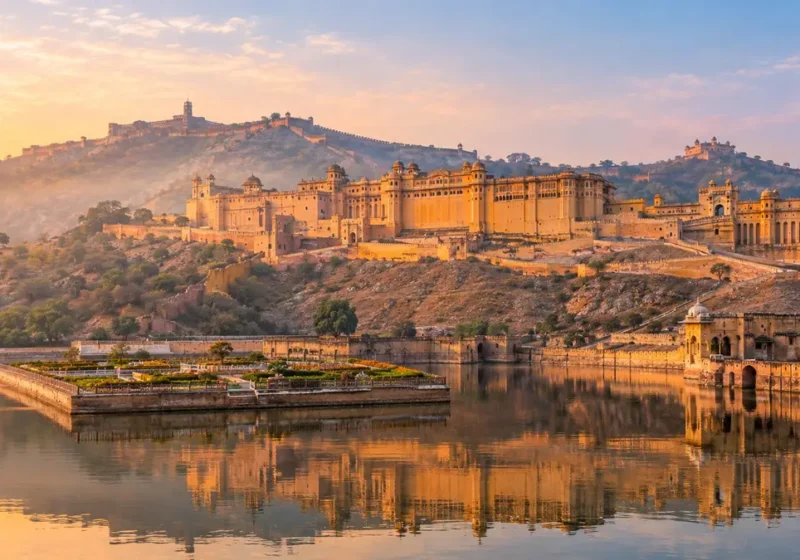
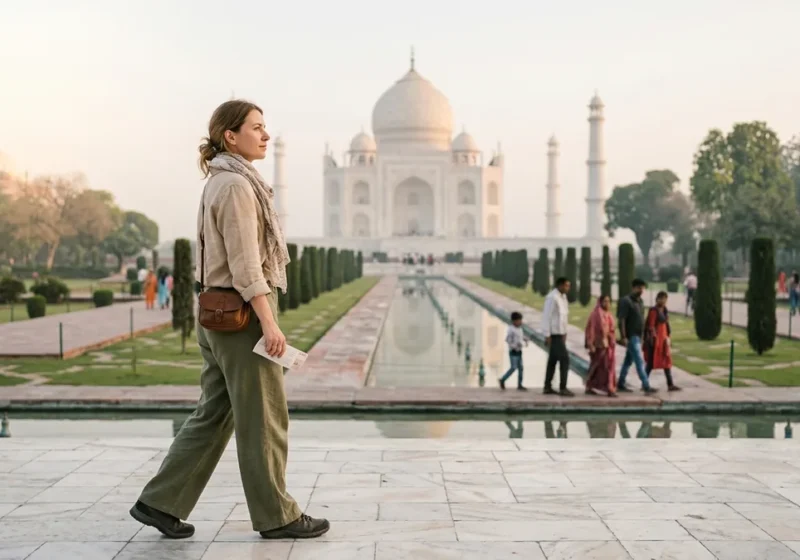
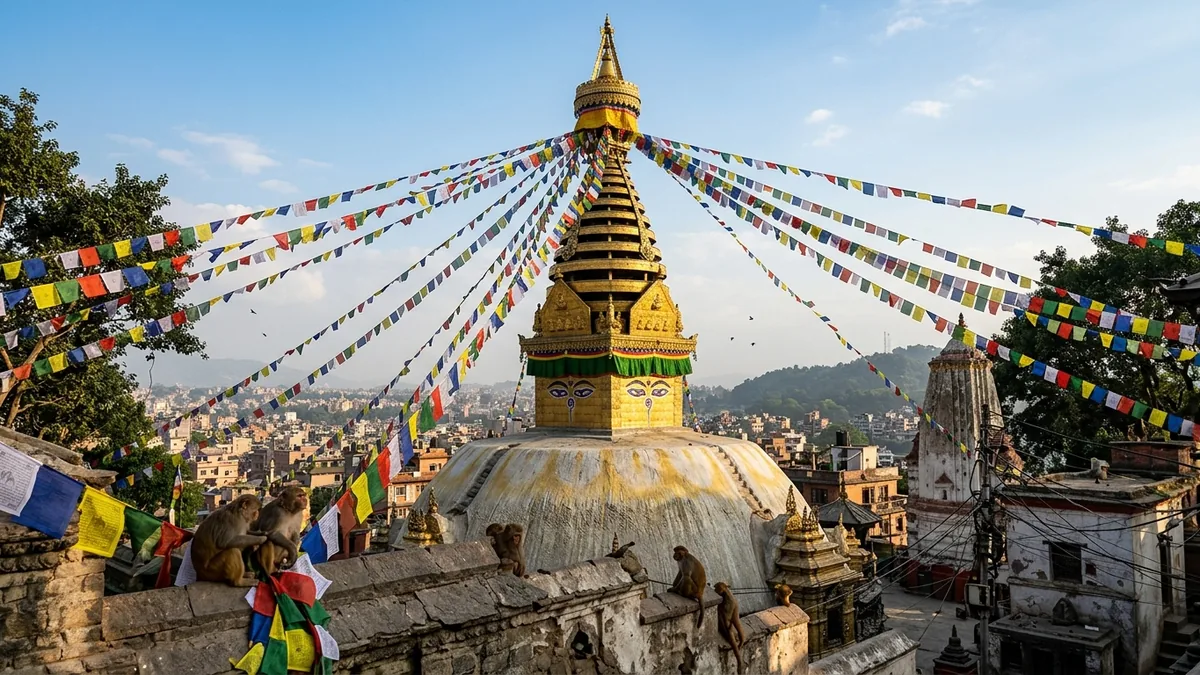
Yes, if you have the time. The two countries complement each other: India’s great monuments, cities and holy rivers, then Nepal’s mountains, lakes and jungle. Many of our guests say the second half feels like a holiday after the first.
It also makes sense geographically. Kathmandu is one of the shortest international flights from Delhi, and the Buddhist sites of both countries, from Sarnath and Bodh Gaya to Lumbini, form one natural circuit.
| India | Nepal | |
|---|---|---|
| Currency | Indian rupee (INR) | Nepali rupee (NPR), fixed at 1.6 NPR to 1 INR |
| Time zone | GMT +5:30 | GMT +5:45 (15 minutes ahead) |
| Driving | On the left | On the left |
| Visa for most visitors | e-Visa before travel | Visa on arrival or online |
| Pace | Big distances, fast expressways, busy cities | Short distances, slow hill roads, smaller towns |
| Highlights | Taj Mahal, Rajasthan, Varanasi, Delhi | Kathmandu Valley, Pokhara, Chitwan, the Himalaya |
The one thing an India and Nepal tour can’t do is everything. Pick the two or three things you most want from each country and build around those.
This is the first decision, and it shapes all the others. Here’s what realistically fits:
| Reisduur | India | Nepal | Who it suits |
|---|---|---|---|
| 10 dagen | Delhi and Agra (3–4 days) | Kathmandu and Pokhara (6 days) | A first taste; fly between the two |
| 14 dagen | Golden Triangle or Agra and Varanasi (6–7 days) | Kathmandu, Pokhara, Chitwan (7–8 days) | Most first-time visitors |
| 21 dagen | Golden Triangle plus Varanasi or part of Rajasthan (10–11 days) | Kathmandu Valley, Bandipur, Pokhara, Chitwan, plus a short trek (10 days) | The complete journey, overland via Lumbini |
| 4 weeks+ | Rajasthan loop and Varanasi | Everest or Annapurna Base Camp trek and the classic circuit | Trekkers and slow travellers |
Less than ten days isn’t worth it. You’d spend too much of it in airports. If you only have a week, choose one country and come back for the other.
For the two-week version day by day, see our 14-day India Nepal itinerary, which lays out an overland route and a fly-in route in full.
Most India and Nepal tours start in India and end in Nepal. There are good reasons:
Start in Nepal if you’re trekking and want to do it while you’re fresh, or if you’re flying in from South-East Asia and it’s cheaper to land in Kathmandu. In that case, fly from Kathmandu to Delhi or Varanasi and finish with the Taj Mahal.
Whichever order you choose, keep your India and Nepal tour moving in one direction. Every backtrack costs a day.
There are three practical ways to link the two halves of an India and Nepal tour:

| Option | Time | Good for |
|---|---|---|
| Fly Delhi → Kathmandu | About 1 hour 40 minutes, several flights a day | Golden Triangle and Rajasthan trips; saving time |
| Fly Varanasi → Kathmandu | About an hour, on the days it operates | Linking the Ganges with Nepal without the long drive |
| By road via Gorakhpur and Sunauli | A full day from Varanasi, with a night near the border | Pilgrims, Lumbini, slow travellers |
| By road via Raxaul and Birgunj | A long day from Bodh Gaya or Patna | The Buddhist circuit via Bodh Gaya |
| By road via Siliguri and Kakarbhitta | Half a day from Darjeeling | Darjeeling and Sikkim, then eastern Nepal |
Flying is the right choice for most people. It saves two long driving days and puts you straight into the Kathmandu Valley. Buddha Air has flown a direct Varanasi–Kathmandu route; check the current schedule, because it changes with the season.
Driving is the richer experience, and it’s the only way to include Lumbini naturally. You watch the Gangetic plain turn into the Terai and then the hills. It does add at least one long day and a border crossing to your India and Nepal tour.
The Sunauli–Belahiya crossing near Gorakhpur is the one most tourists use. It’s busy but simple. Foreigners stop at the Indian immigration office in Sunauli for an exit stamp, walk or drive through the border arch, then buy a visa on arrival at Nepali immigration in Belahiya. Allow 30 minutes to two hours.
A few rules that matter:
Lumbini, the Buddha’s birthplace, is about 30 km from the border, so it’s the natural first night in Nepal. Our India Nepal itinerary guide covers all five main crossings and the step-by-step process.
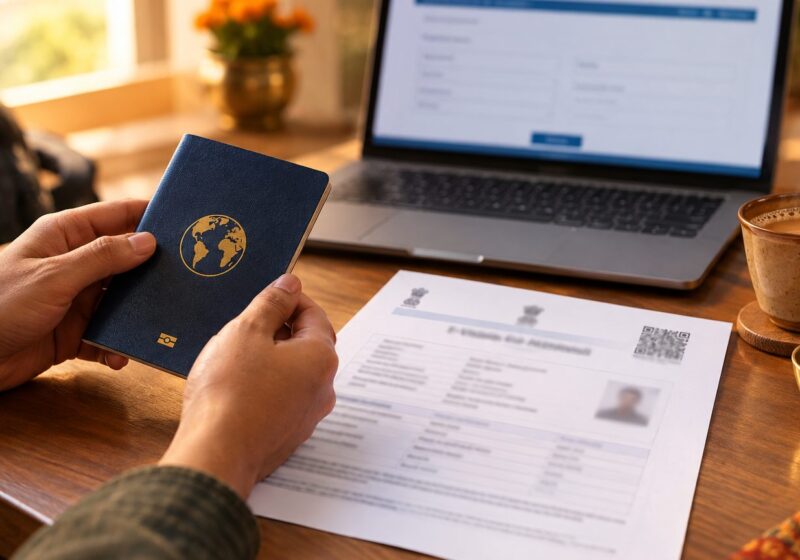
You need permission to enter both countries, and the order you visit them in affects which visa you need.
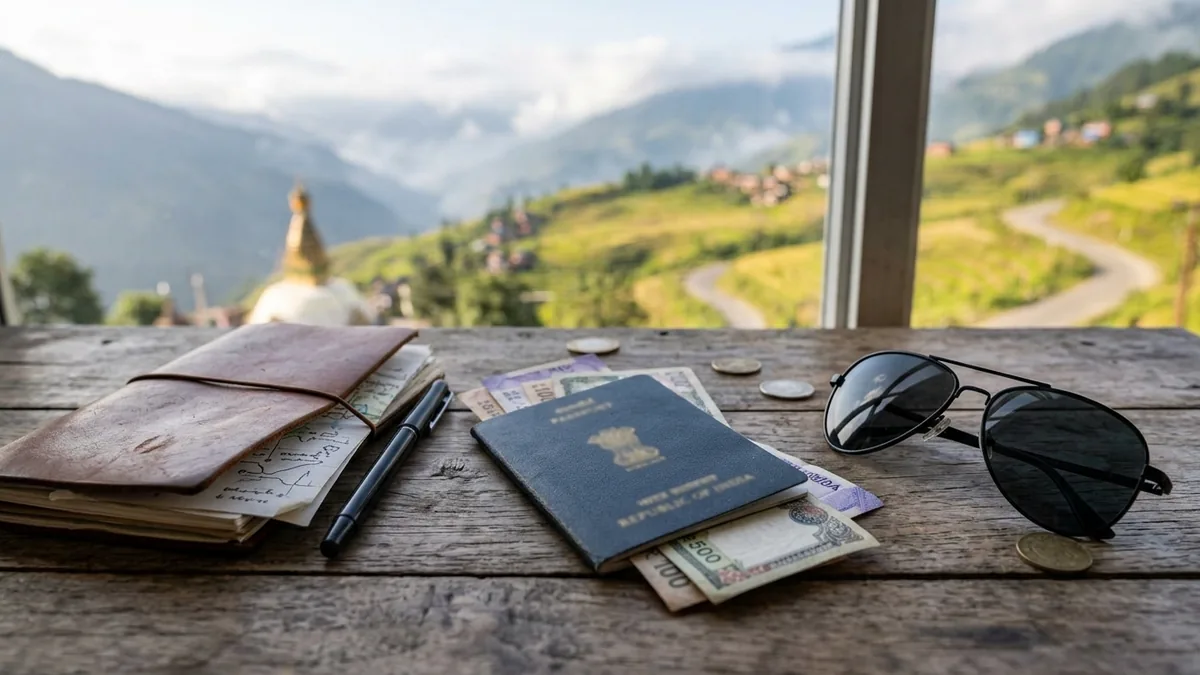
Most nationalities apply online for the Indian e-Visa before travelling. Since December 2025 you can choose an arrival date up to 120 days ahead for the e-Tourist Visa.
Leaving India is easy: an e-Visa holder can exit through any authorised checkpoint, including Sunauli. Returning to India is the tricky part. You need a visa that allows another entry, such as the one-year multiple-entry e-Tourist Visa, and you must enter at a port listed for e-Visas. In August 2026 India’s list included the Nepal border posts at Raxaul, Rupaidiha and Jogbani, but not Sunauli. If your India and Nepal tour goes back into India, the simplest answer is to fly.
Most nationalities can get a tourist visa on arrival at Kathmandu airport or at the main land borders, or apply online in advance. The Tribhuvan airport immigration office lists USD 30 for 15 days, USD 50 for 30 days and USD 125 for 90 days, with a maximum of 150 days in a calendar year. Carry clean US dollar notes. Indian citizens don’t need a visa.
Money is the most confusing part of an India and Nepal tour, because the two rupees look alike, share a name and are pegged to each other, yet the rules are different on each side of the border.
Spend or change your Indian rupees before you fly out of Nepal. Outside the border region, Indian notes are much harder to use.
On an India and Nepal tour you’ll want a local SIM or eSIM in each country, because roaming is expensive and your driver and hotels will call you on WhatsApp.
In India, the big networks are Jio, Airtel and Vi. Buying a SIM as a foreigner needs your passport, visa and a photo, and activation can take a few hours. An international eSIM bought before you fly is often simpler.
In Nepal, Nepal Telecom (NTC) and Ncell sell tourist SIMs at Kathmandu airport and in town with your passport. Coverage is good in cities and on the main highways, patchy in the mountains, where teahouses sell Wi-Fi.
Download offline maps for both countries before you cross the border. Signal drops in the hills between the Terai and Pokhara.
The weather window for an India and Nepal tour is narrower than for either alone. Autumn and late winter to spring are the sweet spots:
| Dates (2026–27) | Festival or event | Where |
|---|---|---|
| Around 11–21 October 2026 | Dashain, Nepal’s biggest festival | All of Nepal; transport gets busy |
| 8 November 2026 | Diwali in India; Laxmi Puja during Tihar in Nepal | Both countries, lit with lamps |
| 6 March 2027 | Maha Shivaratri | Pashupatinath in Kathmandu; Haridwar |
| 6 March – 14 April 2027 | Main bathing days of the Haridwar Ardh Kumbh, as announced by the Akhara Parishad | Haridwar, Uttarakhand |
| 22 March 2027 | Holi | North India and Nepal |
| 14 April 2027 | Nepali New Year and Bisket Jatra | Bhaktapur |
| Around 20 May 2027 | Buddha Jayanti | Lumbini, Boudhanath, Sarnath |
Festival dates follow the lunar calendar; confirm them before you book. Hotels in Pokhara and Kathmandu fill up during Dashain and Tihar, and Delhi’s air is often very poor from late October to January, so if you’re sensitive to pollution, spend fewer nights there in those months.
Avoid May to September for a combined trip. The Indian plains are extremely hot in May and June, and the monsoon then brings landslides to Nepal’s hill roads and hides the mountains.
On the map it’s one step. In daily life, a few things change on an India and Nepal tour, and knowing them makes the second half easier:
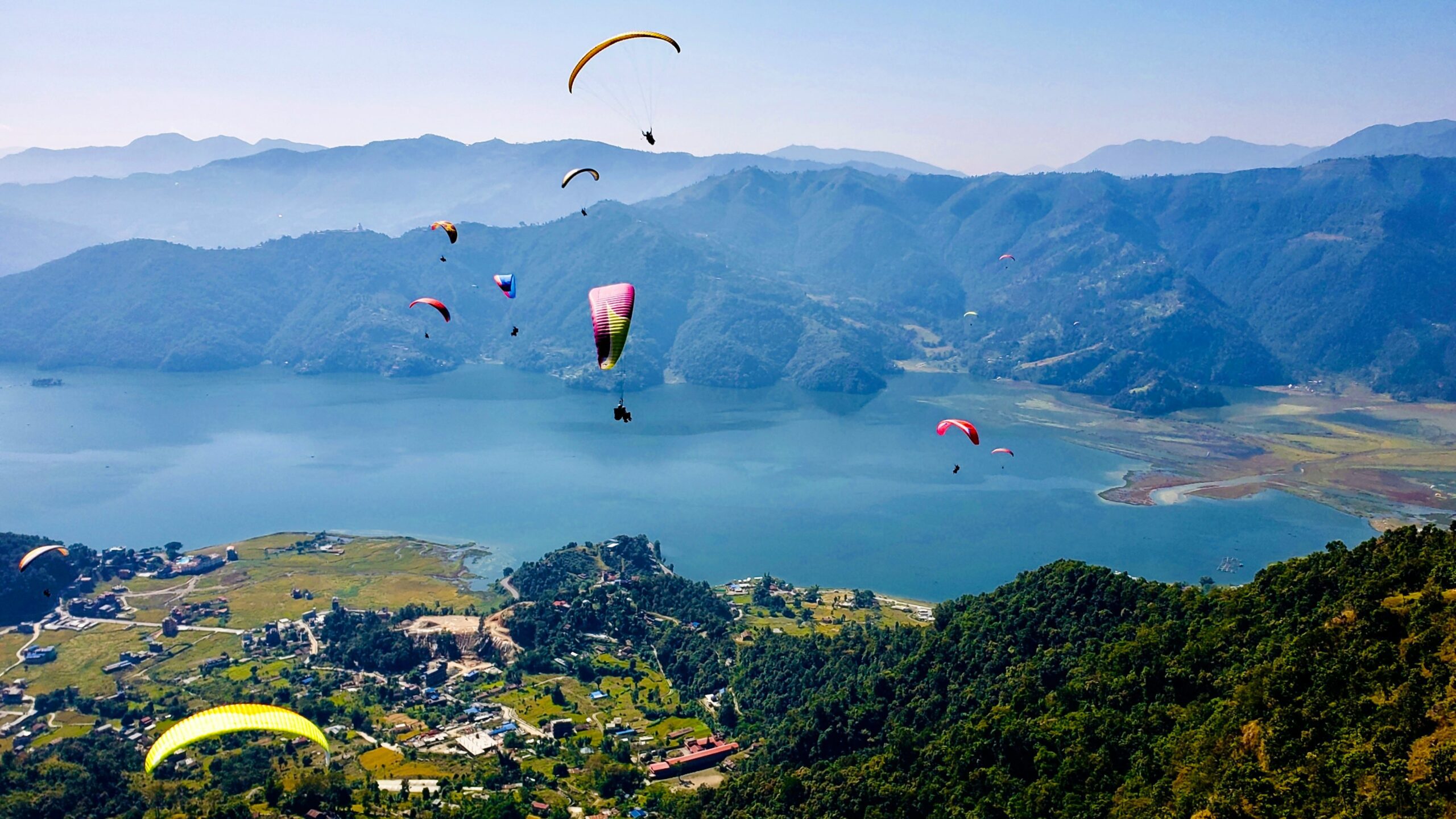
Nepal is where an India and Nepal tour can turn active. Even a few days give you a real taste of the mountains.
Both halves of an India and Nepal tour are safe for travellers with ordinary care. The risks are mostly practical: road travel, stomach upsets, heat and altitude.
See our travellers’ information page for more practical advice.
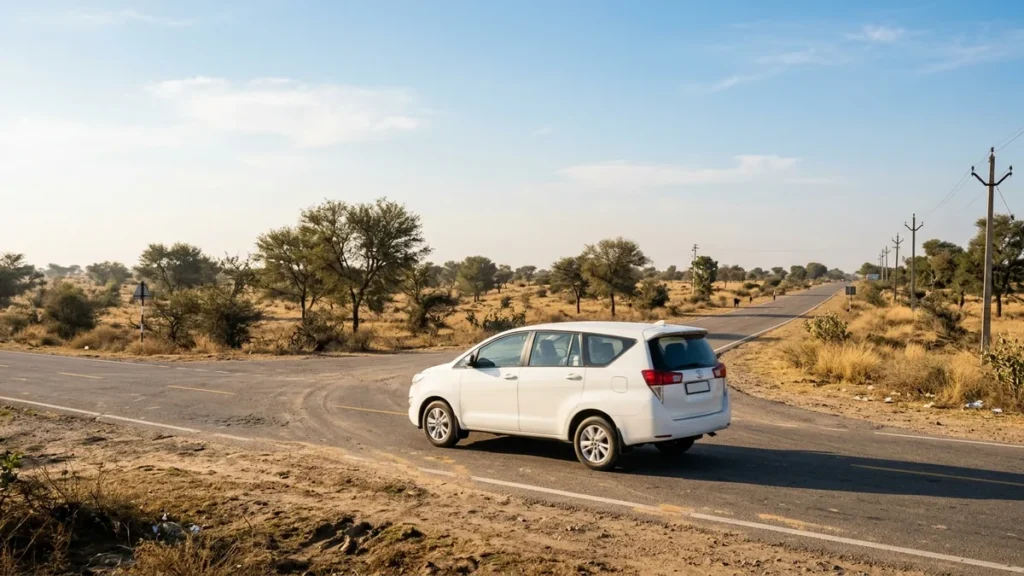
Our trips are priced for the whole vehicle, with the driver, not per person. Here are the published prices that most India and Nepal tours are built from:
| Trip | Sedan (1–3) | SUV (4–5) | Tempo Traveller (6–8) |
|---|---|---|---|
| India Nepal Grand Odyssey (Taj Mahal to Lumbini) | USD 1,869 | USD 2,562 | USD 3,360 |
| Golden Triangle, 6 days | USD 534 | USD 732 | USD 960 |
| Luxury Nepal Tour, 10 days | USD 890 | USD 1,220 | USD 1,600 |
| Golden Triangle 6 days + Luxury Nepal 10 days | USD 1,424 | USD 1,952 | USD 2,560 |
| Nepal Himalayan Heritage Tour | USD 1,068 | USD 1,464 | USD 1,920 |
In India, the price covers the car, driver, fuel, tolls, parking and state taxes; in Nepal, the car, driver, fuel, tolls and parking. Your drivers’ food and lodging are included. Hotels, meals, entry fees, guides, flights and visas are extra, and we’re happy to recommend hotels and book licensed local guides. Treks are priced per person and include the guide, porter, permits, lodging and meals.
See our guide to car and driver costs in India for how pricing works, or our India and Nepal tours page for more routes.
Tell us how long you have, when you’re travelling and what matters most in each country. We reply within 24 hours with a fixed price for the car and driver. If you’d like a detailed day-by-day itinerary, it costs €100, and the full €100 is deducted from your tour price when you book. There is no obligation.
Op maat door India & Nepal
Vertel ons waar je van houdt en we antwoorden binnen 24 uur met een vaste prijs. Een uitgebreide dag-tot-dag reisroute kost €100, die volledig van de reissom wordt afgetrokken.
Kies een of meer bestemmingen — je kunt India en Nepal vrij combineren.
Zo kunnen we het juiste tempo, verblijf en de juiste activiteiten kiezen.
We antwoorden binnen 24 uur. Nooit spam.
Before you book, run through these eight questions:
If you can answer yes to most of these, your India and Nepal tour is well planned.
Think of the trip as four decisions.
How long: two weeks for the classics, three for Rajasthan or a trek. Which order: usually India first, Nepal to finish. How to cross: fly for speed, drive via Sunauli for Lumbini and the journey. When: October to November, or February to March.
Settle those four, sort the visas and the rupees, and the rest of your India and Nepal tour falls into place.
At least 12 to 14 days for a first trip, split roughly half and half. Three weeks lets you add Rajasthan, Varanasi or a short trek. Less than ten days is not really worth it for two countries.
Most people start in India and finish in Nepal. Delhi has more international flights, leaving India overland is simpler than re-entering, and Nepal is a relaxing end to the trip. Start in Nepal if you want to trek while you are fresh.
Fly from Delhi to Kathmandu in about 1 hour 40 minutes, or cross by road. The main tourist border crossing is Sunauli to Belahiya near Gorakhpur, which leads to Lumbini and Pokhara.
Most visitors need both. Apply for the Indian e-Visa before you travel. The Nepal tourist visa can be bought on arrival at Kathmandu airport or the main land borders for USD 30, 50 or 125 for 15, 30 or 90 days.
Only if your visa allows another entry and you enter through a port listed for e-Visas. In August 2026 that included Raxaul, Rupaidiha and Jogbani on the Nepal border, but not Sunauli. Flying back to an Indian airport is the simplest option.
Yes, Indian notes of 100 rupees or less are widely accepted. Nepal Rastra Bank also allows Indian 200 and 500 notes up to 25,000 rupees per person, but 2,000 rupee notes are not allowed. One Indian rupee equals 1.6 Nepali rupees.
Indian UPI users can pay at many Nepali shops through the Fonepay network. Foreign tourists usually rely on cash, cards and ATMs in both countries.
October and November are best for both countries, with clear mountain views and pleasant weather in the plains. February and March are also very good. Avoid May to September because of the heat and the monsoon.
Fly if you are short of time or doing the Golden Triangle. Drive via Sunauli if you want to see Lumbini and the countryside, and have at least two weeks.
Nepal is 15 minutes ahead of India. India is GMT plus 5 hours 30 minutes and Nepal is GMT plus 5 hours 45 minutes.
Yes, with normal care. After the protests of September 2025, Nepal held a general election on 5 March 2026, and tourist arrivals have grown in 2026. Check your government’s travel advice before you go.
Combining our 6-day Golden Triangle tour with our 10-day Luxury Nepal Tour costs USD 1,424 for a sedan, USD 1,952 for an SUV or USD 2,560 for a Tempo Traveller, for the whole vehicle. Hotels, flights, meals and entry fees are extra.
Yes. Poon Hill takes 4 to 5 days from Pokhara, Annapurna Base Camp about 11 days and Everest Base Camp about 14 days. Plan the trek for early in the Nepal half and keep a spare day for weather.
It helps on an India and Nepal tour. India needs your passport, visa and a photo for a SIM, and activation can take hours, so an international eSIM is often easier. In Nepal, NTC and Ncell sell tourist SIMs at Kathmandu airport.
Yes. It is written for the October 2026 to June 2027 season. Visa rules, e-Visa ports and currency rules change, so confirm them before you travel.
A good India and Nepal trip isn’t about seeing everything. It’s about a few clear decisions made early.
Enough days? The right order? Flight or border? The right visa for India? Dollars for Nepal? The right months?
If the answer is yes, you’ll get the best of both: the Taj Mahal at sunrise and the Annapurnas from a lakeside café. If not, you’ll spend your holiday undoing mistakes in airports.
Once you plan around those things, organising an India and Nepal tour becomes simple. For the day-by-day version, read our 14-day India Nepal itinerary, our guide to the best places to visit in Nepal or our India and Nepal pilgrimage guide.
See the India Nepal Grand Odyssey · India and Nepal tours · Plan my trip