By Khem “Babu” Khadaka, founder, driving these roads since 1996 · Last updated: 2027 season (October 2026 – June 2027)
The Upper Mustang trek takes you through a high, dry, red-and-ochre desert on the Tibetan side of the Himalaya, to the walled city of Lo Manthang, and the rules for doing it changed in 2025–26.
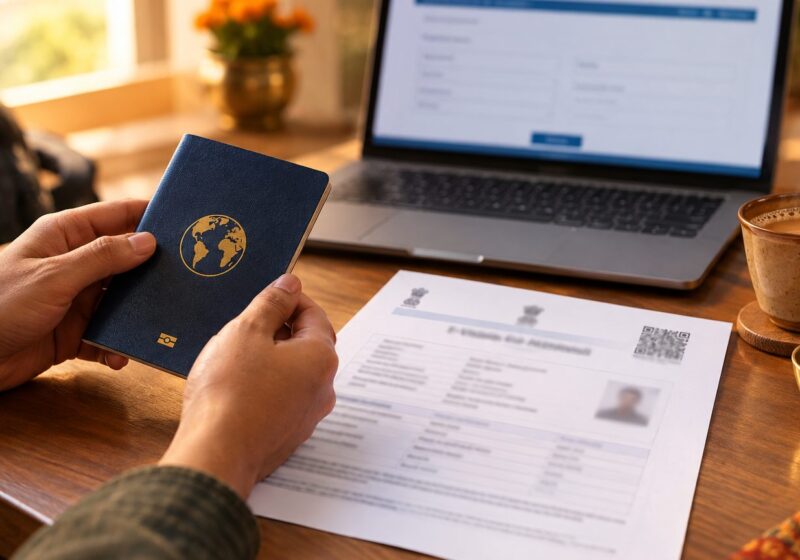
For decades, Upper Mustang cost a flat USD 500 per person for a ten-day permit, and you couldn’t go alone. Both of those have gone. The permit is now charged by the day, and a single trekker can now get one, as long as a licensed guide goes too.
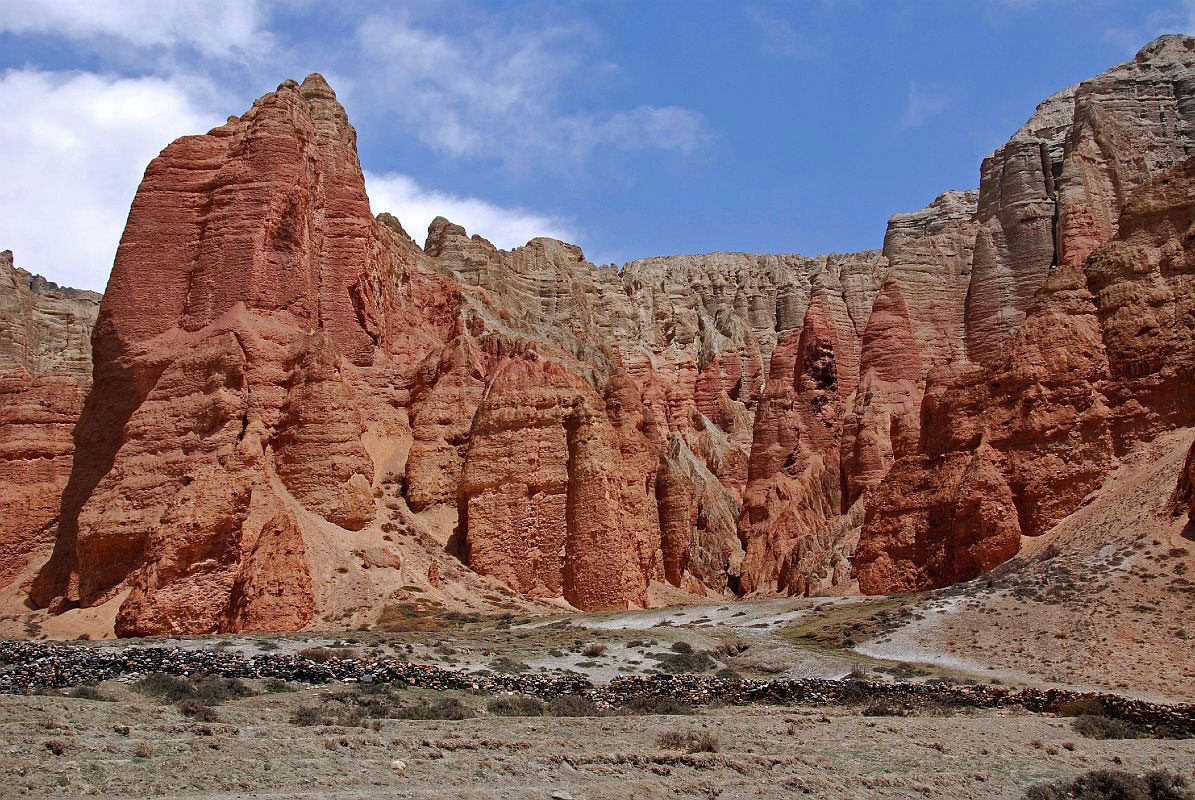
What hasn’t changed is the landscape: eroded cliffs full of ancient caves, whitewashed villages among barley fields, and monasteries painted in the 15th century. Nor has the fact that a road now runs most of the way to Lo Manthang, which changes how a good trek is planned.
So instead of asking only “How much is the Upper Mustang permit?”, it helps to ask a better question:
How do I reach Lo Manthang under the new permit rules, in the right season, on trails that stay off the road, with enough time to see the kingdom properly?
That is what this Upper Mustang trek guide is built around. It covers the new permit rules and what they cost, ACAP and the guide rule, a day-by-day 14-day itinerary with altitudes, Lo Manthang’s monasteries and caves, how the road affects the trail, the best months and the Tiji festival dates for 2027, altitude, lodges and food, and what our trek costs per person.
Upper Mustang is the northern part of Mustang district, a finger of Nepal that pushes up into the Tibetan plateau. It was the Kingdom of Lo, with its own king until Nepal abolished the monarchy in 2008, and it was closed to outsiders until 1992 (background).
Because it sits behind the Annapurna and Dhaulagiri ranges, it gets very little rain, roughly 250 to 400 mm a year. That’s why it looks nothing like the green Nepal of the Annapurna foothills. The villages are built of mud-brick and stone, the fields are watered by snowmelt channels, and the culture is Tibetan Buddhist.
It is not a high-altitude trek in the Everest sense. Most nights are between about 3,000 and 3,850 metres, and the passes are only a little over 4,000 metres. The challenge is wind, dust, long days and the remoteness, not the height.
Every Upper Mustang trek is built around one place: Lo Manthang, the walled capital of Lo, founded in 1380 by Ame Pal, who built its walls and much of the town that stands today (Lo Manthang).

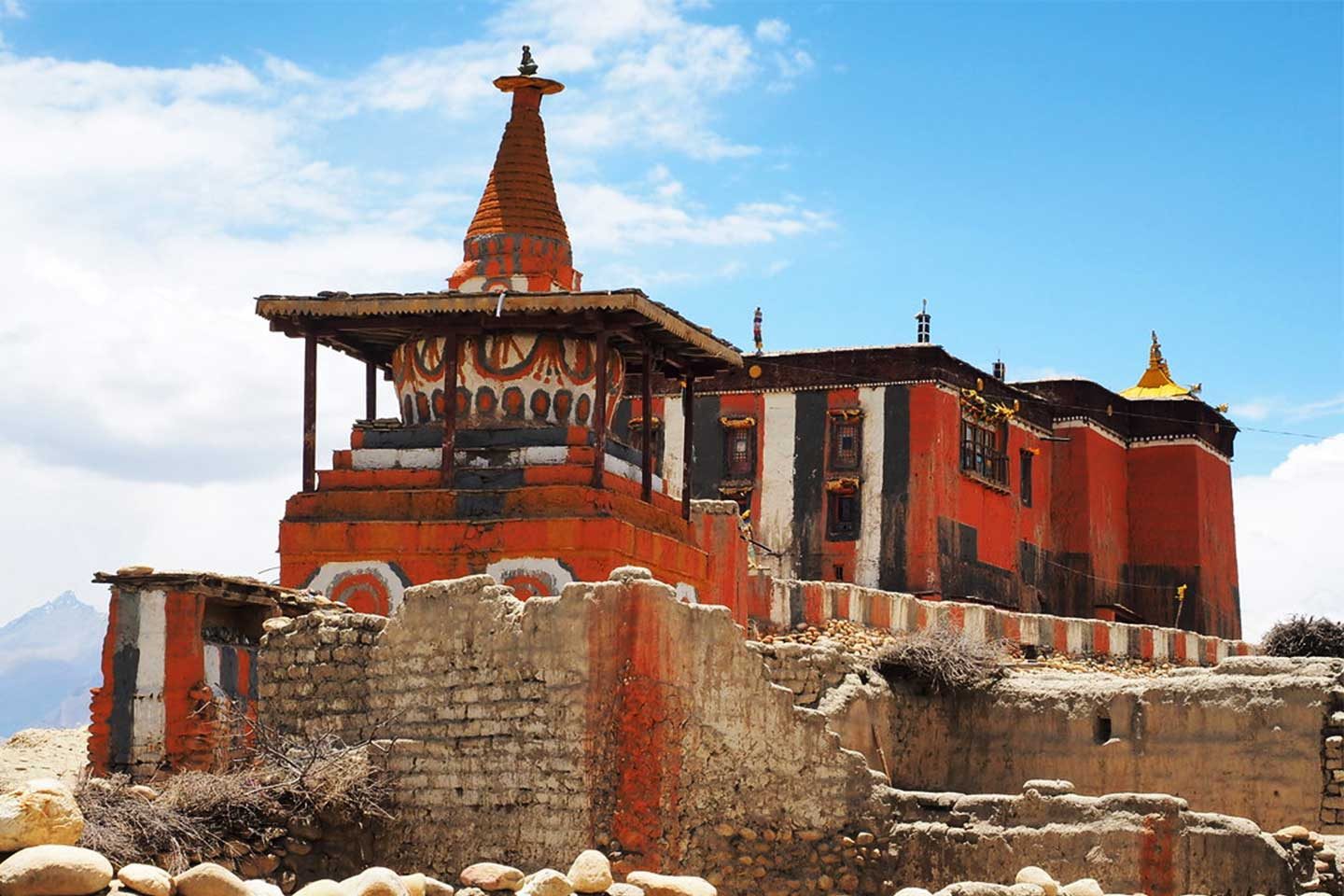
Inside the walls are narrow lanes, the old five-storey royal palace and three great monasteries. Jampa Lhakhang, from the early 15th century, has some of the finest mandala murals in the Himalaya. Thubchen Gompa, from the late 15th century, is a vast assembly hall with restored wall paintings. Chode Gompa is the living monastery, with a school for young monks.
The villages on the way are just as memorable: Kagbeni at the gate of the restricted area, Ghami with its long mani wall, Tsarang with its old palace and monastery, and Dhakmar under its red cliffs. Spend a rest day in Lo Manthang; most itineraries that rush it regret it.
This is the part most online guides have wrong, because the rules changed twice in six months.
| Permit or rule | Current position (2026–27 season) | What it was before |
|---|---|---|
| Restricted Area Permit (RAP) | USD 50 per person per day inside Upper Mustang | USD 500 per person for the first 10 days, then USD 50 per day |
| Minimum group | One trekker can get a permit (from 22 March 2026) | At least two trekkers on the same permit |
| Guide | Licensed guide compulsory, arranged through a registered agency | Same |
| ACAP (Annapurna Conservation Area) | NPR 3,000 for most foreign nationals; NPR 1,000 for SAARC | Same |
| TIMS registration | Arranged by your agency where required; NPR 2,000 for most nationalities | Same |
| Where issued | Department of Immigration, Kathmandu, through the agency | Same |
The cut to a daily rate was announced in November 2025 (Kathmandu Post report) and took effect in December 2025. The solo-permit change followed on 22 March 2026. Trekking agencies’ reports say one guide may now accompany up to seven trekkers.
What it means in practice: on a classic 14-day Upper Mustang trek you spend about 10 days inside the restricted area, so the permit still costs about USD 500. It’s shorter trips, such as the jeep tour, that now cost less. The TIMS fee is published by the Nepal Tourism Board, and ACAP details are on the NTNC ACAP page.
Permits are checked at Kagbeni and again in Lo Manthang. You’ll need your passport and visa, and the permit is issued for fixed dates, so tell us early if your dates might change.
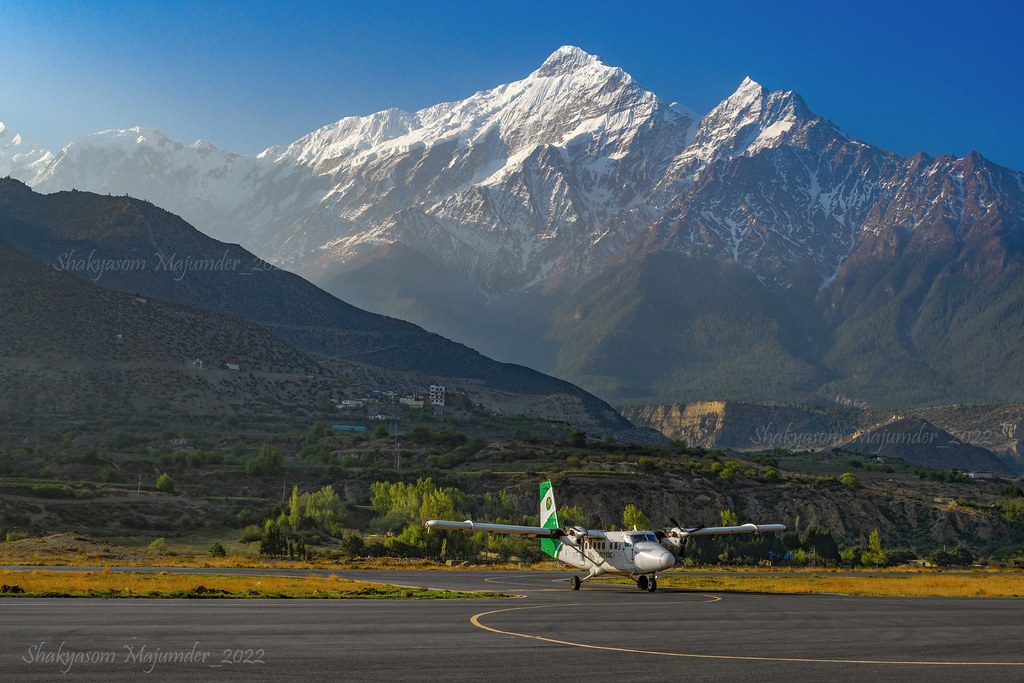
The Upper Mustang trek starts at Jomsom (about 2,720 m), the district headquarters in the Kali Gandaki valley.
| Option | Time | Notes |
|---|---|---|
| Fly Pokhara to Jomsom | About 20 minutes | Morning flights only; afternoon winds stop flying. Delays of a day are common. |
| Drive Pokhara to Jomsom | 7 to 9 hours (about 160–180 km) | Paved to Beni, then rough gravel through the gorge; landslides in the monsoon |
| Kathmandu to Pokhara | About 25 minutes by air, or 6–8 hours by road | Most treks spend a night in Pokhara |
The flight is one of the most spectacular in Nepal, between Dhaulagiri and Annapurna through the deepest gorge in the world. Always keep a spare day at the end of the trek in case the return flight is cancelled.
From Jomsom it’s an easy three hours up the wide riverbed to Kagbeni, a medieval village at the junction of the trails to Muktinath and Upper Mustang, and the checkpoint where the restricted area begins.
This is the classic shape of the trek, the one our 14-day Upper Mustang trek follows. It goes up the west side of the valley and comes back down the east, via Dhakmar and Ghar Gompa, so you don’t retrace your steps.
| Day | Route | Overnight altitude (approx.) | Walking |
|---|---|---|---|
| 1 | Arrive in Kathmandu; permits processed | 1,400 m | None |
| 2 | Fly or drive to Pokhara | 820 m | None |
| 3 | Fly to Jomsom; trek to Kagbeni | 2,810 m | About 3 hours |
| 4 | Kagbeni to Chele; enter the restricted area | 3,050 m | 5–6 hours |
| 5 | Chele to Syangboche, over two passes near 3,900 m | 3,500 m | 6–7 hours |
| 6 | Syangboche to Ghami, over the Nyi La (about 4,010 m) | 3,520 m | 4–5 hours |
| 7 | Ghami to Tsarang | 3,560 m | 4–5 hours |
| 8 | Tsarang to Lo Manthang, over the Lo La | 3,840 m | 4–5 hours |
| 9 | Rest day in Lo Manthang: monasteries, Chhoser caves | 3,840 m | Optional |
| 10 | Lo Manthang to Dhakmar, via Ghar Gompa | 3,820 m | 6–7 hours |
| 11 | Dhakmar to Ghiling | 3,570 m | 4–5 hours |
| 12 | Ghiling to Chhusang | 2,980 m | 5–6 hours |
| 13 | Chhusang to Jomsom (partly by jeep) | 2,720 m | 4–6 hours |
| 14 | Fly Jomsom to Pokhara; trek ends | 820 m | None |
Altitudes vary a little between maps; we’ve used the commonly quoted figures. Walking times are for an average trekker with stops.
A dirt road now runs from Jomsom all the way to Lo Manthang and on to the Chinese border at Korala. Jeeps, motorbikes and trucks use it, and some stretches near Lo Manthang are now paved.
People worry this has spoiled the trek. It hasn’t, if the route is planned well. On many stages the old footpath runs separately from the road, over passes and through villages the road bypasses. A guide who knows these trails keeps you off the dust for most of the walk.
The return via Dhakmar and Ghar Gompa is almost entirely off the road, and it’s the most beautiful part of the trek. Where the road can’t be avoided, usually on the lower stretches near Chele, Chhusang and Jomsom, many itineraries use a jeep for a few hours.
The upside of the road: emergency evacuation is easier than it used to be, the lodges are better supplied, and if someone in your group is unwell, they can ride a stage while the rest walk.
The sky caves of Mustang, thousands of them cut into cliffs, were used as homes, burial chambers and meditation cells. In 2007 a shepherd found a cave with 55 paintings of the life of the Buddha. You’ll see many from the trail; most are unreachable and must not be climbed into.
Monasteries usually ask a small entry fee or a donation, paid to the caretaker who unlocks the door. Bring a torch for the dark interiors, and don’t use flash on the paintings.
Tiji is a three-day monastic dance festival held in the square outside the royal palace in Lo Manthang. Masked monks of Chode Gompa act out the story of Dorje Jono, a deity who defeats a demon to save the land, and the whole of Lo comes to watch.

The dates follow the Tibetan lunar calendar. In 2026 Tiji was held on 13–15 May. For 2027, trekking operators expect it on 1–3 June 2027. The monastery confirms the dates a few months ahead, so treat these as provisional until spring 2027.
Lodges in Lo Manthang fill up for Tiji, so a festival Upper Mustang trek needs booking well in advance. Plan to arrive a day or two before the first dance.
| Months | Conditions | Verdict |
|---|---|---|
| March to April | Cold nights, bright days, some snow on the passes early in March | Good; quiet |
| May to June | Warm days, clear skies, strong afternoon wind; Tiji festival | Excellent |
| July to August | Rain shadow: little rain in Upper Mustang, but the road and flights below Jomsom can be disrupted by the monsoon | Good for the trek itself; allow spare days |
| September to October | Clear, stable, harvest time in the barley fields | The best overall |
| November | Cold, clear, quieter; lodges start to close late in the month | Good for hardy trekkers |
| December to February | Very cold, snow possible; many residents move south for the winter | Not recommended |
The fact that Upper Mustang stays dry during the monsoon is one of its great advantages. When most of Nepal is under cloud in July and August, the Upper Mustang trek is one of the few classic routes still open. Just build in extra time for the journey to and from Jomsom.
It’s a moderate trek. You need to be comfortable walking 5 to 7 hours a day on rough, dusty trails with several climbs of 300 to 500 metres. No technical skills are needed.
Altitude: you sleep above 3,500 metres for about a week, and headaches and poor sleep are common in the first nights. The itinerary above climbs gradually. Walk slowly, drink three to four litres of water a day, and tell your guide about any symptoms. If they get worse, the answer is to go down, and the road makes that easier than on most treks.
Wind and sun: from late morning a strong wind blows up the Kali Gandaki. Most days are planned to finish by early afternoon. Bring a buff or scarf for the dust, sunglasses, sunscreen and lip balm.
Fitness: if you can walk a hilly 15 km day at home with a light pack and feel fine the next morning, you can do this trek. Train with a few back-to-back long walks in the months before.
The Upper Mustang trek is a teahouse trek: you sleep in small family-run lodges, not tents.
If walking 12 to 14 days isn’t for you, you can reach Lo Manthang by road on a 10-day Upper Mustang jeep tour. With the new daily permit, the jeep tour is also the cheaper option for permit fees.
| Upper Mustang trek | Upper Mustang jeep tour | |
|---|---|---|
| Length | 14 days from Kathmandu | 10 days from Kathmandu |
| Days in the restricted area | About 10 | About 4–5 |
| Pace | Slow; you see every village | Faster; longer drives on rough roads |
| Altitude | Gradual gain, better acclimatisation | Faster gain; more care needed |
| Best for | Walkers who want the full experience | Limited time, older travellers, photographers |
| Our price (couple) | USD 1,950 per person | USD 1,550 per person |
Read our full Upper Mustang jeep tour guide for the road route, Muktinath and the Chhoser caves.
Travel insurance that covers trekking to at least 4,500 metres and helicopter evacuation is essential. Porters carry the main bags on our treks, so your daypack need only hold water, layers, snacks and a camera.

Our 14-day Upper Mustang trek to Lo Manthang is private and priced per person, depending on the size of your group:
| Groepsgrootte | Price per person |
|---|---|
| Small group, 6–8 trekkers | USD 1,285 |
| Family, 4–5 trekkers | USD 1,600 |
| Couple, 2–3 trekkers | USD 1,950 |
| Solo trekker | USD 2,575 |
Included: teahouse lodging and all meals on the trek, a licensed guide, a porter, all permits (including the Restricted Area Permit and ACAP) and ground transport. Not included: your Nepal visa, international flights, the Pokhara–Jomsom flights, travel insurance and tips.
| Other costs to budget | Approximate amount |
|---|---|
| Nepal visa (30 days) | USD 50 |
| Pokhara–Jomsom flights | Roughly USD 100 or more each way; fares change |
| Travel insurance with evacuation cover | Varies by age and country |
| Drinks, hot showers, charging, snacks | About USD 10–20 per day |
| Monastery donations and entry | A few hundred rupees each |
| Tips for guide and porter | Optional; see our tipping guide |
Tipping is always your choice; our tipping guide gives typical amounts for trekking crews. For the rest of Nepal, see our Nepal tours and Nepal car and driver service.
Tell us your dates, your group size and whether you want to time the trek for Tiji. We reply within 24 hours with a fixed per-person price. If you’d like a detailed day-by-day itinerary, it costs €100, and the full €100 is deducted from your tour price when you book. There is no obligation.
Op maat door India & Nepal
Vertel ons waar je van houdt en we antwoorden binnen 24 uur met een vaste prijs. Een uitgebreide dag-tot-dag reisroute kost €100, die volledig van de reissom wordt afgetrokken.
Kies een of meer bestemmingen — je kunt India en Nepal vrij combineren.
Zo kunnen we het juiste tempo, verblijf en de juiste activiteiten kiezen.
We antwoorden binnen 24 uur. Nooit spam.
Before you book, run through these eight questions:
If you can answer yes to most of these, your Upper Mustang trek will go smoothly.
Think of the Upper Mustang trek in three parts.
The approach: the flight to Jomsom and the walk into Kagbeni. The kingdom: the villages, passes and monasteries on the way to Lo Manthang, and a full day inside its walls. The return: the red cliffs of Dhakmar and Ghar Gompa, away from the road.
Know the new permit rules, go in the right season, walk the old trails rather than the road, and don’t rush Lo Manthang. Then this Upper Mustang trek guide has done its job.
The Restricted Area Permit is USD 50 per person per day inside Upper Mustang, since December 2025. It used to be a flat USD 500 for the first 10 days. You also need the ACAP permit, NPR 3,000 for most foreign nationals.
Since 22 March 2026 a single trekker can get the Restricted Area Permit. You still need a licensed guide arranged through a registered trekking agency, so you won’t be walking alone.
Yes. A licensed guide is compulsory in Upper Mustang and the permit must be arranged through a registered agency. Guides also know the old trails that avoid the road.
Usually 12 to 14 days from Kathmandu, with about 9 to 10 days inside the restricted area. Our trek is 14 days, including a rest day in Lo Manthang and a return via Dhakmar.
About 3,840 metres. The highest point on the classic Upper Mustang trek is the Nyi La at about 4,010 metres, and a few other passes are close to 4,000 metres.
It’s a moderate trek. Expect 5 to 7 hours of walking a day on rough, dusty trails, strong afternoon winds and nights above 3,500 metres, but no technical sections.
March to November. September and October are the best overall, and May and June are excellent. Because Upper Mustang lies in a rain shadow, it can be trekked in July and August too.
Trekking operators expect Tiji to be held on 1 to 3 June 2027 in Lo Manthang. The dates follow the Tibetan calendar and are confirmed by the monastery a few months ahead. In 2026 it was held on 13 to 15 May.
Our 14-day trek costs USD 1,285 per person in a group of 6 to 8, USD 1,600 for 4 to 5, USD 1,950 for 2 to 3 and USD 2,575 solo, including permits, guide, porter, lodging and meals on the trek.
Yes. A dirt road runs from Jomsom to Lo Manthang and on to the Korala border, with some paved stretches near Lo Manthang. Good itineraries use the old footpaths, which often run separately from the road.
Fly from Pokhara, about 20 minutes, in the morning only, or drive 7 to 9 hours on a road that is paved to Beni and rough beyond. Keep a spare day in case flights are cancelled.
Your agency registers you where required. The TIMS fee published by the Nepal Tourism Board is NPR 2,000 for most nationalities and NPR 1,000 for SAARC citizens.
Simple family-run teahouses with twin rooms, often with shared bathrooms. Meals are dal bhat, noodles, momos, Tibetan bread and soups. Lo Manthang, Kagbeni and Jomsom have the most comfortable lodges.
Yes. Upper Mustang gets little rain in July and August, but the road and flights below Jomsom can be disrupted by landslides and cloud. Allow spare days.
Choose the trek if you want to walk and see every village, with gradual acclimatisation. Choose the 10-day jeep tour if you have less time or prefer not to walk long days; it also costs less in permit fees.
Yes. It’s written for the 2026–27 season and reflects the December 2025 permit change and the March 2026 solo-permit rule. Rules can change again, so we confirm them when you book.
A good Upper Mustang trek isn’t about how fast you reach Lo Manthang. It’s about the villages in between and the time you spend inside the walls.
The new permit rules understood? A licensed guide and a spare day for the flight? The right month, and Tiji dates checked? Kit for wind, dust and cold? A route that keeps you off the road?
If the answer is yes, you’ll see one of the last corners of old Tibetan culture. If not, you’ll see a lot of jeep dust.
Once you plan around those things, this Upper Mustang trek guide becomes simple to use. Compare it with our Everest Base Camp trek guide and our guide to the best treks in Nepal for beginners, or read our Pokhara travel guide for the days before you fly to Jomsom.
See the 14-day Upper Mustang trek · Annapurna and Mustang region · Plan my trip