By Khem “Babu” Khadaka, founder, driving these roads since 1996 · Last updated: 2027 season (October 2026 – June 2027)
This Manali travel guide starts with the question almost every visitor gets wrong: when to go.
Manali is one of India’s most-searched holiday destinations, and one of the easiest to get wrong.
People arrive in December expecting snow and find bare slopes. They plan Rohtang Pass for a Tuesday in April and find it’s still closed. They drive up from Delhi overnight, spend their first day exhausted, and waste another sitting in the traffic jam to Solang. Others come in July and August, when landslides can close the road for days.
So instead of asking only “What are the top things to do in Manali?”, it helps to ask a better question:
What will the mountains, the roads and the snow actually be like in the month I’m travelling?
This guide covers it all for 2027: the best time to visit Manali, snowfall, the Rohtang Pass permit, the Atal Tunnel, Solang Valley, Hadimba Temple, Old Manali, Delhi to Manali by car, how many days in Manali you need, and a simple Manali itinerary. It’s written by a family that drives these mountain roads for a living.
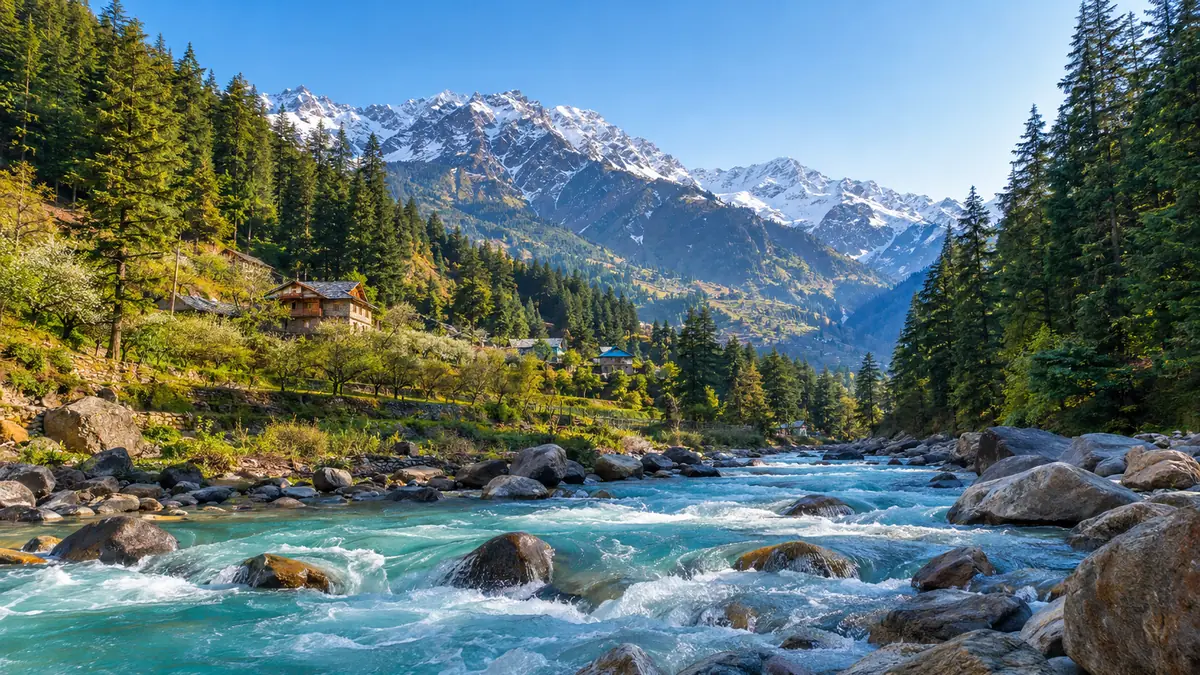
Manali sits at about 2,000 metres at the head of the Kullu Valley, where the Beas river runs fast and green between forests of giant deodar cedars, with the snow peaks of the Pir Panjal range rising behind. It’s the gateway to Rohtang Pass, the Atal Tunnel, Lahaul, Spiti and, for the adventurous, Ladakh.
It’s really two places. New Manali, around the Mall Road, is busy with hotels, shops and traffic. Old Manali and the villages above it are slower: apple orchards, wooden houses, cafés and quiet walks. The best trips mix both.
Manali fits naturally into:
If this Manali travel guide has one rule, it’s this: choose your month first, then plan the trip around it. Manali changes completely from season to season.
| Months | What to expect | Our advice |
|---|---|---|
| October – November | Clear skies, crisp air, autumn colours | Excellent. Quiet and beautiful. Rohtang may close from mid-November. |
| December | Cold. Snow is possible but not guaranteed. Very busy at Christmas and New Year. | Avoid the last week of December unless you enjoy traffic jams |
| January – February | The most reliable snowfall. Very cold. | The best time for snow and skiing at Solang. Roads can close after heavy snow. |
| March – April | Snow melting on the higher slopes, pleasant days | Good. Rohtang usually still closed. |
| May – June | Warm days, cool nights. Peak Indian holiday season. | Rohtang opens (the date changes every year). Book early and expect crowds. |
| July – August | Monsoon rain, landslides and road closures | Not recommended. The Kullu–Manali road has been badly hit by Beas floods in recent monsoons. |
| September | Rains clearing, green valleys | Good from mid-September |
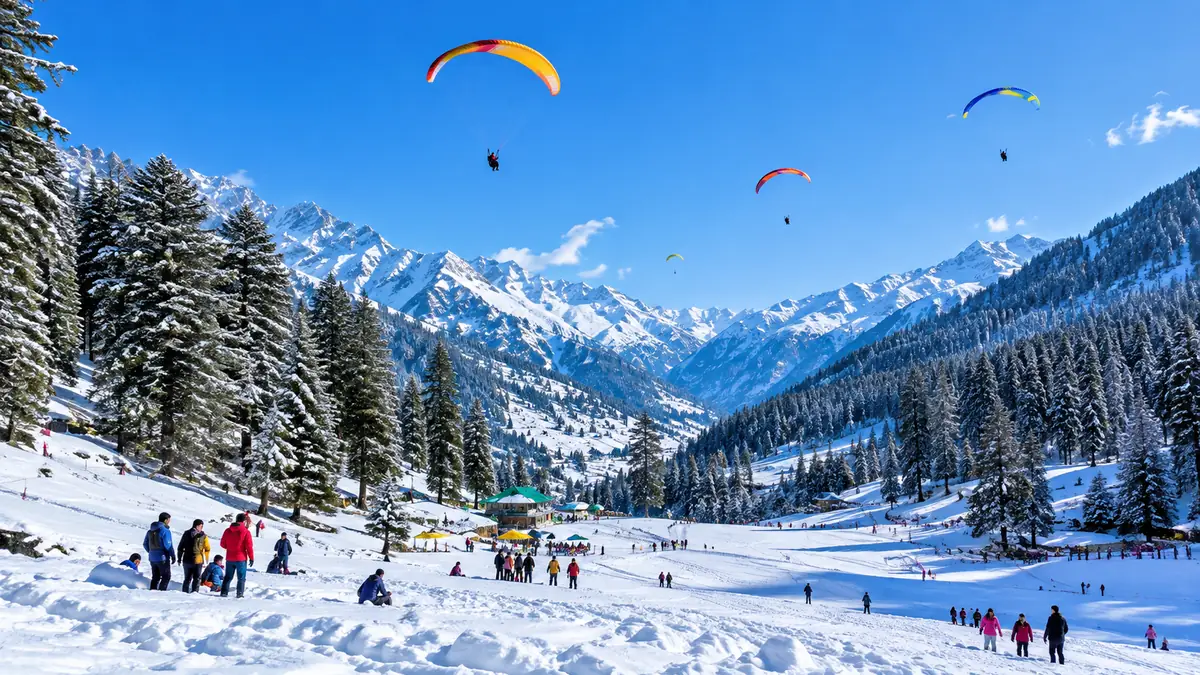
Manali snowfall in short: for snow in the town, come in January or February. For snow any time between spring and autumn, go up to Rohtang when it’s open, or through the Atal Tunnel to Sissu.
| Option | Time | Good for | The catch |
|---|---|---|---|
| Delhi to Manali by car (private driver) | 12 to 14 hours, about 540 km. Best split over two days. | Door to door, stops when you want, and a car for Solang, Rohtang and the valley | A long drive, with the last part on mountain roads |
| Overnight Volvo bus | 12 to 14 hours | Budget travel | An uncomfortable night, and you arrive tired |
| Flight to Kullu–Manali (Bhuntar) | About 1 hr 20 min in the air, then about 50 km by road | The fastest option | Small airport, limited flights, and often cancelled for weather |
We strongly recommend breaking the drive: Delhi → Shimla (8–9 hours) or Delhi → Chandigarh, then on to Manali (7–8 hours from Shimla along the Beas through Kullu). It turns an exhausting day into two good ones. There’s no train to Manali. See our Shimla travel guide for the first stop.
Rohtang Pass (about 3,980 m) is the famous high pass above Manali, with snow fields you can walk on well into summer. Because of heavy traffic and environmental damage, the number of vehicles allowed each day is limited by order of the National Green Tribunal.
| Detail | What to know |
|---|---|
| Season | Usually open from about May–June until November. The exact dates depend on snow clearing and change every year. |
| Rohtang Pass permit | About ₹550 per car (₹500 permit + ₹50 congestion charge), booked online |
| Daily limit | About 1,200 tourist vehicles a day (800 petrol, 400 diesel). They sell out quickly in peak season. |
| Booking window | Only a day or two in advance |
| Best time of day | Leave Manali very early to beat the traffic and the afternoon weather |
With GoIndiaNepal, your driver applies for the permit for you. If permits are sold out or Rohtang is closed, we take you through the Atal Tunnel to the Lahaul side instead.
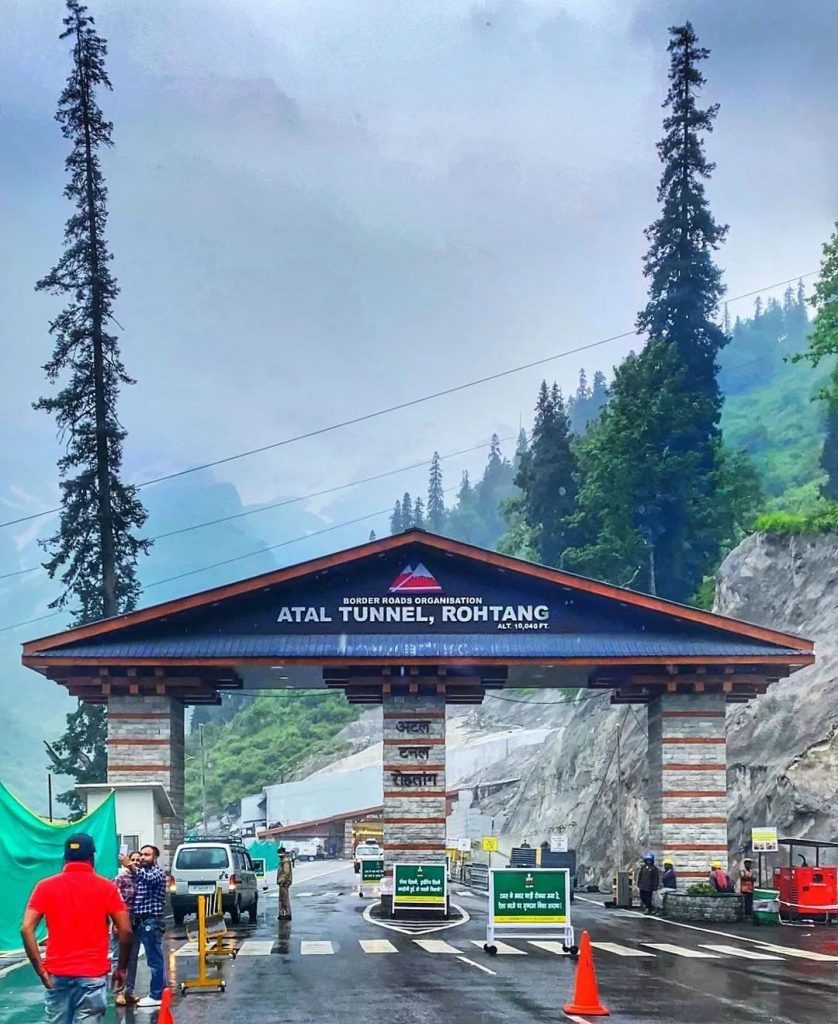
The Atal Tunnel, opened in October 2020, runs 9.02 km under the Pir Panjal range at about 3,000 metres. It’s the longest highway single-tube tunnel above 10,000 feet in the world. It cuts about 45 km and 3 to 4 hours off the old route over Rohtang, and it’s open for most of the year.
For many travellers, the Atal Tunnel and Sissu are now a better day out than Rohtang itself: less traffic, fewer crowds and a more dramatic valley.
Solang Valley, about 12–14 km from Manali, is the town’s playground: meadows in summer, snow in winter, and a ring of mountains all around.
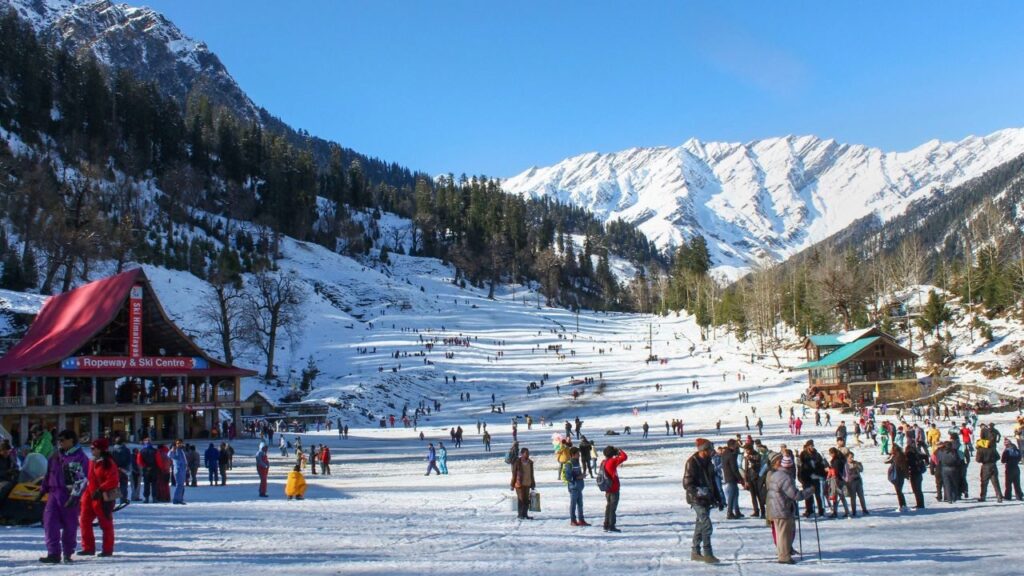
Go early in the morning. In peak season the road to Solang can be one long traffic jam by 11 a.m. Activities aren’t included in our tours, but we’ll point you to operators we trust.
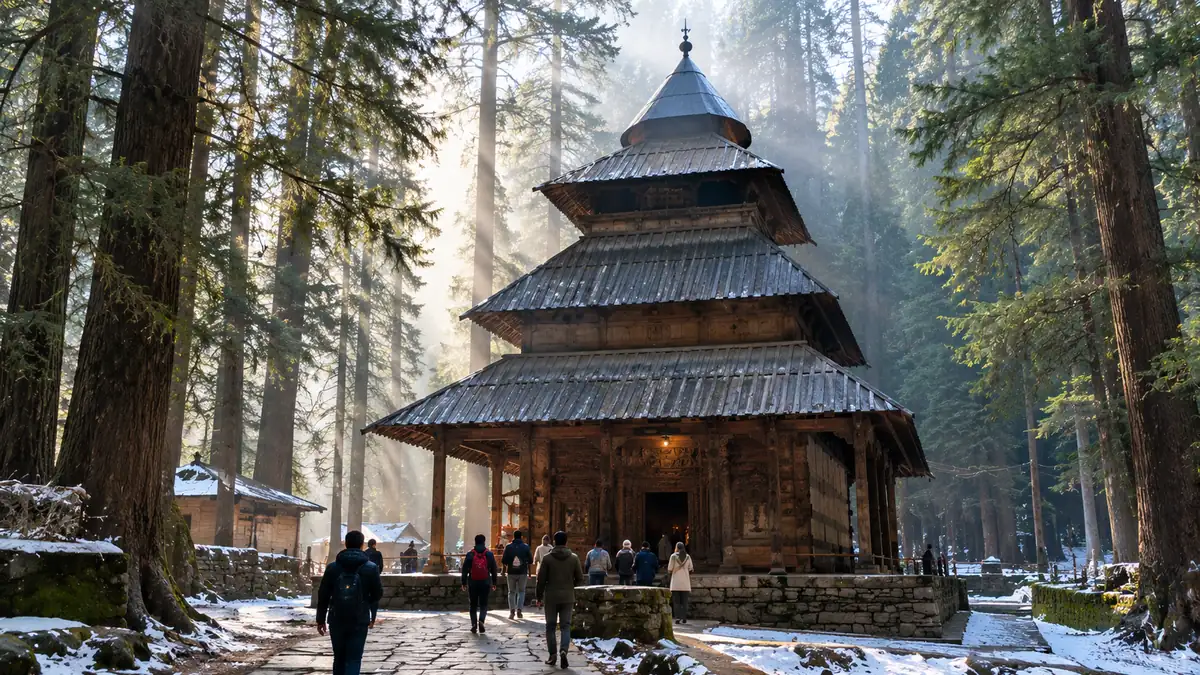
Hadimba Devi Temple, built in 1553 by Maharaja Bahadur Singh of Kullu, stands in a silent forest of giant deodar cedars about 2 km above the Mall Road. Its four-tiered wooden pagoda roof is carved with animals and gods, and instead of an idol, the shrine is built around a natural rock with footprints believed to be the goddess’s.
From the temple, walk up into Old Manali: stone-and-wood houses, apple orchards, cafés along the Manalsu stream, and the small Manu Temple at the top of the village.
| Place | What it is | Tip |
|---|---|---|
| Vashisht Temple and hot springs | Stone temple and natural hot-water baths in a village above the Beas | Free. Combine it with the Jogini Waterfall walk. |
| Jogini Waterfall | A tall waterfall reached by an easy hike from Vashisht | About 2 to 3 hours return |
| Naggar Castle | A 15th-century castle and the Nicholas Roerich Art Gallery, about 21 km south | Lovely views over the Kullu Valley |
| Mall Road | Shopping, Tibetan market and cafés | Best in the evening |
| River rafting on the Beas | Near Kullu, in season | Use licensed operators with proper safety gear |
| Sethan and Hampta villages | Quiet mountain villages above Manali | Snow views and silence |
| Time | What you can do |
|---|---|
| 2 nights | Hadimba Temple, Old Manali, Vashisht and one big day out (Solang or the Atal Tunnel). Rushed. |
| 3 nights (our recommendation) | All of the above, plus a second big day out: Rohtang or Sissu, and Solang |
| 4–5 nights | Add Naggar, a village walk, rafting, or simply time to slow down |
| Day | Plan |
|---|---|
| Day 1 | Arrive from Shimla or Chandigarh along the Beas and through Kullu. Evening on the Mall Road. |
| Day 2 | Early start through the Atal Tunnel to Sissu and the Lahaul Valley, or up to Rohtang Pass in season with a permit. Back by afternoon. Evening in Old Manali. |
| Day 3 | Early morning at Solang Valley before the crowds. Afternoon at Hadimba Temple, Vashisht hot springs and the Jogini Waterfall walk. |
| Day 4 | Leave for Dharamshala (about 6–7 hours) or start the journey back towards Delhi. |
Want this built around your dates? Our tailor-made travel team will plan it for you.

We don’t run hotels and we earn nothing from yours. If you’d like, we’ll book one for you at cost.
| From Manali to | Approx. drive | Why go |
|---|---|---|
| Dharamshala / McLeod Ganj | 6 to 7 hours | Tibetan culture and the Dalai Lama’s temple |
| Kasol and the Parvati Valley | About 3 hours | A riverside village, cafés and short hikes |
| Shimla | 7 to 8 hours | The colonial summer capital and the toy train |
| Spiti Valley (via Atal Tunnel) | Long mountain days, in season only | High-altitude desert and ancient monasteries |
| Leh (via Atal Tunnel) | 2 days, in summer only | One of the world’s great high-altitude road trips |
Coming from Amritsar? Read our Amritsar travel guide. It combines beautifully with Dharamshala and Manali.
Our 8-day Shimla and Manali tour from Delhi is priced for the whole vehicle with its driver, not per head:
| Reisen als | Fahrzeug | 8-day tour price |
|---|---|---|
| 1 to 3 travellers | Limousine | USD 800 |
| 4 to 5 travellers | SUV | USD 1,096 |
| 6 to 8 travellers | Tempo Traveller | USD 1,440 |
That covers the car, an experienced mountain driver, fuel, tolls, state taxes and parking. Hotels, meals, permits and activities are extra, and we’ll arrange them at cost if you want. Himalayan routes are priced separately from our plains day rates because they’re slower and harder on the vehicle. See Hire a Car and Driver in India and how driver pricing works in India.
Thinking of driving yourself? Read Should You Drive Yourself in India? first. Tipping your driver is always your choice (see our tipping guide).
Tell us your dates, how many of you are travelling and what you want to see. We reply within 24 hours with a fixed price for the car and driver. If you’d like a detailed day-by-day itinerary, it costs €100, and the full €100 is deducted from your tour price when you book. There is no obligation.
Individuell durch Indien & Nepal
Sagen Sie uns, was Sie lieben, und wir antworten innerhalb von 24 Stunden mit einem Festpreis. Eine ausführliche Tag-für-Tag-Reiseroute kostet €100, die vollständig vom Reisepreis abgezogen werden.
Wählen Sie ein oder mehrere Ziele — Indien und Nepal lassen sich frei kombinieren.
So finden wir das richtige Tempo, die passenden Unterkünfte und Aktivitäten.
Wir antworten innerhalb von 24 Stunden. Niemals Spam.
Before you finalise your trip, run through the eight questions at the heart of this Manali travel guide:
If you can answer all eight, your Manali plan is ready.
A good Manali trip isn’t about ticking off Rohtang, Solang and the Mall Road in two rushed days. It’s about the right season, the right pace, and being on the road early while the mountains are clear and the valley is quiet.
Pick your month. Break the drive. Stay three nights. Start early. Manali will do the rest.
March to June and mid-September to November for pleasant weather and clear views, and January to February for snow. Avoid July and August, when landslides and road closures are common.
January and February bring the most reliable snowfall in and around the town. December snow isn’t guaranteed. Rohtang and Sissu can have snow much later into spring.
About 540 km, taking 12 to 14 hours. We recommend breaking the journey overnight in Shimla or Chandigarh.
Three nights, as in the 3-day Manali itinerary above. That’s enough for Old Manali, Hadimba Temple, Solang Valley and a day trip to Rohtang or through the Atal Tunnel to Sissu.
Yes. Vehicles need an online permit, about ₹550 per car, and only around 1,200 tourist vehicles are allowed each day. Permits can usually only be booked a day or two ahead.
Usually from about May–June until November, depending on snow. The exact opening date changes every year.
For most of the year, yes, although heavy snow can close the approach roads for short periods. It gives year-round access to the Lahaul Valley and Sissu.
9.02 km. It’s the longest highway single-tube tunnel above 10,000 feet in the world, opened in October 2020.
The Rohtang permit isn’t needed for the tunnel, but Lahaul has its own entry rules that change from time to time. Your driver will check and handle them on the day.
Hadimba Devi Temple, Old Manali, Vashisht hot springs, the Jogini Waterfall walk, Solang Valley, Rohtang Pass (in season), the Atal Tunnel and Sissu, Naggar Castle and the Mall Road.
Short flights start from roughly ₹1,000–1,500, and longer flights cost more. Prices and flight length vary by operator, so agree both before you go up.
Yes, entry is free. It’s open roughly from 8:00 a.m. to 6:00 p.m. Go early to avoid the crowds.
No. The nearest major railheads are Chandigarh and Kalka. Most travellers come by road, by overnight bus, or fly to Bhuntar (Kullu–Manali Airport), about 50 km away.
July and August bring landslides and road closures, and the Kullu–Manali road has been badly damaged by Beas floods in recent monsoons. We don’t recommend travelling then.
Yes. It’s the classic Himachal circuit. See our 8-day Shimla and Manali tour or the longer North India Himalayan tour.
Our 8-day Shimla and Manali tour from Delhi costs USD 800 for a sedan (1–3 travellers), USD 1,096 for an SUV and USD 1,440 for a Tempo Traveller, including fuel, tolls, state taxes, parking and the driver.
Yes. It’s written for the October 2026 to June 2027 season. Rohtang dates, permit rules and activity prices change every year, so confirm them locally.
A great Manali trip isn’t about fitting everything in. It’s about timing.
The right month? The drive broken in two? Three nights? A backup for Rohtang? An early start? A driver who knows the mountains?
If the answer is yes, you’re going to see Manali at its best. If not, you might spend more time in traffic than in the mountains.
And once you plan around the season, using this Manali travel guide becomes simple. For more of Himachal, explore our Manali tours or read about combining the mountains with the Golden Triangle.
See the 8-day Shimla and Manali tour · Car and driver rates in India · Plan my trip