By the Khadaka Family · GoIndiaNepal (formerly The Pearls of India) · Planning Nepal & Rajasthan tours since 1996
Nepal is every traveler’s Himalayan dream. But when it comes to the best places to visit in Nepal from September to December 2026, the choices can feel overwhelming. Every trekking blog, every Instagram reel, every adventure magazine has covered Everest Base Camp, the Annapurna Circuit, the temples of Kathmandu, and the lakes of Pokhara. But almost none of them are written by people who have actually been arranging these journeys for three decades.
We have. Since 1996, our family has guided travelers from over 40 countries through every corner of Nepal — from first-time trekkers booking their first Himalayan foothills adventure to seasoned mountaineers preparing for Everest expeditions. This guide is what we’ve learned: the routes that work, the seasons that deliver, the moments that turn a good Nepal Tour into one you’ll talk about for the rest of your life.
If you only have a few minutes, skip to the section that fits you:
A Nepal Tour is a multi-destination journey through this Himalayan nation — roughly the size of Arkansas but with vertical relief that defies imagination — built around its ancient temples, world-class trekking routes, serene lakes, and wildlife-rich jungles.
Most Nepal Tours include some combination of:
A complete Nepal Tour takes 8-18 days. We design every itinerary around what matters most to you — speed, comfort, budget, photography, spirituality, or quiet immersion in the Himalayas.
Ideal months: September through December
This window is widely considered the best time to visit Nepal for good reason. The monsoon rains (June to August) have washed the dust from the mountains, leaving the landscape impossibly green and vibrant. The skies clear to reveal the Himalayas with astonishing clarity — you can see the peaks from Kathmandu and Pokhara on the best days.
The monsoon begins to retreat around mid-September. The air is fresh, the hills are at their greenest, and the trails start to dry out. It’s a fantastic “shoulder season” with fewer crowds and still-lush landscapes.
Pro tip from 30 years of operations: September is when we send our photography-focused travelers. The combination of lingering greenery and clearing skies produces the most dramatic images of the year.
October is the golden month for Nepal travel. The weather is practically perfect — warm, sunny days and cool, crisp nights. Visibility is at its best all year; you can see the Himalayas from Kathmandu and Pokhara with breathtaking clarity.
Pro tip from 30 years of operations: The period between Dashain and Tihar (late October to early November) is our most booked window. If you want October, confirm your trekking permits and hotel rooms by June at the latest.
The crowds begin to thin, but the weather remains excellent. Days are still pleasant, though nights get colder, especially at higher elevations. It’s an ideal time for trekkers and photographers who want the mountains in sharp, crystal-clear light with fewer people on the trails.
Pro tip from 30 years of operations: November is when experienced trekkers target the Everest and Annapurna regions. The post-monsoon clarity is still there, but the trails are less crowded. Our favorite month for guiding.
Winter starts to set in, bringing cold temperatures and occasional snow to the high mountains. However, the visibility is often the clearest of the entire year, and the trekking trails are remarkably quiet. It’s a magical time for those seeking solitude and stunning winter landscapes.
Pro tip from 30 years of operations: December is our recommended month for wildlife safaris in Chitwan (animals congregate around water sources) and for lower-altitude treks like Poon Hill. High-altitude treks (Everest Base Camp, Annapurna Circuit) require serious cold-weather preparation.
The Kathmandu Valley is the spiritual and cultural soul of Nepal — a living museum of ancient temples, bustling bazaars, and centuries-old traditions. It’s where every Nepal Tour begins, and for good reason.
Kathmandu Durbar Square
Wander through historic courtyards filled with intricately carved temples and palaces that reveal the valley’s medieval heritage. The Hanuman Dhoka Palace, the Kumari Ghar (home of the living goddess), and the Taleju Temple are unmissable.
What we tell our clients honestly: The 2015 earthquake damaged parts of Durbar Square. Reconstruction is ongoing. Some temples are still under scaffolding. Visit anyway — the resilience of the Nepali people is as moving as the architecture itself.
Boudhanath Stupa
One of the largest Buddhist stupas in the world, surrounded by monasteries and prayer wheels. This is a place of profound peace and spiritual energy. We recommend visiting at sunset when monks begin their evening prayers and the butter lamps are lit.
Swayambhunath (The Monkey Temple)
Perched on a hilltop, this ancient stupa offers panoramic views of the Kathmandu Valley. The blend of Hindu and Buddhist traditions, the prayer flags fluttering in the wind, and the resident monkeys make it unforgettable.
Bhaktapur
Often overlooked by rushed itineraries, Bhaktapur is the best-preserved of the three medieval cities in the valley. The Nyatapola Temple, the Pottery Square, and the Peacock Window are treasures. We always include Bhaktapur in our 12+ day tours.
Our insider tip: Skip the tourist restaurants in Thamel and eat at the small Newari eateries in Bhaktapur or Patan. The authentic chhoela (spiced grilled buffalo) and bara (lentil pancakes) are life-changing.
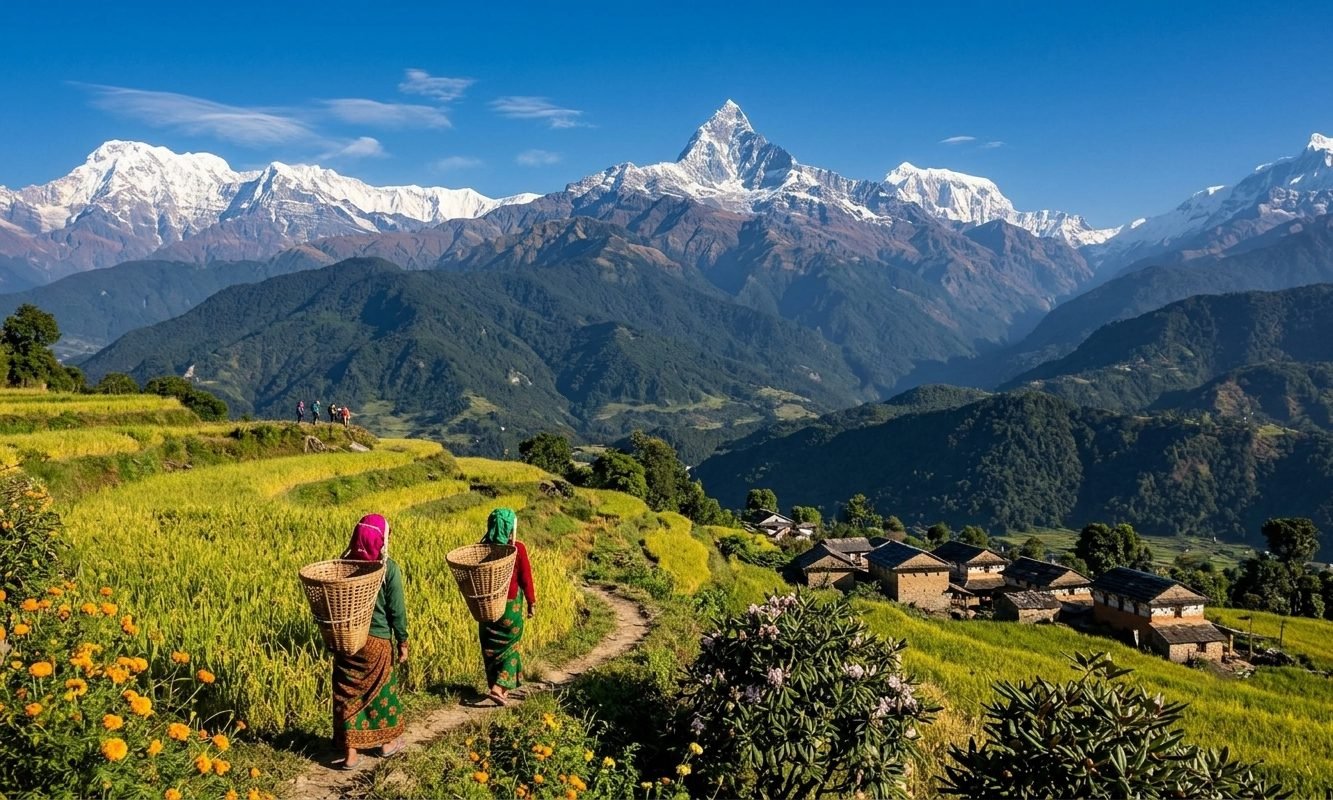
A stark contrast to the hustle of Kathmandu, Pokhara is a relaxed lakeside city offering stunning views of the Annapurna range reflected in the tranquil waters of Phewa Lake. It’s the adventure capital of Nepal and the gateway to the Annapurna region.
Sunrise at Sarangkot
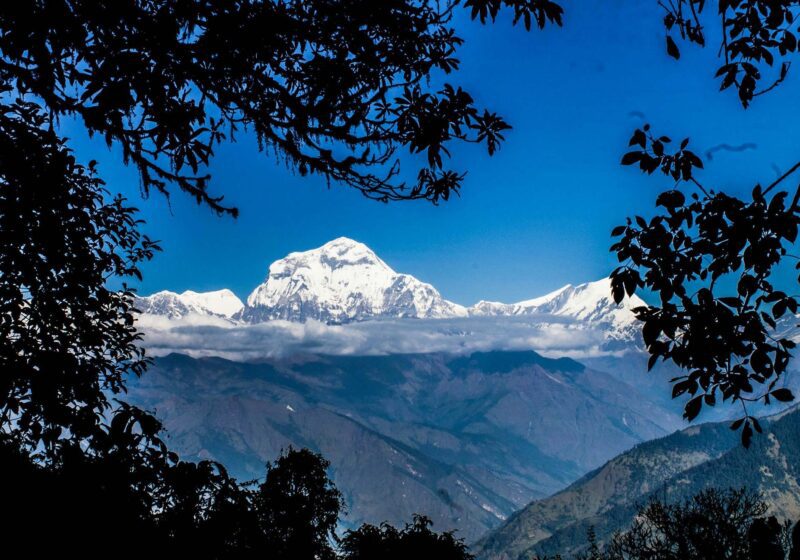
A short drive from town, Sarangkot is famous for its breathtaking sunrise views over the Himalayas. The sight of the sun painting Dhaulagiri, Annapurna, and Machhapuchhare (the Fishtail Mountain) in shades of gold and pink is worth the pre-dawn wake-up call.
Boating on Phewa Lake
Paddle across the lake for views of the mountains reflected in the water. Visit the small Tal Barahi Temple set on an island in the middle of the lake. The sunset boat rides are spectacular but crowded — we book the late-afternoon slot.
Adventure Activities
Pokhara is the hub for paragliding, zip-lining, and ultralight flights. The clear autumn skies make this the ideal time for aerial adventures. Paragliding from Sarangkot over the lake and towards the mountains is an experience you’ll never forget.
World Peace Pagoda
A massive white Buddhist stupa on a hilltop across the lake. The walk up takes about an hour, and the views of Pokhara, Phewa Lake, and the Annapurna range are jaw-dropping.
Our insider tip: Don’t pay extra for a “lake view” hotel unless you can afford a true lakeside property. The public Gangaur Ghat offers exactly the same view, and you can sit there for free. For the best photography, hire a local boatman to take you to the middle of the lake at sunrise.
Travel south to the subtropical plains of the Terai for a completely different Nepalese experience. Chitwan National Park is a UNESCO World Heritage Site and offers some of the best wildlife viewing in Asia.
Wildlife Safari
Go on a jeep safari or a canoe ride to spot the elusive one-horned rhinoceros, the Bengal tiger (if you’re lucky!), crocodiles, and a dazzling array of birdlife. The dry season from October to December is fantastic for wildlife sightings as animals congregate around water sources.
Tharu Village Visit
The indigenous Tharu people have lived in the Terai for centuries, developing a unique culture adapted to the jungles. Visit a Tharu village to learn about their traditional farming, architecture, and the mesmerizing Tharu stick dance performed around the campfire.
Elephant Breeding Center
Located inside the park, this center is home to several elephants and their calves. It’s educational and humbling to see these magnificent creatures up close.
Our insider tip: December is prime time for birdwatching. Over 500 species have been recorded in Chitwan. Early morning canoe rides along the Rapti River offer the best sightings of water birds and the occasional rhino coming to drink.
For many, a trip to Nepal is synonymous with trekking, and for good reason. The September to December window is the best trekking season of the year.
Everest Base Camp Trek (12-14 Days)
This is the iconic trek for a reason. The journey through the Khumbu region, home to the legendary Sherpa people, offers breathtaking views of Everest, Lhotse, Nuptse, and Ama Dablam. From September to November, the skies are clear, making the sunrise from Kala Patthar an unforgettable experience. December brings colder temperatures and quieter trails for a more solitary experience.
What we tell our clients honestly: The Everest Base Camp trek is not a wilderness expedition — it’s a well-trodden trail with teahouses, lodges, and hundreds of other trekkers. That doesn’t diminish the experience. The landscape, the culture, and the sense of achievement are still profound. The trick is to avoid the October crowds by trekking in November.
Annapurna Circuit Trek (12-18 Days)
One of the most diverse treks in the world, the Annapurna Circuit takes you from subtropical forests and terraced rice paddies to a high-altitude desert. The highlight is crossing the Thorong La Pass (5,416m), which is most safely attempted during the stable weather of September to November.
Annapurna Base Camp Trek (7-12 Days)
A shorter but equally rewarding trek that leads you into the heart of the Annapurna Sanctuary, surrounded by towering peaks like Machhapuchhare. The rhododendron forests are particularly beautiful in the autumn light.
Poon Hill Trek (4-5 Days)
The perfect introduction to Himalayan trekking. Poon Hill offers panoramic views of the Annapurna and Dhaulagiri ranges from a relatively low altitude (3,210m). It’s accessible, safe, and delivers some of the most spectacular sunrise views in the world. We recommend this for first-time trekkers and families.
Our insider tip: As of April 2023, solo trekking is no longer permitted in many regions of Nepal. Hiring a licensed guide or joining a group is mandatory for safety and logistical support. It also greatly enriches your cultural experience. We’ve been placing travelers with trusted guides since 1996 — our guides speak excellent English, know the trails intimately, and know exactly where to stop for the best cups of tea.
For spiritually inclined travelers, Lumbini — the birthplace of Siddhartha Gautama, who became the Buddha — is a profound stop. The Maya Devi Temple, marking the exact spot of his birth, is a UNESCO World Heritage Site surrounded by monasteries built by Buddhist communities from around the world.
Our insider tip: Visit early morning when the chanting of monks fills the air. The peace at dawn is unmatched.
Perched on a ridge between Kathmandu and Pokhara, Bandipur is a beautifully preserved Newari hilltop town. It offers stunning mountain views, traditional architecture, and a slower pace that many travelers crave after the chaos of Kathmandu. It’s one of the best places to visit in Nepal if you want to simply be.
Our insider tip: Bandipur is perfect for a quiet overnight stay on the drive between Kathmandu and Pokhara. Most travelers rush through — you shouldn’t.
Nepal’s festival calendar is one reason this country outranks every other Himalayan destination for cultural travelers. Plan your Nepal Tour around these dates whenever possible.
| Festival | Dates (2026) | Location | Why It Matters |
|---|---|---|---|
| Indra Jatra | September 21-28 | Kathmandu | Chariot processions of the living goddess Kumari, masked dances, traditional music |
| Dashain | October 12-26 | Nationwide | Nepal’s biggest festival — family gatherings, kite flying, tika blessings on foreheads |
| Tihar | November 8-12 | Nationwide | Festival of Lights — oil lamps, rangoli, worship of crows, dogs, cows, and siblings |
| Chhath Puja | November 12-14 | Terai region | Sun god worship at riverbanks — most spectacular in Janakpur and Chitwan |
| National Day | December 28 | Kathmandu | Celebrations marking Nepal’s modern history |
A note on Dashain and Tihar: These are Nepal’s two biggest festivals. The entire country comes alive with celebrations. However, transportation can be challenging as Nepalis return to their villages, and some shops may close for several days. If you want to experience these festivals, book everything by August. If you want a quieter trip, travel between festivals (late October to early November is our recommendation).
This is the most-booked Nepal Tour structure for first-time visitors. It balances depth and movement without exhausting anyone.
| Day | Destination | Highlights |
|---|---|---|
| 1-2 | Kathmandu | Arrival, Boudhanath Stupa, Swayambhunath, Kathmandu Durbar Square |
| 3-4 | Pokhara | Drive (6 hours) or flight (25 mins), Phewa Lake boating, Sarangkot sunrise, World Peace Pagoda |
| 5-6 | Chitwan | Drive (5 hours), jungle safari, canoe ride, Tharu cultural evening |
| 7 | Return to Kathmandu | Drive (5 hours) or fly (25 mins) |
| 8 | Bhaktapur & Patan | UNESCO Durbar Squares, pottery squares, ancient temples |
| 9-10 | Departure | Final shopping, optional Nagarkot for mountain views, depart |
For travelers who want the complete Nepal experience, including a Himalayan trek.
| Day | Destination | Highlights |
|---|---|---|
| 1-3 | Kathmandu Valley | Full cultural immersion with all three Durbar Squares |
| 4-6 | Pokhara | Sarangkot sunrise, boating, adventure activities |
| 7-11 | Annapurna Trek | Poon Hill or Annapurna Base Camp (depending on time and fitness) |
| 12-13 | Chitwan | Jungle safari, canoe ride, Tharu village visit |
| 14 | Return to Kathmandu | Flight or drive |
| 15 | Departure |
Combining Nepal with India’s Golden Triangle (Delhi, Agra, Jaipur) is one of the smartest decisions you can make if you have the time. Two countries, one trip, dramatically lower per-day cost than two separate journeys.
| Day | Destination | Highlights |
|---|---|---|
| 1-3 | Delhi | Old Delhi, New Delhi, Red Fort, India Gate |
| 4 | Agra | Taj Mahal at sunrise, Agra Fort |
| 5-6 | Jaipur | Amber Fort, City Palace, Jantar Mantar, bazaars |
| 7 | Fly Delhi to Kathmandu | — |
| 8-18 | Full Nepal circuit | As per 10-15 day itineraries above |
Our insider tip: This combined tour is our most popular among international travelers. Two countries, dramatically different experiences, one smooth transition. We handle all logistics — flights, hotels, guides, permits, and border transfers.
For luxury travelers and honeymooners, the most memorable part of a Nepal Tour is often the accommodation. We arrange stays at Nepal’s most iconic heritage properties.
Worth considering:
We can also arrange experiences that don’t appear on standard booking sites: private helicopter flights to Everest, sunset dinners on Phewa Lake, private pujas (blessings) at ancient temples, cooking classes with palace chefs, and sunrise yoga sessions with Himalayan views.
A great Nepal Tour does not require a luxury budget. We design budget-friendly versions of every itinerary above. Here is what genuinely works.
| Category | Per Day (USD) | Per Day (NPR) |
|---|---|---|
| Backpacker | $20-35 | ₹2,600-4,600 |
| Mid-range | $50-75 | ₹6,500-9,800 |
| Comfort | $100-150 | ₹13,000-19,500 |
| Luxury | $200+ | ₹26,000+ |
A 10-day budget Nepal Tour can be done comfortably for around $250-350 per person. We never refuse a budget traveler.
Things we’ve learned from hosting thousands of Nepal Tours.
ATMs are everywhere in cities. Major hotels and restaurants accept cards; local shops, teahouses, and markets do not. Nepali rupees are cash-only for most daily expenses. Carry small denominations for tips, temple donations, and rural purchases. The currency exchange rate is roughly NPR 130-135 to USD 1 (subject to fluctuation).
Nepali SIM cards can be purchased at the airport with your passport and a photo. Ncell and Nepal Telecom both offer tourist SIMs with data packages. Alternatively, use an international roaming package or an eSIM like Airalo. Wi-Fi at hotels is generally good in cities, patchy in remote areas. Trekking teahouses often charge a small fee for Wi-Fi ($2-3 per day).
Pro tip from 30 years of operations: A slow ascent is not a luxury — it’s a safety requirement. We build at least 2-3 acclimatization days into every trekking itinerary. The travelers who skip acclimatization are the ones who get sick or have to turn back.
Modest dress is appreciated everywhere and required at religious sites. Pack breathable, quick-drying fabrics. Layers are essential for trekking — temperatures can vary wildly from warm days to freezing nights. Bring a large scarf or pashmina — useful for covering shoulders at temples, sitting on stone floors, and as a layer for cool evenings.
Drink bottled or filtered water for the first three days while your stomach acclimates. Eat at busy restaurants with high turnover. Stick to cooked food rather than raw salads at small vendors. Beyond that, eat adventurously — Nepali food is distinctive and delicious. Dal bhat, momos, and Newari dishes are must-tries.
Always ask before photographing people, especially women and the elderly. Many sites restrict photography inside sanctums. Respect signs and ask if unsure. Tip people $1-2 if you photograph them at length — it is appreciated and customary.
After three decades, these are the mistakes we see most often.
We are a family-run operator, not a corporate booking platform. Khem “Babu” Khadaka, our founder, has been planning Nepal and India tours since 1996. His philosophy hasn’t changed in 30 years:
“If you’re happy, I am happy.”
We have planned Nepal Tours for honeymooners from Italy, photographers from Japan, retired couples from Australia, multi-generation family groups from California, solo backpackers from South America, and mountaineers from every corner of the globe. Every traveler is different. Every itinerary should be too.
Q: How many days do I need for a Nepal Tour?
The minimum is 6-7 days for a focused Kathmandu-Pokhara circuit. We recommend 10-14 days to include Chitwan and a short trek. Add 5-7 days for a combined Nepal-India Golden Triangle tour.
Q: What’s the best month to visit Nepal in 2026?
October is the absolute peak for weather and festivals. November offers excellent conditions with fewer crowds. September is great for greenery and photography. December is ideal for wildlife safaris and quiet trekking at lower altitudes.
Q: Is Nepal safe for solo female travelers?
Yes, when planned by a reputable operator. We’ve guided hundreds of solo female travelers across Nepal without incident. We can also arrange female drivers and guides on request.
Q: Can I combine a Nepal Tour with the Golden Triangle (Delhi-Agra-Jaipur)?
Yes! Our 18-day combined itinerary is our most popular long-haul option. Two countries, one seamless trip, dramatically better value than two separate journeys.
Q: How much does a Nepal Tour cost in 2026?
| Category | Per Day (USD) | Notes |
|---|---|---|
| Budget | $25-40 | Hostels, local buses, simple meals |
| Standard | $70-120 | Good hotels, private car/guide |
| Comfort | $150-250 | Luxury hotels, private experiences |
| Luxury | $300+ | Heritage properties, helicopter transfers, premium services |
We quote based on your actual preferences, not fixed packages.
Q: Do I need a visa to visit Nepal?
Most travelers can obtain a visa on arrival at Tribhuvan International Airport in Kathmandu or at land border crossings. For those entering overland from India, visas are available at the border. We assist with the process if needed.
Q: Can I see the Himalayas without trekking?
Yes. Pokhara offers stunning Annapurna views from the lakeside. Nagarkot, near Kathmandu, provides panoramic Himalayan views on clear days. Mountain flights from Kathmandu offer a bird’s-eye view of Everest. But the real magic is on the trails.
Q: What should I pack for a Nepal Tour?
Layers are essential. Base layers, fleece or down jacket, waterproof outer shell, sturdy trekking boots, sun hat, sunglasses, sunscreen, water purification tablets, and a headlamp for teahouses. Pack light — teahouses have limited space.
Q: Is it worth visiting Nepal in December?
Absolutely. December offers the clearest views of the year, quiet trails, and excellent wildlife viewing in Chitwan. High-altitude treks are cold but stunning. Lower-altitude treks (Poon Hill, Langtang) remain accessible and beautiful.
There’s no obligation. Send us a message — by WhatsApp, email, or our Plan My Dream Trip form — with your dates, group size, and what kind of experience you’re hoping for. We’ll send back a detailed, personalized itinerary within 24 hours.
📱 WhatsApp: +91 98109 09368
✉️ Email: [email protected]
🏠 Office: Sarita Vihar, New Delhi, India
Namaste, and we hope to be the family planning your Nepal Tour in 2026.
— The Khadaka Family
GoIndiaNepal (formerly The Pearls of India)
Serving travelers since 1996