By Khem “Babu” Khadaka, founder, driving these roads since 1996 · Last updated: 2027 season (October 2026 – June 2027)
The best treks in Nepal for a first-timer are not the famous ones you’ve seen on posters, and the rules for walking them changed in 2023.
Most beginners start by looking at Everest Base Camp, because it’s the name they know. It’s a wonderful trek, but at 5,364 metres and two weeks long it’s a serious one. Nepal has dozens of shorter, lower routes with views that are just as good and far less risk.
The other thing beginners miss is the guide rule. Since 1 April 2023, foreign trekkers in Nepal’s national parks and conservation areas must walk with a licensed guide arranged through a registered agency. The days of turning up in Pokhara and walking off alone are over on most routes.
So instead of asking only “Which trek in Nepal is the most famous?”, it helps to ask a better question:
Which trek gives me the Himalaya I’ve imagined, at an altitude and length I can enjoy, within the rules that now apply to every trekker?
That is what this guide to the best treks in Nepal for beginners is built around. It ranks ten treks by difficulty, length and maximum altitude, from two-day village walks to Everest Base Camp for fit beginners, and explains the permits and guide rules for 2026–27, the best seasons, how to prepare, altitude and insurance, and what our guided Annapurna and Everest treks cost.
We’ve walked all of these best treks in Nepal with guests. We ranked them on four things a first-timer should care about: maximum altitude, number of days, how hard the daily walking is, and how easy the trek is to get to and out of if something goes wrong.
| Trek | Days (from Pokhara or Kathmandu) | Max altitude (approx.) | Difficulty | Best for |
|---|---|---|---|---|
| Ghandruk village trek | 2–3 | 1,940 m | Easy | Families, very short trips |
| Ghorepani Poon Hill | 4–5 | 3,210 m | Easy to moderate | The classic first trek |
| Mohare Danda | 5–6 | 3,300 m | Easy to moderate | Poon Hill views without crowds |
| Mardi Himal | 5–7 | About 4,500 m (viewpoint) | Moderate | Big views on a short trek |
| Khopra Ridge | 7–9 | 3,660 m | Moderate | Quiet ridges and community lodges |
| Annapurna Base Camp | 7–11 | 4,130 m | Moderate | A mountain amphitheatre |
| Langtang Valley | 7–8 | 3,870 m (higher on side trips) | Moderate | Close to Kathmandu, Tamang culture |
| Everest View trek | 5–7 | About 3,880 m | Moderate | Seeing Everest without two weeks |
| Pikey Peak | 5–7 | About 4,065 m | Moderate | Everest views, few trekkers |
| Everest Base Camp | 12–14 | 5,364 m (Kala Patthar 5,545 m) | Challenging | Fit beginners with time |
Altitudes are the commonly quoted figures and vary a little between maps. The days assume a comfortable pace with a guide.
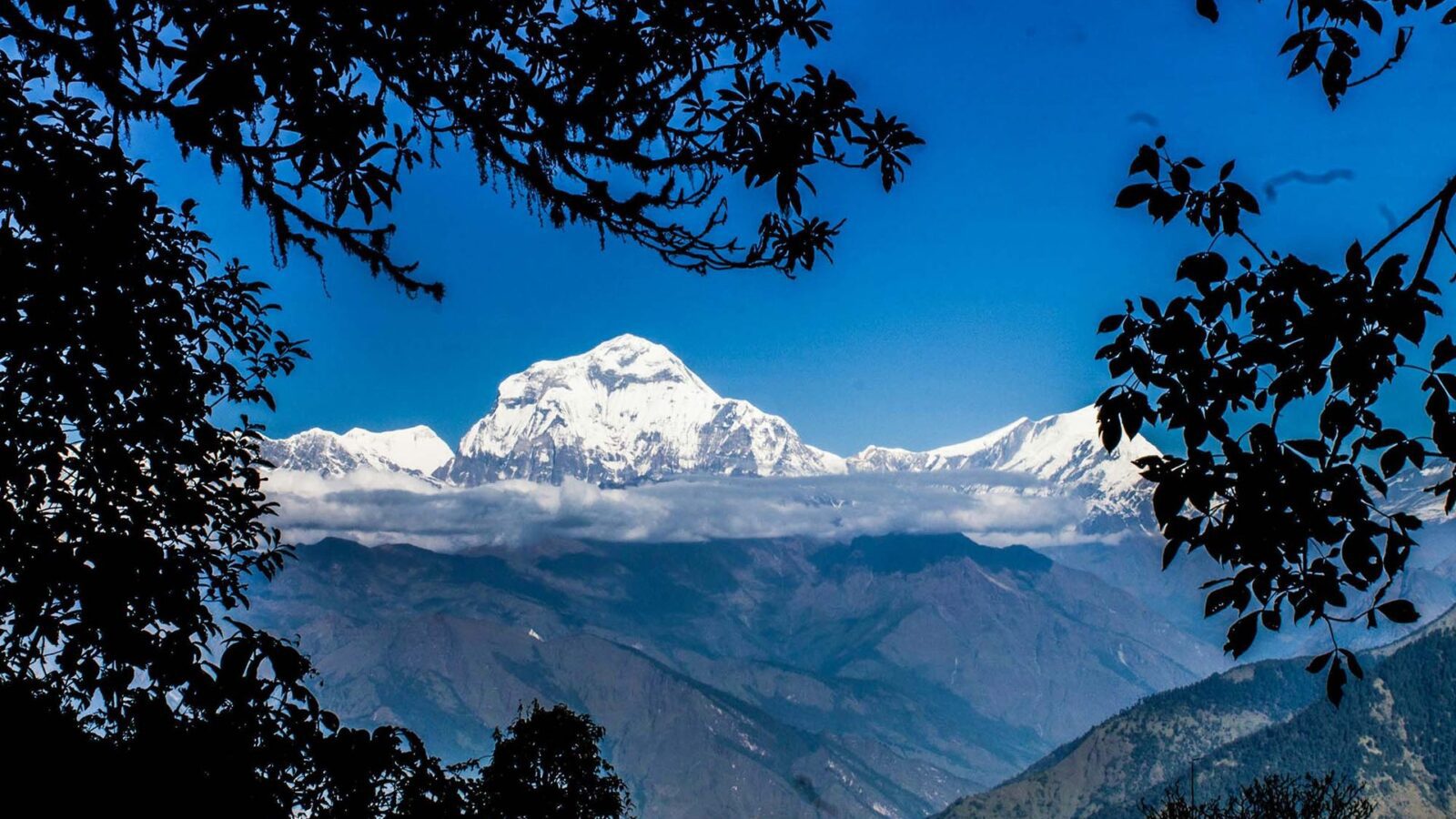
If you only have four or five days, this is the one. It’s the most popular short trek in the country for good reason: a sunrise view from Poon Hill across a wall of peaks, including Dhaulagiri and Annapurna I, both over 8,000 metres.
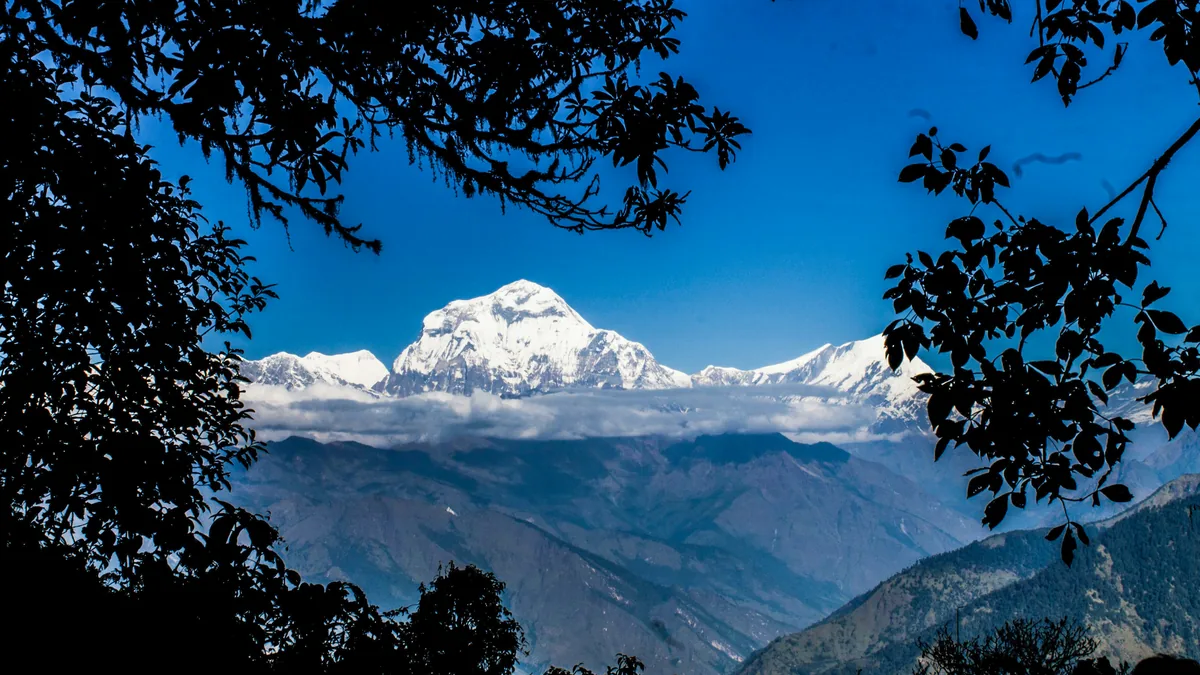
Like most of the best treks in Nepal for beginners, it starts near Pokhara, with a drive of about two hours to the trailhead. You climb through Gurung and Magar villages and rhododendron forest to Ghorepani, at about 2,860 metres, then rise before dawn for the 45-minute climb to Poon Hill (3,210 m).
The hard part is the stone staircases, especially the long climb above Tikhedhunga to Ulleri. Take them slowly. Return via Tadapani and Ghandruk to make a loop.
Best months: October to November for clear views, and March to April when the rhododendrons are in flower. Poon Hill also works in December and January, when it’s cold but quiet.
Ghandruk is a large, beautiful Gurung village of stone houses and slate roofs at about 1,940 metres, facing Annapurna South and the fishtail peak of Machhapuchhre.
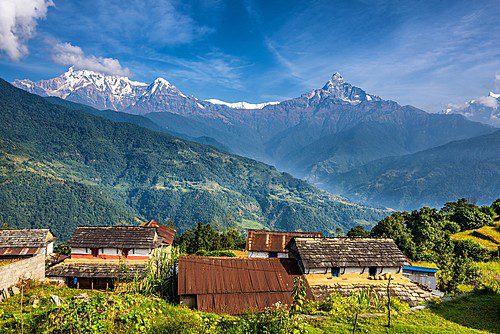
It’s reachable in a day’s walk from the road, so you can do a two or three-day trek from Pokhara, with a night in a village lodge and sunrise over the mountains. Visit the small Gurung museum and walk the lanes in the evening.
This suits families with young children, older travellers and anyone who wants a taste of trekking without the stairs of Poon Hill. You can also combine it with Australian Camp and Dhampus for an even gentler walk with views.
Both are community-run routes near Poon Hill, and both are good for beginners who want fewer people.
Mohare Danda, at about 3,300 metres, has a lodge run by the local community, with profits going to the village. The panorama of Dhaulagiri and the Annapurnas is similar to Poon Hill’s, and on most mornings you’ll share it with only a handful of people. Allow five to six days.
Khopra Ridge (Khopra Danda), at about 3,660 metres, is further off the main trail and takes seven to nine days. It’s a grassy ridge facing Dhaulagiri across the Kali Gandaki gorge. From Khopra, fit trekkers can make a long day to Khayer Lake, a sacred high lake. Lodges are simple, and this feels more remote than its altitude suggests.
Mardi Himal is the newest of the popular routes near Pokhara, and one of the best treks in Nepal for views per day walked. It follows a narrow ridge straight towards Machhapuchhre, through forest and then open grassland.
Most people sleep at High Camp, around 3,580 metres, and climb before dawn to the Upper Viewpoint or on towards Mardi Himal Base Camp at about 4,500 metres. The final climb is steep, and on windy or icy days the guide may turn back at the viewpoint.
Allow five to seven days from Pokhara. The lodges are small, so in October and November it pays to start early in the day. It’s a great choice if you’ve done a little hill walking and want a more mountain-like trek than Poon Hill.
The Annapurna Base Camp trek (ABC) takes you into the Annapurna Sanctuary, a high glacial basin ringed by peaks over 7,000 metres, including Annapurna I. It was first entered by outsiders only in 1956 (Annapurna Sanctuary).
The route climbs up the Modi Khola valley through Chhomrong’s long stone staircases, bamboo forest and the gorge to Machhapuchhre Base Camp (about 3,700 m), then into the sanctuary to Annapurna Base Camp at about 4,130 metres. Sunrise there, with the mountains lighting up all around you, is one of the great moments in Himalayan trekking.
It takes seven to eleven days from Pokhara, depending on whether you add Poon Hill at the start. The walking is moderate, with a lot of up and down.
A safety note: the stretch between Deurali and Machhapuchhre Base Camp is exposed to avalanches after heavy snow, mainly in late winter and spring. Guides check conditions daily and will hold you at Deurali if needed. This is one reason the guide rule makes sense.
Our 11-day Annapurna Base Camp trek starts from Kathmandu and includes the full sanctuary route. Machhapuchhre, above it all, is sacred to local people and has never been officially climbed.
Langtang is one of the best treks in Nepal if you’re short of time: it’s the closest major trekking area to Kathmandu, a drive of about seven to eight hours to Syabrubesi, so there’s no domestic flight to wait for.
The trail follows the Langtang Khola through forest into a wide glacial valley to Kyanjin Gompa at about 3,870 metres, a small monastery and cheese factory village. From there, day hikes climb Kyanjin Ri (about 4,700 m) or, for the fit, Tserko Ri (close to 5,000 m).
Langtang village was destroyed by a landslide in the 2015 earthquake, and many people died. It has since been rebuilt, and trekking brings important income to the Tamang communities here. Allow seven to eight days. You’ll need a Langtang National Park permit (NPR 3,000) and a licensed guide.
You don’t need two weeks to see Everest. Two of the best treks in Nepal for a first view of it are short.
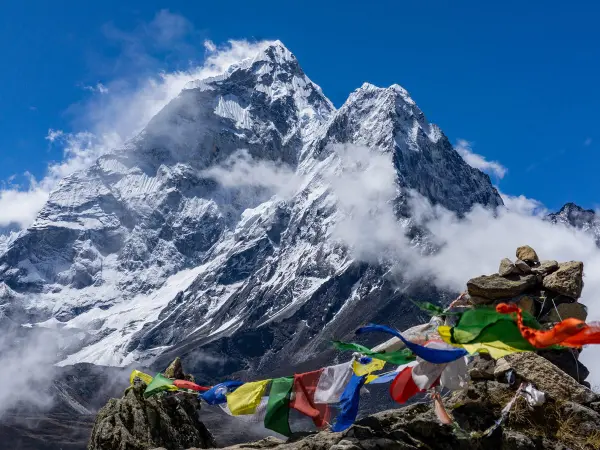
The Everest View trek flies to Lukla (2,860 m), walks up the Dudh Koshi to Namche Bazaar (3,440 m) and climbs to the Hotel Everest View and the Sherpa villages of Khumjung and Khunde, at about 3,800 to 3,900 metres. From there, on a clear morning, Everest, Lhotse and Ama Dablam are in front of you. Allow five to seven days, including spare time for Lukla flights, which in peak season often leave from Ramechhap (Manthali), a four to five hour drive from Kathmandu.
Pikey Peak, at about 4,065 metres in the lower Solu region, is reached by road from Kathmandu, with no flight at all. Its summit gives one of the widest views of the Everest range in Nepal, and you’ll see few other trekkers. Allow five to seven days. Nights are cold, and lodges are basic.
Everest Base Camp is on almost every list of the best treks in Nepal, and fit beginners do complete it every season. But you should go in with your eyes open.
If you’re fit, have done a few long hill days before, and have the time, it’s an unforgettable trek. If you’re unsure, start with Annapurna Base Camp and come back for Everest. Read our full Everest Base Camp trek guide before deciding.
This is what every first-timer needs to know about the rules.
| Permit or rule | Cost (foreign nationals) | Where it applies |
|---|---|---|
| Licensed guide through a registered agency | Compulsory since 1 April 2023 | National parks and conservation areas: Annapurna, Langtang, Manaslu, Mustang and more |
| TIMS card | NPR 2,000 (NPR 1,000 for SAARC nationals) | Annapurna, Langtang and most regions outside Everest |
| ACAP (Annapurna Conservation Area) | NPR 3,000 | Poon Hill, Ghandruk, Mardi Himal, ABC, Khopra, Mohare |
| Langtang National Park | NPR 3,000 | Langtang Valley |
| Sagarmatha National Park | NPR 3,000 | Everest region |
| Khumbu Pasang Lhamu local permit | NPR 3,000 (raised from NPR 2,000 in 2025) | Everest region, in place of TIMS |
| Restricted areas (e.g. Upper Mustang) | From USD 50 per day; solo permits allowed since March 2026 | Upper Mustang, Manaslu, Upper Dolpo and others |
The TIMS fee is published by the Nepal Tourism Board, which also says a licensed guide is required on the main trekking routes in protected areas. The Sagarmatha park fee is on the Sagarmatha National Park page, and ACAP is administered by the National Trust for Nature Conservation.
The Everest exception: when the guide rule came in, the local government of the Khumbu region said it would still allow solo trekkers with its own trek card (report). How strictly the rule is applied there has varied since. We treat a guide as essential for any beginner, everywhere.
For restricted areas such as Upper Mustang, the fees and group rules changed in 2025–26; see our Upper Mustang trek guide.
Seven of the ten best treks in Nepal on this list start within two or three hours’ drive of Pokhara, Nepal’s lakeside second city.

Pokhara sits at about 820 metres on Phewa Lake, with Machhapuchhre and the Annapurnas rising behind it. It’s reached by a short flight from Kathmandu to its international airport or a six to eight hour drive.
Give yourself a day in Pokhara before and after your trek. Use the first to check gear and buy anything you’ve forgotten, and the second to rest, eat well and perhaps paraglide from Sarangkot. Our Pokhara travel guide covers the town in detail.
| Months | Conditions | Good for beginners? |
|---|---|---|
| October to November | Dry, clear, stable; cold nights at altitude | The best season; busiest trails |
| December to February | Cold, clear; snow above about 3,500 m | Yes for low treks (Ghandruk, Poon Hill); harder for ABC and higher |
| March to May | Warmer, rhododendrons in bloom, some afternoon cloud | Excellent; second-best season |
| June to September | Monsoon rain, leeches, cloud, landslides and flight delays | Not recommended, except rain-shadow Upper Mustang |
For a first go at the best treks in Nepal, October or early November is ideal. If you want fewer people and flowers, go in late March or April. Avoid the monsoon: the trails are slippery, the views are hidden, and roads to the trailheads are often blocked.
None of the best treks in Nepal needs an athlete, but they all need legs for stairs. Start eight to twelve weeks before you go. Walk for three to five hours on hilly ground with a light pack at weekends, and climb stairs during the week. Back-to-back long days are the best test.

Travel insurance must cover trekking to the maximum altitude of your route (4,500 metres covers most beginner treks; 6,000 metres for Everest Base Camp) and helicopter evacuation. For kit, bring broken-in boots, layers including a down jacket, a good sleeping bag, rain gear, a headtorch, water purification and a small first-aid kit. Porters carry the main bag on our treks.
Our treks are private and priced per person, depending on the size of your group. Each includes teahouse lodging, all meals on the trek, a licensed guide, a porter, permits and ground transport.
| Trek | Small group (6–8) | Family (4–5) | Couple (2–3) | Solo |
|---|---|---|---|---|
| Annapurna Base Camp trek, 11 days | USD 1,005 | USD 1,075 | USD 1,140 | USD 1,710 |
| Everest Base Camp trek, 14 days | USD 1,320 | USD 1,650 | USD 2,000 | USD 2,650 |
| Upper Mustang trek, 14 days | USD 1,285 | USD 1,600 | USD 1,950 | USD 2,575 |
Not included: your Nepal visa, international flights, domestic mountain flights such as Lukla, travel insurance and tips. Tipping your guide and porter is always your choice; our tipping guide gives typical amounts.
Poon Hill, Mardi Himal, Mohare, Khopra, Langtang and the other shorter treks are built to order. Tell us your dates and we’ll send a fixed price. Add a few days in Kathmandu, Chitwan or Lumbini with our Nepal car and driver service, or see all our Nepal tours.
Tell us your dates, your fitness and how many of you are trekking, and we’ll suggest the best trek for you. We reply within 24 hours with a fixed per-person price. If you’d like a detailed day-by-day itinerary, it costs €100, and the full €100 is deducted from your tour price when you book. There is no obligation.
Tailor-Made India & Nepal
Tell us what you love and we reply within 24 hours with a fixed price. A detailed day-by-day itinerary costs €100, deducted in full from your tour price.
Pick one or more destinations — you can mix India and Nepal freely.
This helps us match the right pace, stay and activities.
We reply within 24 hours. No spam, ever.
Before you book, run through these eight questions:
If you can answer yes to most of these, you’ve picked well from the best treks in Nepal.
Think of the best treks in Nepal for beginners as three steps up.
Village treks of two to six days below about 3,300 metres: Ghandruk, Poon Hill, Mohare Danda. Mountain treks of five to eleven days up to about 4,500 metres: Mardi Himal, Khopra, Langtang, Annapurna Base Camp, the Everest View trek and Pikey Peak. The big one: Everest Base Camp, for fit beginners with two weeks.
Start at the step that fits you, go in the right season with a licensed guide, and respect the altitude. Then this guide to the best treks in Nepal has done its job.
For beginners, the best treks in Nepal are Ghorepani Poon Hill (4 to 5 days, 3,210 m), Ghandruk (2 to 3 days), Mardi Himal (5 to 7 days) and Annapurna Base Camp (7 to 11 days, 4,130 m). All begin near Pokhara and have good lodges.
The Ghandruk village trek from Pokhara is the easiest worthwhile trek, at 2 to 3 days and below 2,000 metres. Ghorepani Poon Hill is the easiest classic trek, though it has many stone steps.
The best treks in Nepal for a short trip are Ghandruk (2 to 3 days), Poon Hill (4 to 5 days), Mardi Himal (5 to 7 days), Mohare Danda (5 to 6 days) and the Everest View trek (5 to 7 days).
Usually 4 to 5 days from Pokhara, including a drive of about two hours to the trailhead. Poon Hill is at 3,210 metres, reached by a 45-minute climb from Ghorepani before sunrise.
It is a moderate trek of 7 to 11 days, with long stone staircases and a maximum altitude of about 4,130 metres. Fit beginners manage it well with a guide and a steady pace.
Not in most places. Since 1 April 2023, foreign trekkers in Nepal’s national parks and conservation areas must use a licensed guide arranged through a registered agency. The Everest region has applied the rule differently, but we recommend a guide everywhere.
The Nepal Tourism Board lists the TIMS fee as NPR 2,000 for most foreign nationals and NPR 1,000 for SAARC citizens. It is issued through your trekking agency.
NPR 3,000 for most foreign nationals and NPR 1,000 for SAARC nationals. It is needed for Poon Hill, Ghandruk, Mardi Himal, ABC and the other Annapurna region treks.
The Sagarmatha National Park permit (NPR 3,000) and the Khumbu Pasang Lhamu rural municipality permit, which trekking agencies report as NPR 3,000 since 2025. TIMS is not needed in the Everest region.
October to November is the best season for the best treks in Nepal, with dry, clear weather. March to May is the second-best, with rhododendrons in flower. Avoid the June to September monsoon for most treks.
It is one of the best treks in Nepal for fit beginners with 12 to 14 days, but it goes to 5,364 metres and altitude sickness is common. If you’re unsure, start with Annapurna Base Camp or the Everest View trek.
The Everest View trek, 5 to 7 days from Lukla to Namche Bazaar and the Hotel Everest View, or Pikey Peak, 5 to 7 days by road from Kathmandu with no flight.
The Langtang Valley trek, which starts with a drive of about 7 to 8 hours to Syabrubesi and reaches Kyanjin Gompa at about 3,870 metres in 7 to 8 days.
You should be able to walk 5 to 6 hours on hilly ground with a light pack and feel fine the next day. Train for 8 to 12 weeks with long weekend walks and stair climbing.
Our 11-day Annapurna Base Camp trek costs USD 1,005 to 1,710 per person and our 14-day Everest Base Camp trek USD 1,320 to 2,650, depending on group size, including guide, porter, permits, lodging and meals.
Yes. It’s written for the 2026–27 season and reflects the guide rule, current permit fees and the 2026 changes for restricted areas. Fees can change, so we confirm them when you book.
A good first trek in Nepal isn’t about the name. It’s about choosing a route you’ll enjoy every day of.
The right altitude for your first time? A licensed guide? The right month? Legs trained for stairs? Insurance that covers the height and a helicopter?
If the answer is yes, you’ll come home planning your next trek. If not, you’ll remember the stairs more than the mountains.
Once you plan around those things, choosing from the best treks in Nepal is simple. Read our Upper Mustang jeep tour guide for a trek-free way into the mountains, our guide to the best places to visit in Nepal, or see our Annapurna region and Everest region tours.
See the 11-day Annapurna Base Camp trek · Nepal tours · Plan my trip