By Khem “Babu” Khadaka, founder, driving these roads since 1996 · Last updated: 2027 season (October 2026 – May 2027)
This Pokhara travel guide starts with a simple truth: Pokhara is the easiest place in Nepal to fall in love with.
Making the most of it takes a little more planning.
Most people arrive, walk along Lakeside, take a boat on Phewa Lake, and leave two days later without ever seeing the mountains, because they came in the wrong month, slept through the one clear hour of the day, or spent the morning on a bus. Others try to squeeze paragliding, the caves, the pagoda and a trek into a single day and see all of it in a rush.
So instead of asking only “What are the top things to do in Pokhara?”, it helps to ask a better question:
When will the Annapurnas actually be visible, and how do I plan my days around that?
This guide covers it all for 2027: getting from Kathmandu to Pokhara by car or plane, the best time to visit Pokhara, Sarangkot sunrise, Phewa Lake boating, paragliding prices, the World Peace Pagoda, short hikes, entry fees and how many days in Pokhara you really need. It’s written by a family that drives these roads for a living.
Pokhara sits at about 800 metres, on the shore of Phewa Lake, with some of the highest mountains on earth rising almost straight up behind it. On a clear morning you can see Machhapuchhre (Fishtail, 6,993 m), the Annapurna massif and Dhaulagiri from a café table on Lakeside. Few places in the world give you that view with so little effort.
It’s also Nepal’s most relaxed city. After the traffic and dust of Kathmandu, Pokhara is where most travellers slow down: lake walks, good food, easy day hikes, and the start of the Annapurna treks.
Pokhara fits naturally into:
| Option | Time | Good for | The catch |
|---|---|---|---|
| Kathmandu to Pokhara by car (private driver) | 6 to 8 hours, about 200 km | Door to door, stops when you want them, river views along the Trishuli | A full day on the road |
| Domestic flight | About 25 minutes in the air, into Pokhara International Airport | The fastest option, with mountain views on a clear day | Airport time on both ends, and flights are often delayed by weather |
| Tourist bus | 7 to 9 hours | Budget travel (about USD 15–25) | Fixed stops, and no flexibility if the road is slow |
The road is the Prithvi Highway, following the Trishuli and Marsyangdi rivers. Parts of it have been under repair after monsoon damage, and some stretches are slow, so it’s a road that rewards an experienced driver and an early start. Many travellers break the drive at Bandipur, a beautifully preserved hill town about two-thirds of the way to Pokhara.

For a full comparison, read our guide to hiring a car and driver in Nepal.
If this Pokhara travel guide has one rule, it’s this: getting the month right matters more than anything else, because the view is the reason you’re here.
| Months | Mountain views | Our advice |
|---|---|---|
| October – November | The clearest of the year | The best time to visit Pokhara. Book early. |
| December – February | Very good, cold mornings | Clear, crisp and quieter. Pack a warm layer for sunrise. |
| March – April | Good early in the day, hazier later | Rhododendrons in bloom on the hills. Go out early. |
| May | Hazy, warm | Fine for the lake, less reliable for the mountains |
| June – September | Mostly hidden by cloud | Monsoon. Pokhara is one of the wettest places in Nepal. Green and quiet, but the peaks are rarely visible. |
Whatever the month, the clearest hour is almost always the first hour after sunrise. Plan your mountain moments for early morning, and leave the lake, cafés and museums for later in the day.
Sarangkot is a ridge at about 1,592 metres above the town. At sunrise the light hits Dhaulagiri, the Annapurnas and Machhapuchhre one by one, turning them pink, then gold, then white.
Our tip: if the first morning is cloudy, try again the next day. It’s the main reason we recommend at least two nights in Pokhara.
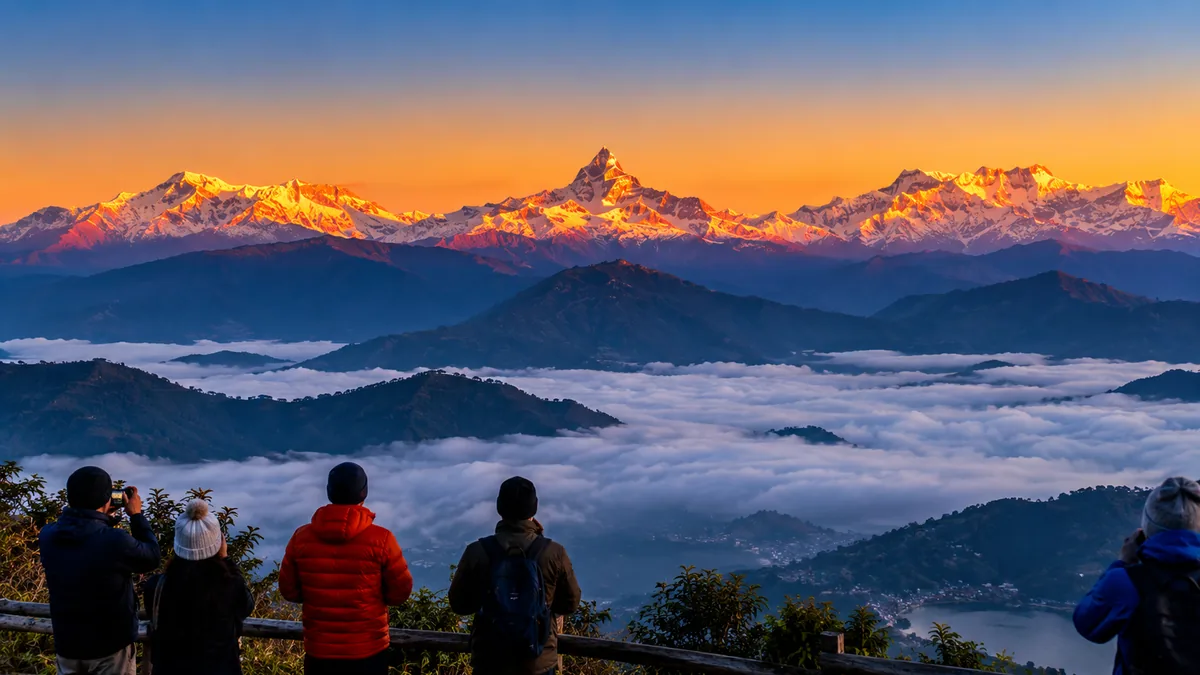
Phewa Lake is the heart of Pokhara. It’s the third-largest lake in Nepal, about 5.7 km² at roughly 742 metres, and on a still morning it reflects Machhapuchhre almost perfectly.
A boat across the lake is also the most beautiful way to start the walk up to the World Peace Pagoda.
The white World Peace Pagoda stands on a hilltop on the far side of Phewa Lake, looking back over the town to the Annapurnas. It’s one of the best viewpoints in Pokhara, and entry is free.
The late-afternoon light here is lovely, and you can watch paragliders drifting down towards the lake.
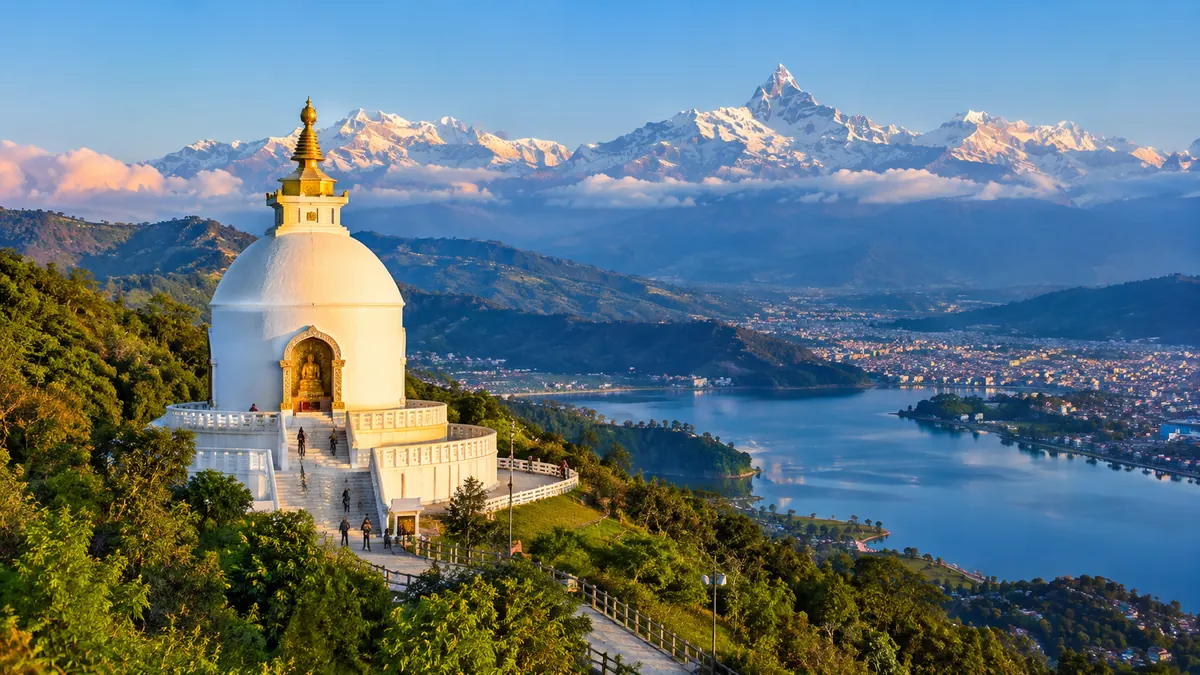
Pokhara is one of the world’s best-known places for tandem paragliding. You launch from Sarangkot and glide over the valley with the Annapurnas on the horizon, landing beside Phewa Lake.
| Flight | Typical 2026–27 price |
|---|---|
| Standard tandem, about 30 minutes | USD 90–100 |
| Long flight, about 60 minutes | USD 110–120 |
| Extended “Annapurna” flight | USD 120–150 |
| Photo and video package | About USD 20–30 extra |
Paragliding isn’t included in our tours, but we’re happy to book it for you at cost with an operator we trust.
| Attraction | What it is | Foreigner entry (approx.) |
|---|---|---|
| International Mountain Museum | The story of the Himalaya, its climbers and its people. Open daily, 8:30 a.m.–5:00 p.m. | NPR 750 |
| Davis Falls (Devi’s Falls) | A waterfall that disappears into an underground gorge, best after the monsoon | NPR 100–200 |
| Gupteshwor Mahadev Cave | A Hindu cave shrine opposite Davis Falls. The lower section can close in the monsoon. | About NPR 100 |
| Mahendra Cave and Bat Cave | Limestone caves north of town. Bring a torch for the Bat Cave. | About NPR 150 / NPR 110 |
| Bindhyabasini Temple | One of Pokhara’s oldest and busiest temples | Free |
| Begnas and Rupa lakes | Quieter lakes about 15 km east of the city, for a slower afternoon | Free (boats extra) |
| Seti River Gorge | A deep, narrow gorge cutting right through the city | Free |
Prices change often, so treat these as a guide and carry small notes in Nepali rupees.
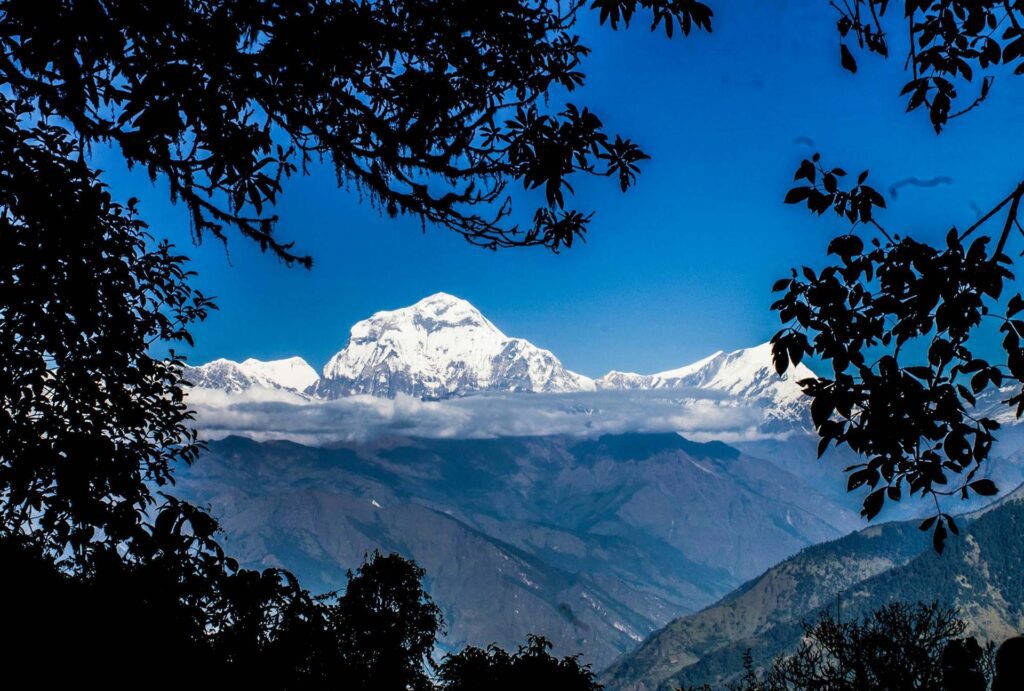
Pokhara is the gateway to the Annapurna region. Even if you’re not trekking, a short walk into the hills gives you mountain views without the crowds.
| Hike or trek | Length | Good for |
|---|---|---|
| World Peace Pagoda walk | Half a day | Everyone |
| Australian Camp and Dhampus | 1 to 2 days | A taste of village trekking with big views |
| Ghorepani Poon Hill | 4 to 5 days | A first Himalayan trek, with a famous sunrise |
| Annapurna Base Camp | About 11 days | Fit trekkers who want to stand among the peaks |
Trekking in the Annapurna Conservation Area requires an ACAP permit (NPR 3,000 for foreigners), and trekkers must now go with a licensed guide through a registered agency. We handle guides and permits on all our treks. Read our guide to the best treks in Nepal for beginners, or explore the Annapurna region.
| Time | What you can do |
|---|---|
| 1 night | Lakeside, a sunset boat, one sunrise at Sarangkot. Rushed, and you only get one chance at the view. |
| 2 nights (our recommendation) | Sarangkot, Phewa Lake, the World Peace Pagoda, the caves or the museum, and a second chance at clear mountains |
| 3 nights | Add paragliding, Begnas Lake or a day hike to Australian Camp |
| 4+ nights | A short trek such as Poon Hill, or simply time to slow down |
| Day | Plan |
|---|---|
| Day 1 | Drive from Kathmandu (6–8 hours, or break the journey at Bandipur). Evening walk along Lakeside and sunset by the water. |
| Day 2 | Sarangkot at sunrise. Breakfast, then a boat on Phewa Lake to the Tal Barahi Temple and the hike up to the World Peace Pagoda. Afternoon at Davis Falls and Gupteshwor Cave. |
| Day 3 | Morning paragliding or the International Mountain Museum, then on to Chitwan (about 4–5 hours) or back to Kathmandu. |
Want this built around your dates? Our tailor-made travel team will plan it for you.
We don’t run hotels and we earn nothing from yours. If you’d like, we’ll book one for you at cost.
| From Pokhara to | Approx. drive | Why go |
|---|---|---|
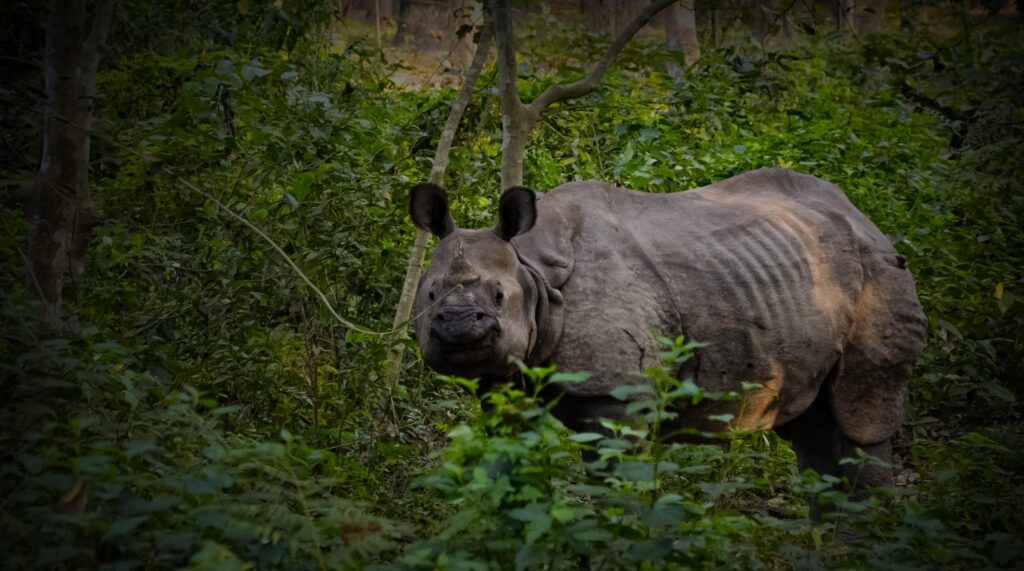
| Chitwan National Park | 4 to 5 hours | Rhinos, jungle safaris and Tharu villages |
| Lumbini | 6 to 7 hours | The birthplace of the Buddha |
| Kathmandu | 6 to 8 hours | Temples, Durbar Squares and your flight home |
| Upper Mustang | 2 days by 4WD jeep | The “forbidden kingdom”. See our Upper Mustang jeep tour guide. |
Our Nepal road prices are the same published day rates as India. Every figure is per person, per day:
| Travelling as | Vehicle | Per person, per day |
|---|---|---|
| On your own | Sedan | USD 92 |
| Two or three of you | Sedan | USD 49 |
| Family of four or five | SUV | USD 36 |
| Six to eight | Hiace minibus | USD 33 |
That covers the vehicle, your driver and his food and lodging, fuel, tolls and road taxes. Hotels, meals, guides, boat hire and activities like paragliding are extra, and we’ll arrange any of them at cost if you want. The Upper Mustang road and treks carry their own rates. See Hire a Car and Driver in Nepal for everything included.
Tell us your dates, how many of you are travelling and what you want to see in Nepal. We reply within 24 hours with a fixed price for the car and driver. If you’d like a detailed day-by-day itinerary, it costs €100, and the full €100 is deducted from your tour price when you book. There is no obligation.
Tailor-Made India & Nepal
Tell us what you love and we reply within 24 hours with a fixed price. A detailed day-by-day itinerary costs €100, deducted in full from your tour price.
Pick one or more destinations — you can mix India and Nepal freely.
This helps us match the right pace, stay and activities.
We reply within 24 hours. No spam, ever.
Before you finalise your Pokhara trip, run through the eight questions at the heart of this Pokhara travel guide:
If you can answer all eight, your Pokhara plan is ready.
A good Pokhara trip isn’t about ticking off every attraction. It’s about being in the right place at the right hour: on a ridge at sunrise, on the water while it’s still calm, and somewhere high when the clouds lift.
Come in the right season. Stay long enough. Get up early. Pokhara will do the rest.
October and November give the clearest mountain views, followed by December to April. June to September is monsoon, when the Annapurnas are usually hidden by cloud.
Two to three nights, as in the 3-day Pokhara itinerary above. Two gives you a second chance at a clear sunrise over the Annapurnas, and three adds paragliding or a day hike.
About 200 km on the Prithvi Highway, which takes 6 to 8 hours by private car, depending on traffic and road works.
Flying is faster (about 25 minutes in the air), but flights are often delayed by weather. Driving takes a full day but is door to door, flexible, and lets you stop at Bandipur or along the rivers.
Sarangkot at sunrise, boating on Phewa Lake to the Tal Barahi Temple, the World Peace Pagoda, tandem paragliding, the International Mountain Museum, Davis Falls and Gupteshwor Cave, and a short hike to Australian Camp or Dhampus.
Yes. On a clear day, Machhapuchhre, the Annapurna range and Dhaulagiri are visible from the town and Lakeside, and best of all from Sarangkot at sunrise.
About USD 90–100 for a standard 30-minute tandem flight and USD 110–150 for longer flights. Photo and video packages cost roughly USD 20–30 extra.
From October to April, yes. It’s the best view in Pokhara. In the monsoon you’ll most likely see cloud, so check the sky before you go.
Roughly USD 5–10 per hour, depending on the type of boat, the season and whether you take a boatman. Prices aren’t fixed, so agree before you set off.
Yes, entry is free. You can hike up after a boat across Phewa Lake (about 45 minutes to an hour) or drive most of the way.
NPR 750 for foreign visitors. It’s open every day from 8:30 a.m. to 5:00 p.m.
Yes. Treks in the Annapurna region need an ACAP permit (NPR 3,000 for foreigners), and trekkers must go with a licensed guide through a registered agency.
Yes. It’s written for the October 2026 to May 2027 season. Entry fees and activity prices in Pokhara change often, so treat the figures as a guide and confirm on arrival.
Yes. Pokhara is one of the most relaxed and tourist-friendly cities in Nepal. Take normal care with valuables, and use licensed operators for adventure activities.
About 4 to 5 hours by car, which makes Kathmandu, Pokhara and Chitwan an easy and popular loop.
With GoIndiaNepal, USD 92 per day for one traveller or USD 49 per person per day for two or three, including fuel, tolls, road taxes and the driver’s own costs.
Yes. Many travellers combine the Golden Triangle with Kathmandu and Pokhara. See our 14-day India and Nepal itinerary.
A great Pokhara trip isn’t about the most activities or the cheapest bus. It’s about timing.
Right season? Enough nights? Sarangkot at dawn? Calm water on the lake? A driver who knows the Prithvi Highway?
If the answer is yes, you’re going to see Pokhara at its best. If not, you might see the lake but miss the mountains.
And once you plan around the view, using this Pokhara travel guide becomes simple. For more of the country, read our guide to the best places to visit in Nepal or explore Pokhara tours.
See the 10-day Kathmandu, Pokhara and Chitwan tour · Car and driver rates in Nepal · Plan my trip