By Khem “Babu” Khadaka, founder, driving these roads since 1996 · GoIndiaNepal · Last updated: 16 October 2026 · 2026–27 season
The best things to do in Jaipur fit into two easy days: Amber Fort at opening time, the Hawa Mahal in morning light, the City Palace and Jantar Mantar side by side, and sunset from Nahargarh above the old city.
Getting the order right is what makes the difference.
Jaipur is the busiest tourist city in Rajasthan and the third corner of the Golden Triangle, and most people see it in a rush. They reach Amber Fort at 11 a.m. with every tour bus in the state. They photograph the Hawa Mahal at noon, when its pink face is flat and in shadow. They buy the wrong tickets, or get taken to a “factory” they never asked to see. We have driven guests around the Pink City for close to 30 years, and the same small choices decide whether Jaipur feels magical or exhausting.
This guide covers the 20 best places to visit in Jaipur, 2027 ticket prices for foreign visitors, a timed itinerary for one, two or three days, the day trips worth making, where to eat, where to shop without being hustled, and how Jaipur fits into a Golden Triangle or Rajasthan tour by car.
What should I actually see in Jaipur, in what order, and what will it cost me?
Yes. Jaipur packs more first-class sights into a small area than almost any city in India, and three of them carry UNESCO World Heritage status: Jantar Mantar (2010), Amber Fort as one of the Hill Forts of Rajasthan (2013), and the walled city of Jaipur itself (2019).
Founded in 1727 by Maharaja Sawai Jai Singh II, it was one of India’s first planned cities, laid out on a grid with wide bazaars. It was painted its famous terracotta pink in 1876 to welcome the Prince of Wales, and the colour has been required in the old city ever since.
On a Golden Triangle tour, Jaipur usually gets one or two nights. On a longer Rajasthan tour, it is where the journey into the desert begins.
Here are the 20 places to visit in Jaipur we recommend, with the time each one needs and what foreigners pay at the gate. Prices are for the 2026–27 season and do change, so treat them as a guide. Opening hours vary by season; where we have not listed them, the site is open in daytime hours and you can check on the official booking site.
| Place | Why go | Time needed | Foreigner ticket |
|---|---|---|---|
| Amber Fort | Jaipur’s greatest sight; mirror palace and hilltop walls; 8 a.m.–5:30 p.m. | 2–3 hours | ₹1,000 (in composite) |
| Jaigarh Fort | Fortress above Amber; the giant Jaivana cannon | 1 hour | Separate, or in the City Palace composite |
| Nahargarh Fort | Best sunset view over the city | 1–2 hours | ₹600 (in composite) |
| Panna Meena ka Kund | Geometric stepwell near Amber | 20 minutes | Free |
| Jal Mahal | Palace floating in Man Sagar Lake | 15 minutes | Free (view from shore) |
| Hawa Mahal | The pink “Palace of Winds” | 45 minutes | ₹600 (in composite) |
| City Palace | Still home to the royal family; museums and courtyards; 9:30 a.m.–6:30 p.m. | 1.5–2 hours | Separate ticket; check citypalace.org |
| Jantar Mantar | Giant 18th-century astronomical instruments | 1 hour | ₹600 (in composite) |
| Albert Hall Museum | Indo-Saracenic museum, lit up at night | 1 hour | ₹600 (in composite) |
| Patrika Gate | Painted gateway, a photographer’s favourite | 20 minutes | Free |
| Galta Ji (Monkey Temple) | Temple complex in a rocky gorge | 1.5 hours | Free |
| Royal Gaitor | Marble cenotaphs of Jaipur’s rulers | 45 minutes | Small fee, or in the City Palace composite |
| Isarlat (Swargasuli) | Minaret with views over the bazaars | 30 minutes | In composite |
| Sisodia Rani Garden | Terraced Mughal-style garden | 30 minutes | In composite |
| Vidyadhar Garden | Quiet garden named after the city’s architect | 30 minutes | In composite |
| Birla Mandir | White marble temple, lovely at dusk | 30 minutes | Free |
| Johari and Bapu Bazaars | Jewellery, textiles, mojari shoes | 2 hours | Free |
| Anokhi Museum of Hand Printing | Block printing in a restored haveli in Amer; closed Mondays and 31 May–15 July | 1 hour | Small fee |
| Raj Mandir Cinema | A Bollywood film in a 1970s movie palace | 3 hours | Cinema ticket |
| Chand Baori, Abhaneri | India’s most dramatic stepwell, on the Agra road | 1 hour | About ₹300 |
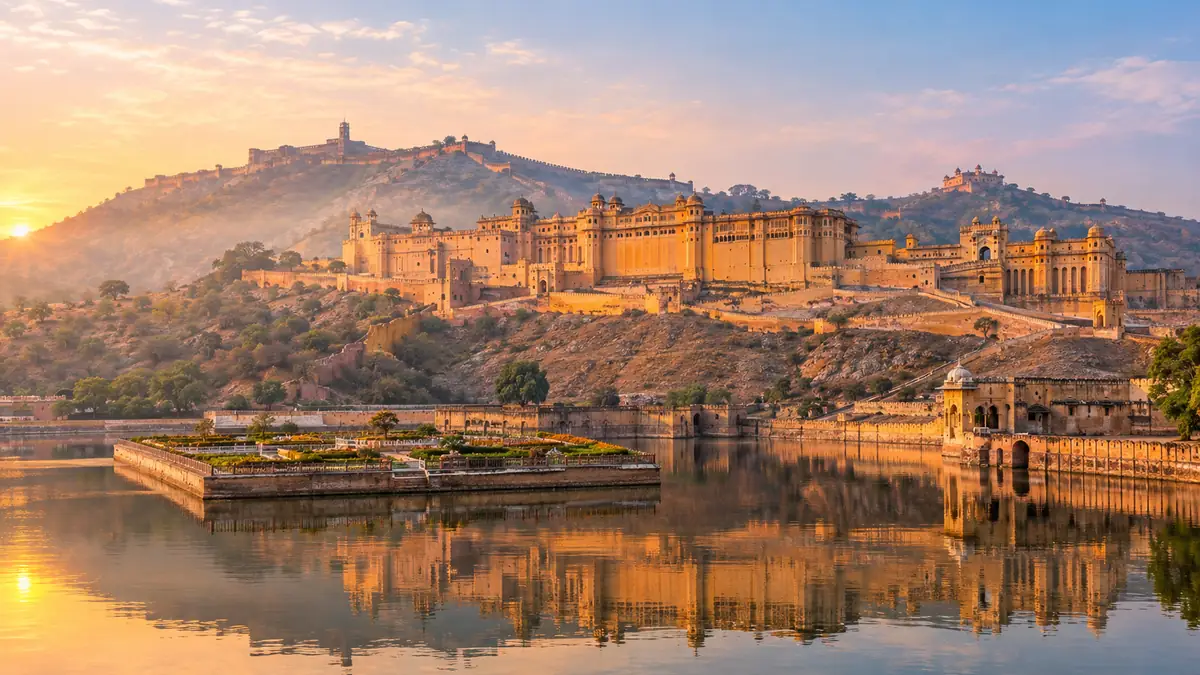
Of all the things to do in Jaipur, this is the one to plan your day around. Amber (also spelt Amer) Fort sits on a ridge 11 km north of the city, its honey-coloured walls dropping down to Maota Lake. Inside are four courtyards built over two centuries: the Diwan-i-Aam where the ruler met the public, the Ganesh Pol gateway with its painted façade, and the Sheesh Mahal, a hall lined with thousands of tiny mirrors that glitter from a single candle.
Go at opening time. The fort opens at 8 a.m., and the first 90 minutes are calm and cool. By late morning the courtyards fill with groups and the sun bounces off the stone. Plan two to three hours.
Ask your driver to stop at the lay-by on the road below the fort on the way in. It is the classic Amber view, and at 7:45 a.m. it is usually empty.
The ridge above Amber carries two more forts, joined by a road along the hilltops. Driving up to them for the view is one of the best things to do in Jaipur late in the day.
Jaigarh Fort was the military heart of the old kingdom, and it holds the Jaivana, one of the largest cannons on wheels ever built. It has a separate ticket and takes about an hour. If you only have one day, skip it; if you have two, pair it with Amber.
Nahargarh Fort looks straight down over the pink city, and it is the best sunset spot in Jaipur. Arrive about an hour before sunset, walk the ramparts, and stay for the lights coming on below. The state-run café on the walls is a good place for a cold drink with the view. Inside is the Madhavendra Bhawan, a set of near-identical suites built for the king’s queens, now used as a sculpture gallery. Nahargarh is in the composite ticket; the wax museum on the hill charges separately.
The road up is steep and narrow and busy at sunset. This is one place where having your own car and driver saves real time, because you are not haggling for a ride back down in the dark.
Two short stops on the way back from Amber that most tour groups miss. Both are easy, free and among the most photogenic things to do in Jaipur.
Panna Meena ka Kund is a 16th-century stepwell a few minutes’ walk behind Amber, its staircases criss-crossing down to the water in perfect geometric zigzags. Visitors are no longer allowed to walk down the steps, but the view from the edge is the point. It is free.
Jal Mahal, the “Water Palace”, seems to float in the middle of Man Sagar Lake on the Amber road. You cannot go inside, but the promenade gives a good view, best in soft morning or late-afternoon light.
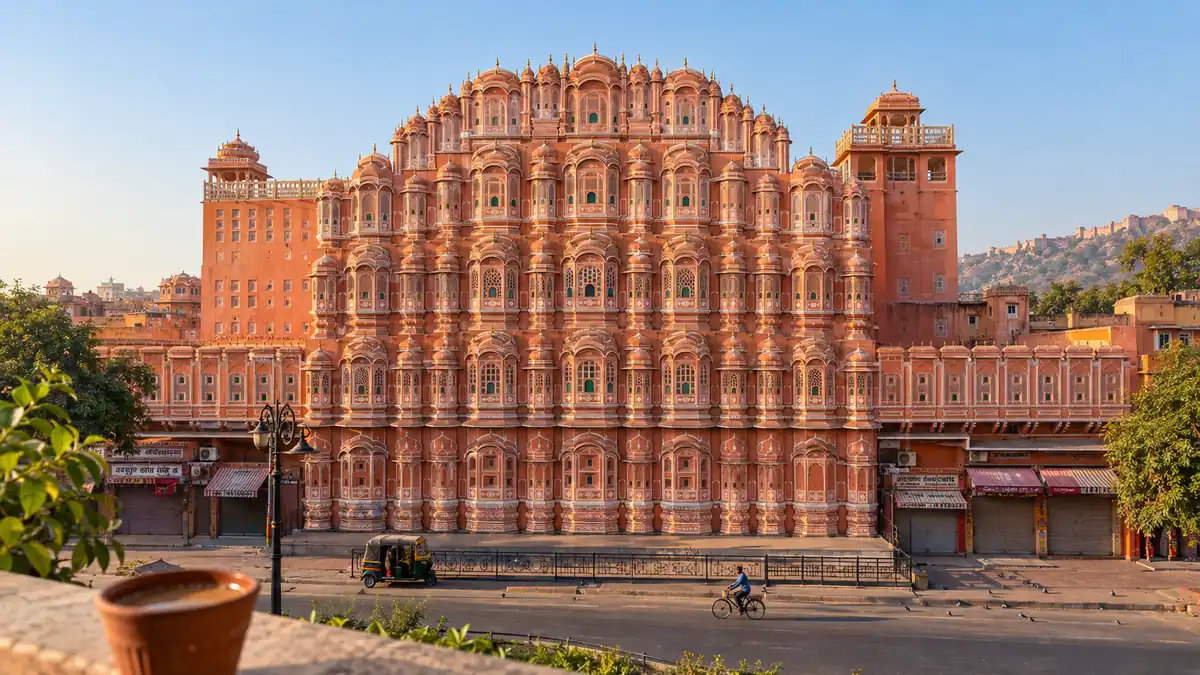
Seeing it at dawn is one of the simplest things to do in Jaipur, and one of the best. The Hawa Mahal, or Palace of Winds, is Jaipur’s most famous image: five storeys of pink sandstone with 953 small windows, built in 1799 so the women of the court could watch street life without being seen.
Here is the thing most visitors do not realise: the famous view is from outside. The façade faces east, so it glows in the first hour of sun. Go at about 7:30 a.m., before the traffic and the street stalls build up, and look from the pavement directly opposite. Later in the morning, the rooftop cafés across the road give the classic raised view with a cup of chai.
Inside, it is a maze of narrow ramps and small rooms that is fun for 30 to 45 minutes, with views back down the bazaar. Entry is ₹600 for foreigners or included in the composite ticket.
These two sit next to each other in the centre of the old city, so see them together. Together they are two of the essential things to do in Jaipur for history lovers.
The City Palace is still partly the home of Jaipur’s royal family, and the flag on the roof shows when the Maharaja is in residence. Highlights are the Pritam Niwas Chowk with its four painted gateways for the seasons — the Peacock, Lotus, Leheriya (green) and Rose gates — the textile and arms galleries, and two enormous silver urns made to carry Ganges water to England. It is run by a private trust, so it is not in the government composite ticket.
Its own composite ticket adds Jaigarh Fort and the Royal Gaitor, which is the better buy if you plan to see both, and the Chandra Mahal royal tour costs extra. The palace is open 9:30 a.m. to 6:30 p.m. and closes on Dhulandi, the day of Holi. Check current foreigner prices on the City Palace website.
Jantar Mantar is a field of giant stone instruments built by the city’s founder to track the sun, moon and stars. The largest instrument, the Vrihat Samrat Yantra, is about 27 metres tall and is said to tell local time to within about two seconds. It means far more with a guide or the audio guide, so allow an hour. It is in the composite ticket.
South of the old city walls, Jaipur opens up into wide British-era boulevards. Several of the free things to do in Jaipur are in this part of town.
If you have a second or third day, these three show a quieter side of the city. They are the most peaceful things to do in Jaipur.
Galta Ji, about 10 km east, is a temple complex built into a rocky gorge with natural spring-fed pools, and it is famous for its monkeys. Climb to the Surya Mandir on the ridge above for sunset. Keep food out of sight. It is free, with a small camera fee.
The Royal Gaitor holds the carved marble cenotaphs of Jaipur’s maharajas in a quiet walled garden below Nahargarh. Few tour groups come here.
Isarlat, also called Swargasuli, is a tall minaret near Tripolia Bazaar. The spiral climb is narrow, but the view over the old city’s grid of pink rooftops is one of the best in Jaipur.
Beyond the forts and bazaars, Jaipur has a few experiences most first-time visitors never hear about. These are the unusual things to do in Jaipur we suggest to repeat guests.
The state government sells a composite ticket that covers its main Jaipur monuments. For most visitors it is the right buy. Use it to plan which ticketed things to do in Jaipur are worth your time.
| Details (2026–27 season) | |
|---|---|
| Price for foreigners | About ₹1,700 (students pay less with ID) |
| Valid for | Usually two days, one visit to each site; check validity when you buy |
| Includes | Amber Fort, Hawa Mahal, Jantar Mantar, Nahargarh Fort, Albert Hall Museum, Isarlat, Sisodia Rani Garden and Vidyadhar Garden |
| Not included | City Palace, Jaigarh Fort and the Royal Gaitor (these three share the City Palace’s own composite ticket), and light-and-sound shows |
| Longer trips | A multi-day pass covering state-run monuments and museums is also sold, reported at ₹5,500 for foreigners (₹2,800 students) for 10 days. Worth it only on a long Rajasthan tour with many state-run sites |
| Where to buy | At the first monument you visit, or online on the Rajasthan government’s OBMS booking site |
The simple rule: Amber Fort alone costs ₹1,000, and the Hawa Mahal, Jantar Mantar, Nahargarh and Albert Hall are ₹600 each, so if you are seeing Amber plus any two of the other sites, the composite ticket pays for itself. Keep it safe: it is checked at every gate.
Prices for foreigners change, sometimes mid-season. Check the official Rajasthan monument booking site before you go, and carry your passport.
These timings assume you have a car and driver, which is how we run Jaipur for our own guests. Distances in Jaipur are short, but traffic in the old city is slow, so the order matters more than the speed. Each plan below fits the main things to do in Jaipur into realistic days.
| Time | Plan |
|---|---|
| 7:15 a.m. | Hawa Mahal façade from across the road |
| 8:00 a.m. | Amber Fort at opening (2.5 hours) |
| 10:45 a.m. | Panna Meena ka Kund, then the Jal Mahal view |
| 12:30 p.m. | Lunch in the old city |
| 2:00 p.m. | City Palace, then Jantar Mantar next door |
| 4:30 p.m. | Johari and Bapu Bazaars on foot |
| 7:00 p.m. | Albert Hall lit up, then dinner |
Day 1 — The hill forts. Amber Fort at 8 a.m., Panna Meena ka Kund, Jaigarh Fort, lunch, a rest at the hotel through the heat of the afternoon, then the drive up to Nahargarh for sunset.
Day 2 — The old city. The Hawa Mahal at 7:30 a.m., inside the Hawa Mahal when it opens, the City Palace and Jantar Mantar, lunch, the bazaars, Isarlat for the rooftop view, and Albert Hall at night.
Add a third day for a dawn leopard safari at Jhalana or Patrika Gate early, the Royal Gaitor, a morning at the block-printing village of Bagru or Sanganer, and sunset at Galta Ji. In the evening, see a Hindi film at the Raj Mandir Cinema — subtitles or not, the crowd is the show.
For the bigger picture of where Jaipur fits in a longer trip, see our Rajasthan tour itinerary guide and how many days you need for the Golden Triangle.
| Place | Distance | Drive time | Why go |
|---|---|---|---|
| Chand Baori, Abhaneri | About 95 km | 1.5–2 hours | Spectacular 13-storey stepwell; best on the way to or from Agra |
| Pushkar | About 145 km | 2.5–3 hours | Holy lake town; better as an overnight stop |
| Ranthambore | About 160 km | 3–3.5 hours | Tiger safaris; plan at least one night |
| Bagru and Sanganer | 15–35 km | 30–60 minutes | Hand block-printing workshops |
Abhaneri is the easiest to fit in: on a Golden Triangle tour, your driver can stop there on the road between Agra and Jaipur at no extra cost. Ranthambore deserves its own night or two — see the Golden Triangle with Ranthambore tiger safari or the 6-day Jaipur, Pushkar and Ranthambore tour.
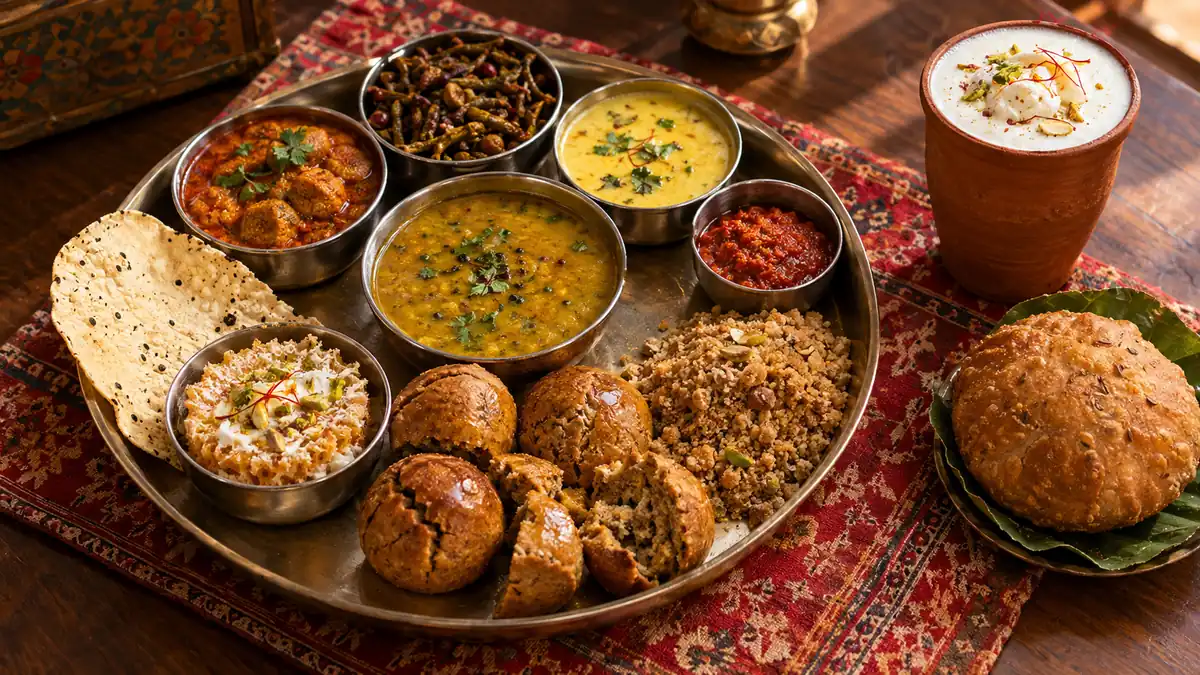
Rajasthani food was built for the desert: rich, filling and slow-cooked. These are the dishes to look for. Eating well is one of the best things to do in Jaipur, so leave room for it.
For a first meal, the long-running vegetarian restaurants and sweet shops of MI Road and Johari Bazaar are a safe start: Laxmi Mishtan Bhandar (LMB) in Johari Bazaar has served Rajasthani food since the 1950s, Rawat Mishtan Bhandar near Sindhi Camp is famous for its pyaaz kachori, and the lassi stalls on MI Road serve it in clay cups. Your driver will know which are busy with local families that day, which is the best guide to freshness. For an evening out, the “village” dinner experiences on the edge of the city are touristy but fun, with folk dancing and a full thali.
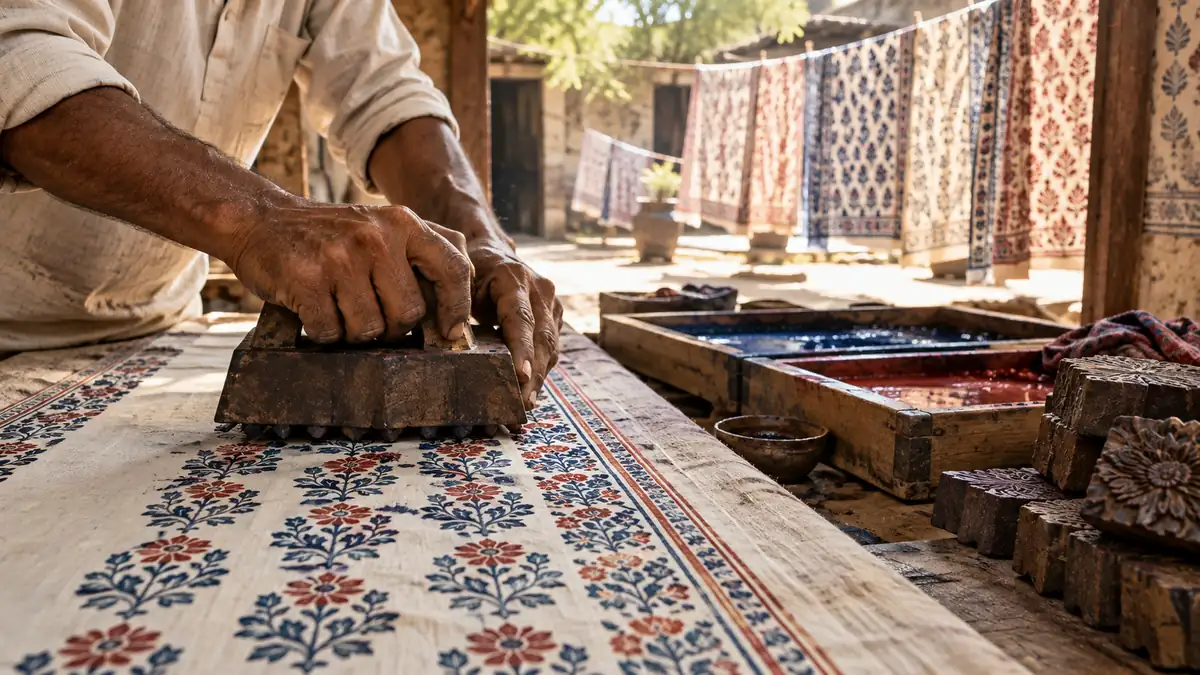
Jaipur is one of India’s great shopping cities, and also the city where you are most likely to be steered into a shop you did not choose. Shopping is one of the most fun things to do in Jaipur if you know the tricks below.
Many bazaar shops close on Sundays, so plan your shopping for another day.
A word on gems. Jaipur has a long-running scam in which visitors are persuaded to buy gemstones to “export” at a profit. Do not buy gems as an investment, and never agree to carry stones abroad for someone.
A word on shopping stops. Many cheap tours earn their real money from commission at carpet, gem and textile “factories”. With us, there are no compulsory shopping stops. If you want to visit a workshop, tell your driver; if you do not, you will not see one. Read more in guide or driver: which do you need in India.
October to March is the best season, with warm days and cool nights. December and January mornings can be chilly, so bring a jacket for sunrise at Amber. April to June is very hot, often above 40°C, and July to September brings monsoon rain, though the city turns green and the crowds thin out. The weather decides which outdoor things to do in Jaipur feel comfortable.
| Festival | When | What happens |
|---|---|---|
| Makar Sankranti | 14 January | The whole city flies kites from its rooftops |
| Jaipur Literature Festival | 14–18 January 2027 | The 20th edition of one of the world’s biggest literary festivals; it overlaps with kite season, so book hotels early |
| Holi | 22 March 2027 | The festival of colours, joyful and messy; the City Palace closes for the day |
| Gangaur and Teej | Gangaur in March–April, Teej in July–August | Processions of women in their finest clothes |
| Diwali | 8 November 2026 and 29 October 2027 | The bazaars are lit with lights for weeks |
For month-by-month detail across the whole state, see our Rajasthan tourism guide.
We do not bundle hotels into our tours or take commission on them, so you are free to stay wherever you like. If you prefer, we can book them for you at cost. Your driver’s own room and meals are always included in our price.
| From | Distance | By car |
|---|---|---|
| Delhi | About 270–280 km | 3.5–4.5 hours on the expressway; 5–6 hours on the old NH48 |
| Agra | About 240 km | 4.5–5 hours, via Abhaneri |
| Ranthambore | About 160 km | 3–3.5 hours |
| Jodhpur | About 340 km | 5.5–6 hours |
| Udaipur | About 400 km | 6.5–7 hours |
The new Bandikui–Jaipur link joins Jaipur to the Delhi–Mumbai Expressway, which has cut the drive from Delhi by an hour or more. Jaipur also has an airport with domestic and some international flights, and fast trains run from Delhi.
In the city, Uber, Ola and auto-rickshaws work for short hops, but a day of Jaipur sightseeing involves a lot of stopping and starting between sites that are spread out across the hills and the old city. A car and driver for the day saves time and negotiation, and the driver waits while you explore. Read our full guide to Delhi to Jaipur by car, see what a car and driver costs in India, or check our car and driver rates.
For a wider view, read our honest guide: is India safe for tourists.
Most travellers see Jaipur as part of a longer route, with the same car and driver throughout:
Our prices are for the whole car, not per person, and cover fuel, tolls, state taxes, parking and the driver’s own meals and room.
Tell us your dates, how many of you are travelling and whether Jaipur is part of a Golden Triangle or a longer Rajasthan route. Our family will send a free route and a fixed price, usually within 24 hours.
Tailor-Made India & Nepal
Tell us what you love and we reply within 24 hours with a fixed price. A detailed day-by-day itinerary costs €100, deducted in full from your tour price.
Pick one or more destinations — you can mix India and Nepal freely.
This helps us match the right pace, stay and activities.
We reply within 24 hours. No spam, ever.
Before you go, make sure you can answer yes to these:
The best things to do in Jaipur are Amber Fort at opening time, the Hawa Mahal in early morning light, the City Palace and Jantar Mantar, sunset at Nahargarh Fort, and an afternoon in Johari and Bapu Bazaars. With more time, add Galta Ji, the Royal Gaitor and a block-printing village.
Two full days is right for most travellers: one for the hill forts and one for the old city. One day covers the main sights if you start at 8 a.m. Three days lets you add Galta Ji, Patrika Gate, the cenotaphs and a day trip.
For the 2026–27 season, Amber Fort costs ₹1,000 for foreign visitors. It is also included in the Jaipur composite ticket of about ₹1,700, which covers Amber plus the Hawa Mahal, Jantar Mantar, Nahargarh, Albert Hall and other state-run sites. Check validity when you buy.
The City Palace is run by a private trust and is not in the government composite ticket. It sells its own composite ticket that also covers Jaigarh Fort and the Royal Gaitor cenotaphs. Check current foreigner prices on the City Palace website before you go.
Yes, if you visit Amber Fort plus any two of the other included sites, such as the Hawa Mahal, Jantar Mantar, Nahargarh or Albert Hall, which cost ₹600 each for foreigners. The City Palace, Jaigarh Fort and the Royal Gaitor are not included; they share the City Palace’s own composite ticket.
October to March is the best time to visit Jaipur, with warm days and cool nights. April to June is very hot, often above 40°C, and July to September is monsoon season.
Jaipur is about 270 to 280 km from Delhi, around 3.5 to 4.5 hours on the Delhi–Mumbai Expressway route or 5 to 6 hours on the old NH48 highway. It is about 240 km from Agra, around 4.5 to 5 hours with a stop at the Abhaneri stepwell.
For sightseeing, yes. The main sights are spread between the hills and the old city, and a driver who waits for you saves time and haggling. On a Golden Triangle or Rajasthan tour, the same driver stays with you for the whole trip.
We do not recommend it. Animal welfare groups have raised serious concerns about the conditions of the elephants used for rides. A shared jeep to the upper gate is quicker, or you can walk the ramp from Maota Lake in about 15 to 20 minutes.
Jaipur is often the first taste of Rajasthan, and it sets the tone for everything after it. See it at the right hours and it is one of the most beautiful cities in India.
Early starts. The right ticket. No detours you did not ask for.
And once you have seen the Pink City, the rest of Rajasthan is waiting just down the road: the blue city of Jodhpur, the lakes of Udaipur and the golden fort of Jaisalmer.
Golden Triangle tours · Rajasthan tours · Get a free route and price