By Khem “Babu” Khadaka, founder, driving these roads since 1996 · Last updated: 2027 season (October 2026 – June 2027)
Rajasthan tourism sells itself with forts, palaces and camels at sunset, and for once the brochure pictures are true.
What the pictures don’t show is scale. Rajasthan is India’s largest state, bigger than many European countries. Its famous cities sit hundreds of kilometres apart, the desert gets bitterly cold on winter nights, and the summer heat can pass 45 °C.
Travellers who enjoy Rajasthan most are the ones who choose well: the right handful of places, the right months, and a pace that leaves time for a rooftop sunset or a chai in a village square.
So instead of asking only “What are the best places to visit in Rajasthan?”, it helps to ask a better question:
Which parts of Rajasthan suit my time and my season, and how do I see them without spending the whole trip on the road?
That’s what this Rajasthan tourism guide is built around. It covers the 15 best places to visit in Rajasthan and what to see in each, entry fees for foreign visitors, the best time to visit Rajasthan month by month, the fairs and festivals of 2026–27 with official dates, what to eat and buy, how to travel responsibly (including why we don’t recommend elephant rides), getting around, and what a Rajasthan trip costs with a private car and driver.
Rajasthan was once a patchwork of princely states ruled by Rajput clans, and each capital built its own fort, palace and temple quarter. That’s why the state has so many great cities rather than one.
It has four UNESCO World Heritage listings: Keoladeo National Park at Bharatpur, the Jantar Mantar observatory in Jaipur, the walled city of Jaipur itself, and the six Hill Forts of Rajasthan (Chittorgarh, Kumbhalgarh, Ranthambore, Gagron, Amber and Jaisalmer).
Rajasthan tourism is also changing. Many former palaces and havelis are now heritage hotels, the roads are far better than a decade ago, and new expressways have shortened the drive from Delhi. The official Rajasthan Tourism website lists events and destinations across the state.
The constant is that distances are large. Plan fewer places, stay longer in each, and the state rewards you.
These are the places to visit in Rajasthan that we send our own guests to, with a realistic number of nights for each.
| Place | Known for | Nights |
|---|---|---|
| Jaipur | Amber Fort, City Palace, Hawa Mahal, bazaars | 2 |
| Udaipur | Lakes, City Palace, sunsets | 2–3 |
| Jodhpur | Mehrangarh Fort, the blue old city | 1–2 |
| Jaisalmer | Living golden fort, havelis, dunes | 2–3 (one in a desert camp) |
| Pushkar | Holy lake, ghats, camel fair | 1–2 |
| Ajmer | Sufi shrine of Moinuddin Chishti | Day visit from Pushkar |
| Ranthambore | Tigers, a fort in the jungle | 2 |
| Chittorgarh | Rajasthan’s largest fort | Day visit or 1 |
| Kumbhalgarh | 36 km of fort walls | 1 or a day trip from Udaipur |
| Ranakpur | Marble Jain temple with 1,444 carved pillars | Stop on the Jodhpur–Udaipur drive |
| Bundi | Painted palace, stepwells, quiet lanes | 1–2 |
| Bikaner | Junagarh Fort, Karni Mata temple | 1 |
| Shekhawati (Mandawa) | Painted havelis | 1 |
| Bharatpur | Keoladeo bird sanctuary | 1 |
| Mount Abu | Hill station, Dilwara Jain temples | 1–2 |
You won’t see all 15 in one trip, and you shouldn’t try. For how to combine them into a route, see our Rajasthan tour itinerary guide, which has day-by-day plans from 6 to 18 days.
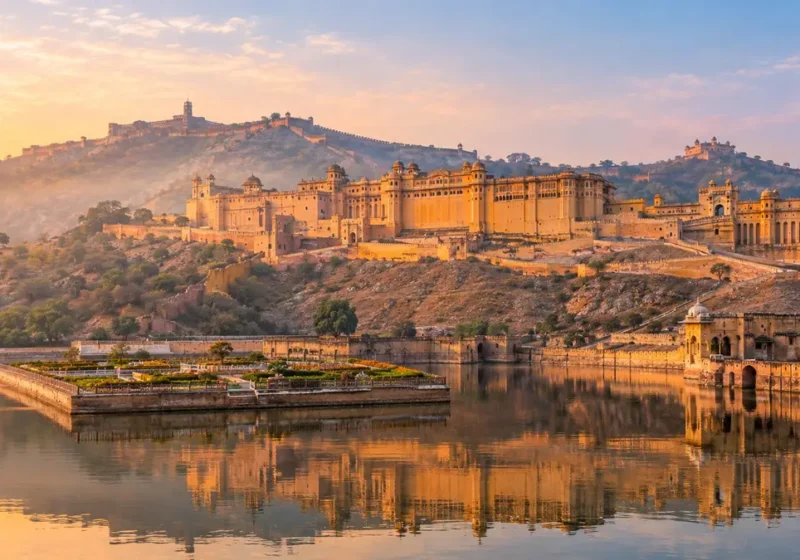
Jaipur is the state capital, the hub of Rajasthan tourism and, for most visitors, the first stop. Its walled old city was painted pink in 1876 to welcome the Prince of Wales, and in 2019 it became a UNESCO World Heritage Site.
Give Jaipur two nights. Our Delhi to Jaipur by car guide covers the drive in, and our Jaipur tours page lists the trips that include it.
For a full day-by-day plan, ticket prices and where to eat, read our guide to the best things to do in Jaipur.
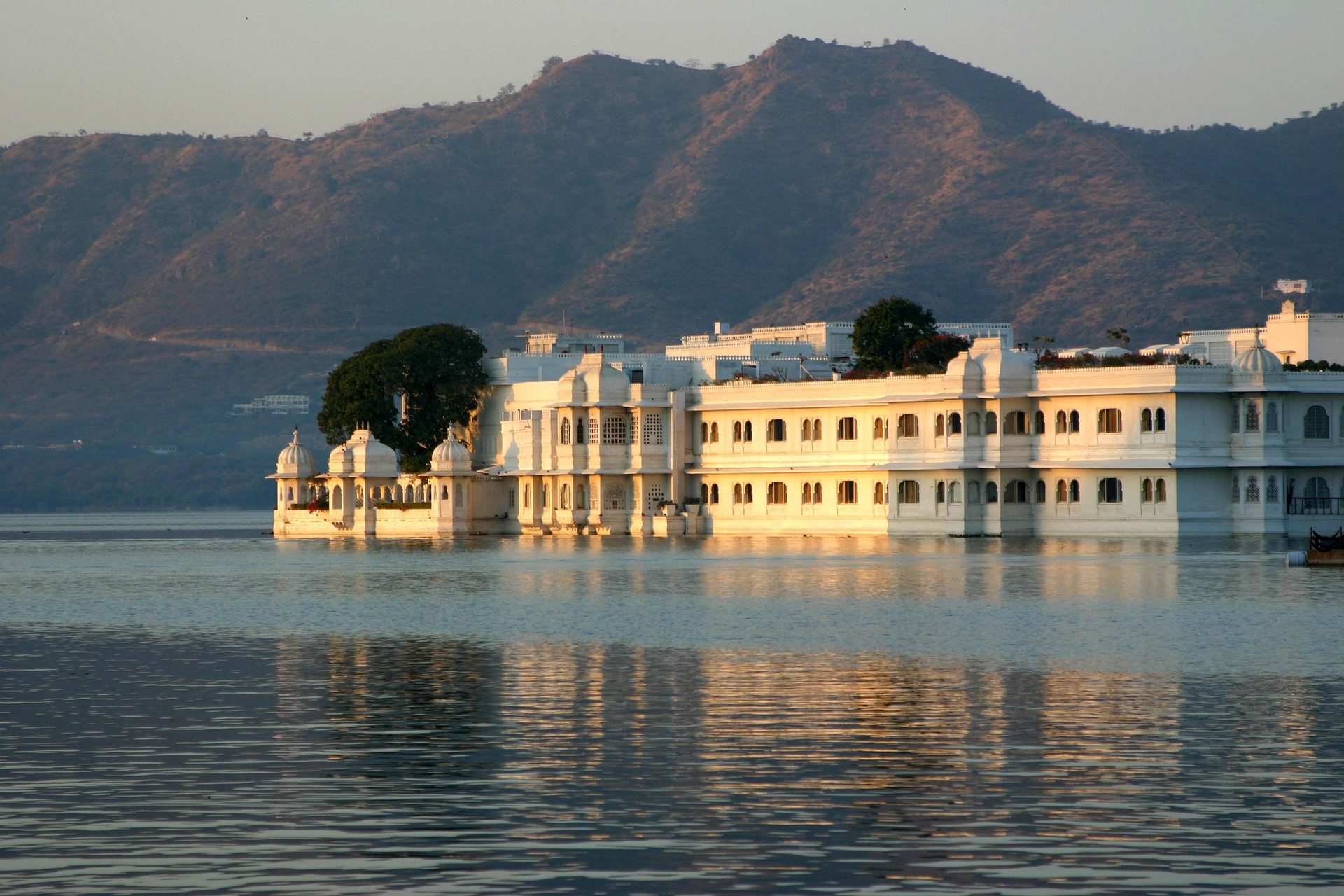
Udaipur, the City of Lakes, is the most romantic stop in Rajasthan tourism. The City Palace rises straight out of Lake Pichola, and the Lake Palace hotel seems to float in the middle of it.

Kumbhalgarh, about 85 km north of Udaipur, is a UNESCO hill fort whose walls run for about 36 km over the Aravalli hills. It was the birthplace of Maharana Pratap. There’s an evening light-and-sound show in Hindi.
Ranakpur, on the road between Udaipur and Jodhpur, is a 15th-century Jain temple of white marble with 1,444 carved pillars, no two the same. Non-Jain visitors are usually admitted from around midday, so time your drive accordingly, and leave leather items in the car.
Jodhpur is dominated by Mehrangarh, one of the most impressive forts in India, standing on a cliff above the old city. It’s run by a royal family trust and is very well kept, with some of the best museum galleries in Rajasthan. Entry for foreign visitors is about ₹600, and the audio guide is excellent.
Below the fort, the old quarter of Brahmpuri is famous for its blue-painted houses. Walk it with a local guide, who can take you up to rooftops for the best views.
Jodhpur works as one full day or two unhurried ones, and it’s the natural gateway to the desert side of Rajasthan tourism.
Jaisalmer is the golden city of the Thar Desert, and its fort, raised on Trikuta Hill in 1156, is one of the few “living forts” left in the world: roughly a quarter of the old city’s population still lives inside its walls.

Walking into the fort is free; the Fort Palace Museum, the Jain temples and some viewpoints charge separately, usually a few hundred rupees. In the town below, Patwon ki Haveli is the finest of the merchants’ mansions, and Gadisar Lake is the place for sunrise.
Outside town, the abandoned village of Kuldhara and the royal cenotaphs of Bada Bagh make good stops on the way to the dunes.
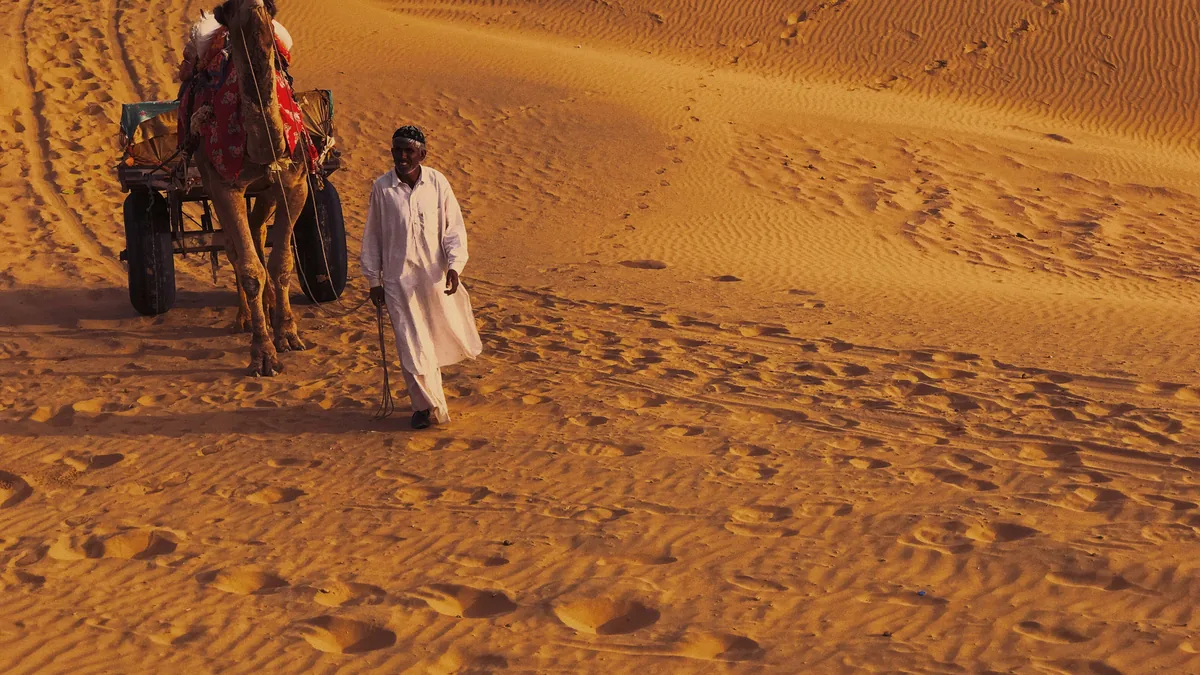
The desert: the Sam dunes, about 40 km west, are the most famous and the busiest. Khuri, to the south-west, is quieter. A night in a desert camp is the highlight for many, but choose carefully; our Rajasthan itinerary guide has camp tips. Desert nights from December to February can fall close to freezing.
Pushkar is a small holy town built around a sacred lake, with 52 ghats leading down to the water. It has one of the very few temples in India dedicated to Brahma. The town is vegetarian and alcohol-free, and it has a relaxed, backpacker-friendly café scene.
The ghats are sacred. Take off your shoes, don’t photograph people bathing, and if someone offers you flowers to throw in the lake, understand that a donation request follows. A polite no is fine.
Pushkar is best known for its camel fair, officially the Pushkar Fair, 17–24 November 2026. Livestock trading, camel races, folk music and a huge pilgrimage come together in the week before the full moon of Kartik.
Ajmer, 15 km away over a hill, is home to the Dargah Sharif, the shrine of the Sufi saint Moinuddin Chishti, one of the most important Muslim pilgrimage sites in South Asia. Cover your head and dress modestly. It’s at its most crowded during the annual Urs festival.
South-eastern Rajasthan is where Rajasthan tourism thins out, and that’s the point.
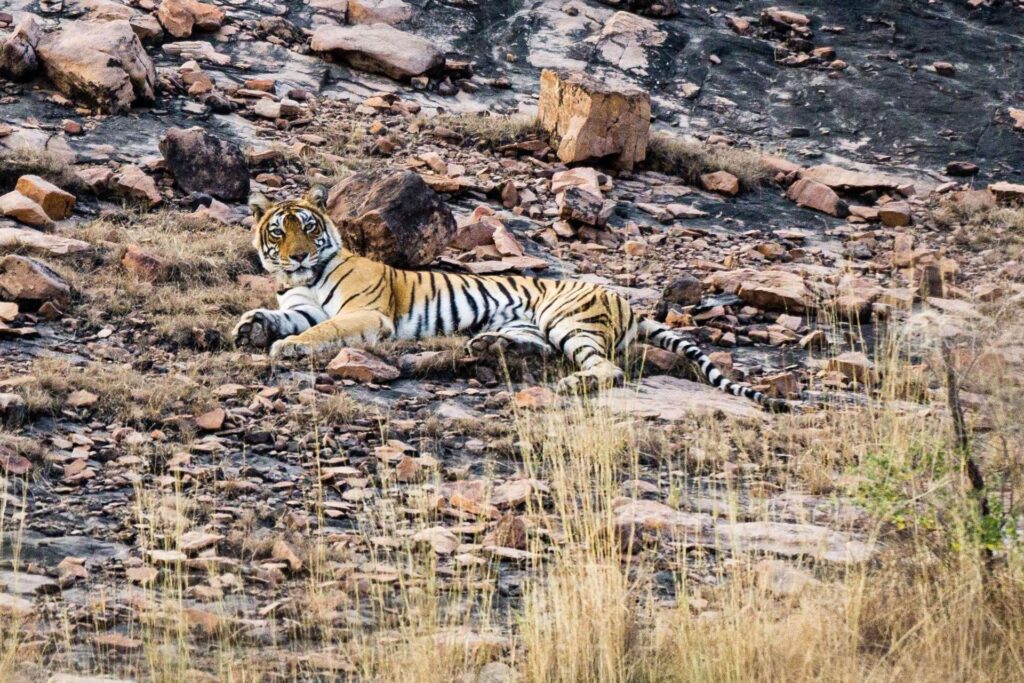
Ranthambore National Park is one of the best places in the world to see a wild Bengal tiger. The park is open from 1 October to 30 June and closed in the monsoon. The 10th-century Ranthambore Fort inside the reserve is one of the UNESCO hill forts. Safari permits are sold on the forest department’s booking site; read our Ranthambore tiger safari guide for zones and timings.
Bundi is a small town under a hillside palace decorated with some of the finest murals in Rajasthan. Its stepwells, above all Raniji ki Baori, are superb, and the lanes are quiet enough to wander without a plan.
Chittorgarh is the largest fort in Rajasthan, a plateau of palaces, towers and temples. It’s famous for the Tower of Victory and for the story of Rani Padmini. Allow half a day; foreigners pay about ₹600 at this Archaeological Survey of India site.
These four places round out the best places to visit in Rajasthan for travellers with more time.
Bharatpur sits only about 55 km from Agra, so it fits neatly between the Taj Mahal and Jaipur.
Entry fees are one of the bigger costs of Rajasthan tourism, because foreign visitors pay several times the Indian rate. These are the main ones for the 2026–27 season:
| Site | Foreigners | Notes |
|---|---|---|
| Amber Fort, Jaipur | ₹1,000 | Raised from ₹500 in January 2026; included in the composite ticket |
| City Palace, Jaipur | About ₹1,000+ | Private trust; not in the composite ticket; check citypalace.org |
| Hawa Mahal, Jaipur | ₹600 | Included in the composite ticket |
| Jaipur composite ticket | About ₹1,700 | Single visit to each site; Amber, Hawa Mahal, Jantar Mantar, Nahargarh, Albert Hall and more |
| Mehrangarh Fort, Jodhpur | About ₹600 | Run by a trust; check what the audio guide costs |
| Jaisalmer Fort | Free to walk in | Fort Palace Museum and temples charge separately |
| City Palace, Udaipur | About ₹300–700 | Depends on the sections visited |
| Chittorgarh Fort | About ₹600 | ASI site; open 9 a.m. to 6 p.m. |
| Junagarh Fort, Bikaner | About ₹300 | Camera fees extra |
Fees change, and privately run palaces set their own. Carry cash, as card machines sometimes fail, and keep your ticket, since some sites check it more than once. Children usually pay less or enter free.
Rajasthan is hot and dry for most of the year. Jaipur’s long-term averages show a daily high of about 22.5 °C in January and 41.1 °C in May, with most of its 600 mm of annual rain falling in July and August.
| Month | Conditions | Verdict |
|---|---|---|
| October | Warm and dry; lakes full after the monsoon | Very good; festival season begins |
| November | Warm days, cool evenings | Excellent; Pushkar Fair and Diwali |
| December | Sunny days, cold nights | Excellent; busiest and priciest weeks around Christmas |
| January | The coolest month; near-freezing desert nights | Excellent; kite festival in Jaipur |
| February | Pleasant and warming | Excellent; Jaisalmer Desert Festival |
| March | Warm, getting hot by the end | Good; Holi |
| April | Hot | Only for heat-tolerant travellers |
| May–June | Very hot; over 40 °C is normal | Avoid, except Ranthambore for tiger sightings |
| July–August | Monsoon rain and humidity | Quiet and green; Ranthambore closed |
| September | Rain easing, still humid | Good for Udaipur and Mount Abu |
So the best time to visit Rajasthan is October to March, with November to February the most comfortable. If you’d like quiet roads and greener landscapes, late September and early October are underrated.
Festivals are the heart of Rajasthan tourism. These dates come from Rajasthan Tourism’s official fairs and festivals calendar, except Diwali:
| Festival | Where | Dates |
|---|---|---|
| Abhaneri Festival | Abhaneri (Chand Baori stepwell) | 12–13 October 2026 |
| Dussehra Fair | Kota | 20 October–6 November 2026 |
| Marwar Festival | Jodhpur | 24–25 October 2026 |
| Diwali | Statewide | 8 November 2026 |
| Pushkar Fair | Pushkar | 17–24 November 2026 |
| Chandrabhaga Fair | Jhalawar | 23–25 November 2026 |
| Bundi Festival | Bundi | 27–29 November 2026 |
| Kumbhalgarh Festival | Kumbhalgarh | 1–3 December 2026 |
| Winter Festival | Mount Abu | 29–31 December 2026 |
| Camel Festival | Bikaner | 9–10 January 2027 |
| Kite Festival | Jaipur | 14 January 2027 |
| Nagaur Fair | Nagaur | 12–15 February 2027 |
| Desert Festival | Jaisalmer | 18–20 February 2027 |
| Holi (Dhulandi) | Statewide | 22 March 2027 |
| Gangaur and Mewar Festival | Jaipur, Udaipur | 9–11 April 2027 |
Festival dates follow the lunar calendar and occasionally move, so confirm before booking. Hotels in Pushkar, Jaisalmer and Udaipur fill up months ahead for their festivals.
Food is one of the underrated pleasures of Rajasthan tourism. Rajasthani cooking was shaped by the desert: dried beans and berries, plenty of ghee, and dishes that keep well in the heat.
Jaipur is known for block-printed cotton (from Sanganer and Bagru), blue pottery and jewellery. Jodhpur has antiques and spices, Jaisalmer embroidered textiles and mirror work, Udaipur miniature paintings, and Bikaner its bhujia.
Be careful with gemstones. Offers to buy stones to resell at home are a long-running scam. For fixed prices, try the state government’s Rajasthali emporiums, and never feel obliged to buy in a shop a guide or driver takes you to.
The way you travel matters as much as where you go. These are the choices we ask our own guests to make.
Responsible Rajasthan tourism is also about pace. A slower trip means fewer kilometres, less pressure on drivers, and more time to meet the people who live here.
Most Rajasthan tourism happens by road. Visitors usually travel by private car and driver, because it’s the only way to stop at villages, stepwells and viewpoints between the cities. Trains are good for some legs, such as Jaipur to Sawai Madhopur or Jodhpur to Jaisalmer, and Jaipur, Udaipur and Jodhpur have the most flights. Driving yourself is possible but not something we recommend for a first visit; see driving yourself in India.
Our Rajasthan tours are private and priced for the whole vehicle. The price covers the car, the driver, fuel, tolls, parking and state taxes, and the driver’s own food and lodging. Hotels, meals, entry tickets and guides are extra.
| Rajasthan tour | Sedan (1–3) | SUV (4–5) | Tempo Traveller (6–8) |
|---|---|---|---|
| Jaipur, Pushkar and Ranthambore, 6 days | USD 534 | USD 732 | USD 960 |
| Jodhpur Jaisalmer Desert Tour, 6 days | USD 534 | USD 732 | USD 960 |
| Jaipur Jodhpur Udaipur Tour, 8 days | USD 712 | USD 976 | USD 1,280 |
| Rajasthan Grand Circuit, 12 days | USD 1,068 | USD 1,464 | USD 1,920 |
| Rajasthan Royal Odyssey, about 18 days | USD 1,602 | USD 2,196 | USD 2,880 |
On top of the car, budget for hotels (from simple guesthouses to palace hotels), meals, entry fees (see the table above) and a licensed guide at the big forts. Tipping your driver is always optional; our tipping guide suggests fair amounts. See all our Rajasthan tours.
Tell us your dates, group size and the places you most want to see. We reply within 24 hours with a fixed price for the car and driver. If you’d like a detailed day-by-day itinerary, it costs €100, and the full €100 is deducted from your tour price when you book. There is no obligation.
Tailor-Made India & Nepal
Tell us what you love and we reply within 24 hours with a fixed price. A detailed day-by-day itinerary costs €100, deducted in full from your tour price.
Pick one or more destinations — you can mix India and Nepal freely.
This helps us match the right pace, stay and activities.
We reply within 24 hours. No spam, ever.
Before you book, run through these eight questions:
If you can answer yes to most of these, your Rajasthan trip will go smoothly.
Think of Rajasthan tourism in three layers.
The great cities: Jaipur, Jodhpur, Jaisalmer and Udaipur, each with its own fort and palace. The places in between: Pushkar, Ranakpur, Kumbhalgarh, Bundi and Shekhawati, where the state feels less polished and more personal. The wild side: the Thar Desert, Ranthambore’s tigers and Keoladeo’s birds.
Pick from each layer, travel in the cool months and don’t rush. That’s all the Rajasthan tourism advice most travellers need.
Jaipur, Udaipur, Jodhpur and Jaisalmer are the essentials of Rajasthan tourism. Add Pushkar, Ranthambore, Kumbhalgarh, Ranakpur, Bundi, Chittorgarh, Bikaner, Shekhawati, Bharatpur or Mount Abu if you have more time.
October to March is the main season for Rajasthan tourism, and November to February is the most comfortable. April to June is very hot, often above 40 °C, and July to September is the monsoon, when Ranthambore closes.
A week covers Jaipur, Jodhpur and Udaipur. Ten to twelve days adds Jaisalmer and the desert, and two and a half weeks lets you see most of the state at a relaxed pace.
The Pushkar Fair runs from 17 to 24 November 2026, according to Rajasthan Tourism’s official calendar. In 2027 it’s scheduled for 6 to 14 November.
From 18 to 20 February 2027. Jaisalmer’s hotels and desert camps fill quickly that week, so book early.
Dhulandi, the day of colours, is on 22 March 2027 according to Rajasthan Tourism. Braj Holi celebrations in eastern Rajasthan take place on 17 and 18 March.
A ticket of about ₹1,700 for foreign visitors (since January 2026) that covers Amber Fort, Hawa Mahal, Jantar Mantar, Nahargarh, Albert Hall and other state monuments. The City Palace is privately run and charged separately, at roughly ₹1,000 or more for foreigners.
About ₹600 for foreign visitors in 2026. The fort is run by a royal family trust, so fees can change; check what the audio guide costs when you arrive.
Yes, you can walk into the fort for free, because it’s a living fort with homes, shops and guesthouses inside. The Fort Palace Museum and the Jain temples charge separately.
Yes, Rajasthan tourism is well established and the state is generally safe for visitors. Usual precautions apply: avoid gem-resale offers, agree prices before rides, dress modestly at religious sites and don’t travel by road after dark.
We recommend not to, because of animal-welfare concerns. The walk up the ramp takes about 15 minutes and has better views, or you can take a jeep to the top.
Dal baati churma, gatte ki sabzi, ker sangri, laal maas, pyaaz kachori and mirchi bada, plus ghevar and Jodhpur’s makhaniya lassi for something sweet.
Most Rajasthan tourism is by road, and most travellers use a private car and driver, because it lets you stop between cities. Trains suit some legs, such as Jodhpur to Jaisalmer, and Jaipur, Udaipur and Jodhpur have the most flights.
Our private car and driver tours start at USD 534 for 6 days in a sedan and USD 1,068 for the 12-day Grand Circuit, for the whole vehicle including fuel, tolls, parking and state taxes. Hotels, meals and entry fees are extra.
Four listings: Keoladeo National Park, Jantar Mantar in Jaipur, the walled city of Jaipur, and the Hill Forts of Rajasthan, which include Amber, Chittorgarh, Kumbhalgarh, Ranthambore, Gagron and Jaisalmer.
Yes. It’s written for the October 2026 to June 2027 season, with festival dates from Rajasthan Tourism’s official calendar. Entry fees and dates can change, so confirm before you travel.
Rajasthan rewards travellers who choose. Four or five places in the cool months will give you more than ten places in a hurry.
Book festival weeks early, carry cash for entry fees, pack warm layers for the desert and walk up to Amber Fort. Leave time for the moments that aren’t on any list: a haveli rooftop at dusk, a village chai stop, a conversation with your driver about his home town.
Once you plan around those things, Rajasthan tourism becomes simple and very rewarding. For routes, read our Rajasthan tour itinerary guide; for tigers, our Ranthambore safari guide; and for adding Agra and Delhi, our Golden Triangle tour guide.
See the 8-day Jaipur Jodhpur Udaipur tour · All Rajasthan tours · Plan my trip