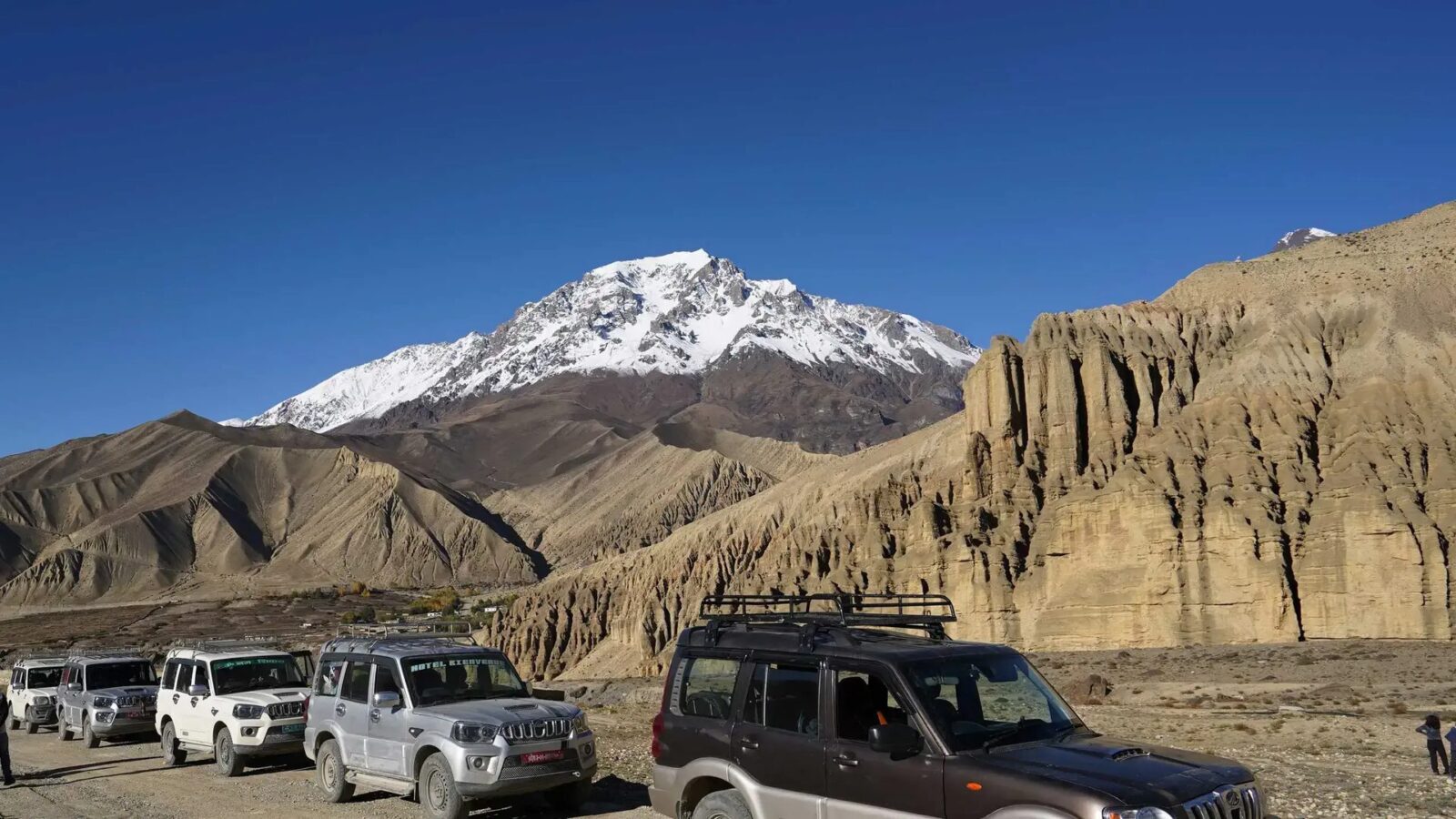
Until 1992 Upper Mustang was closed to foreigners entirely. It is still a restricted area, still requires a special permit, and still costs 50 US dollars per person per day just to be there. What you get for that is a corner of the Tibetan plateau that sits inside Nepal, and a walled capital at Lo Manthang that has changed very little in six hundred years.
Since the road went through, you can now reach it by jeep in a fraction of the time the trek takes. This guide covers what that journey is like and who it suits.
North of the Annapurna range, in the rain shadow behind the Himalaya. That geography is the whole story: the monsoon clouds drop their rain on the south side of the mountains and Mustang stays dry. The landscape is red and ochre cliffs, eroded canyons and almost no trees. It looks like Tibet because culturally and geologically it is.
The road follows the Kali Gandaki gorge, which is the deepest gorge in the world measured between the peaks that flank it. From Pokhara the route runs to Jomsom, then north through Kagbeni, Chele, Syangboche and Ghami to Lo Manthang.
A typical ten-day trip allows for the drive in, three or four days around Lo Manthang, and the drive out, with acclimatisation built in. Lo Manthang sits at about 3,840 metres, which is high enough to matter.
Rough. It is a mountain track, not a highway, and it crosses river beds. The jeeps are 4WD for good reason and the drivers do this route constantly. It is bumpy, spectacular and occasionally alarming, and it is the price of seeing Mustang in ten days instead of eighteen.
Upper Mustang requires a Restricted Area Permit costing 500 US dollars per person for ten days, plus 50 dollars for each additional day. You also need an ACAP permit for the Annapurna Conservation Area.
Two rules catch people out. You cannot get the restricted permit as a solo traveller, a minimum of two is required. And you must be accompanied by a licensed guide. These are government rules, not agency policy.
Mustang is one of the few places in Nepal you can visit during the monsoon, because the rain shadow keeps it dry. That makes June to August genuinely viable, which is unusual.
March to November is the broad season. Spring and autumn are most comfortable. Winter is severe, and much of the local population traditionally leaves for lower ground.
Take the jeep if you have ten days rather than eighteen, if you want to see Mustang without walking six hours a day, or if you are travelling with people who would not manage the trek. Take the trek if the walking is the point.
Our Upper Mustang Jeep Tour covers the 4WD vehicle and driver, fuel, and the permits and taxes for the route.
Hotels and teahouse accommodation, meals, domestic flights to Jomsom if you take them, and the guide fee are quoted separately so you can see exactly what each part costs. We arrange all of it, we just do not hide it inside one number.
Yes. A Restricted Area Permit at 500 US dollars per person for ten days, plus an ACAP permit. A licensed guide and a minimum group of two are both required.
Yes, since the road was built. It is a rough mountain track and requires a 4WD, but the drive is now the most common way to reach Mustang.
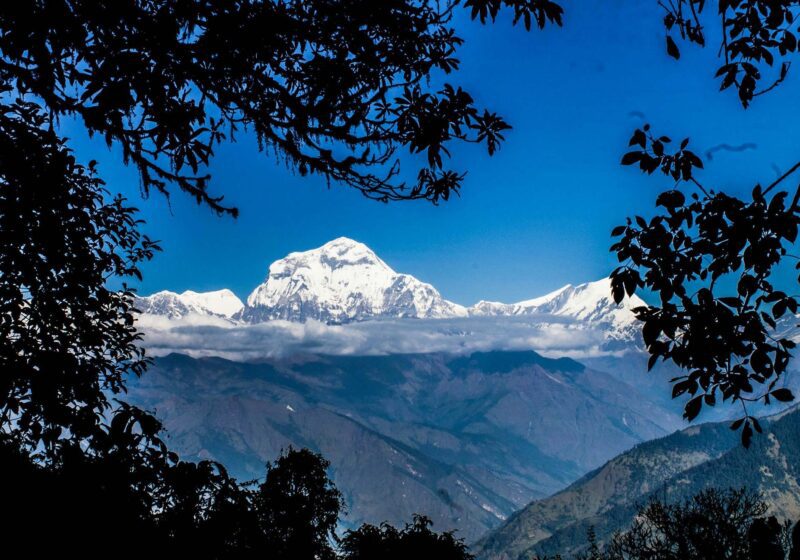
Yes. It sits in the rain shadow of the Annapurna and Dhaulagiri ranges and stays dry when the rest of Nepal is wet.
About 3,840 metres. High enough that you should ascend gradually rather than driving straight up.
Ask us about permit availability before booking flights, as the restricted permits are issued in limited numbers.