By Khem “Babu” Khadaka, founder, driving these roads since 1996 · Last updated: 2027 season (October 2026 – June 2027)
An India–Nepal pilgrimage links the holiest places of two faiths along one stretch of the Ganga plain and the Himalayan foothills, and most people plan it the wrong way round.
They book the famous sites one by one: a flight to Varanasi, another to Kathmandu, a separate trip to Bodh Gaya. They spend days in airports and miss the fact that the Buddha’s life, and some of Hinduism’s greatest shrines, sit on a single overland route that crosses the border at Sunauli.
The Buddha was born at Lumbini in Nepal, found enlightenment at Bodh Gaya, gave his first sermon at Sarnath and died at Kushinagar, all within a few hundred kilometres. Varanasi, Pashupatinath, Janakpur and Muktinath lie on or near the same map.
So instead of asking only “Which holy places should I visit in India and Nepal?”, it helps to ask a better question:
How do I follow the Buddha’s path and the great Hindu shrines as one overland journey, cross the border the right way, and reach each place at the right time of day and year?
That is what this Nepal pilgrimage guide is built around. It covers the Hindu sites (Varanasi, Pashupatinath, Muktinath, Janakpur and the Ganga at Haridwar) and the Buddhist circuit (Bodh Gaya, Sarnath, Kushinagar and Lumbini), how to cross the border at Sunauli and which visa rules catch people out, entry fees and dress codes, the festival dates for 2026–27, sample routes and what a private car and driver costs.
Think of an India–Nepal pilgrimage as two overlapping routes.
The Buddhist circuit follows the four places the Buddha himself named as worthy of pilgrimage: where he was born (Lumbini), where he was enlightened (Bodh Gaya), where he first taught (Sarnath) and where he passed away (Kushinagar). Three are in India, one in Nepal.
The Hindu circuit is looser. It usually includes Varanasi on the Ganga, Pashupatinath in Kathmandu, Muktinath high in Mustang, and Janakpur, the birthplace of Sita. Many pilgrims add Haridwar and Rishikesh at the start.
The two circuits meet in the Ganga plain and at the Sunauli border, so it’s easy to combine them. A Buddhist pilgrim will pass Varanasi anyway, and a Hindu pilgrim heading to Kathmandu by road goes within half an hour of Lumbini.
| Circuit | Main sites | Best length |
|---|---|---|
| Buddhist (India and Nepal) | Bodh Gaya, Sarnath, Kushinagar, Lumbini (plus Rajgir, Nalanda, Vaishali, Shravasti) | 10–14 days |
| Hindu (India and Nepal) | Varanasi, Pashupatinath, Janakpur, Muktinath (plus Haridwar, Rishikesh, Ayodhya) | 10–14 days |
| Combined India–Nepal pilgrimage | Varanasi, Sarnath, Bodh Gaya, Kushinagar, Lumbini, Kathmandu, Pokhara | 14–16 days |
Varanasi (Kashi, Banaras) is one of the oldest living cities in the world and the holiest city in Hinduism. Pilgrims come to bathe in the Ganga, to perform rites for their ancestors, and in many cases to be cremated here, because dying in Kashi is believed to bring liberation.
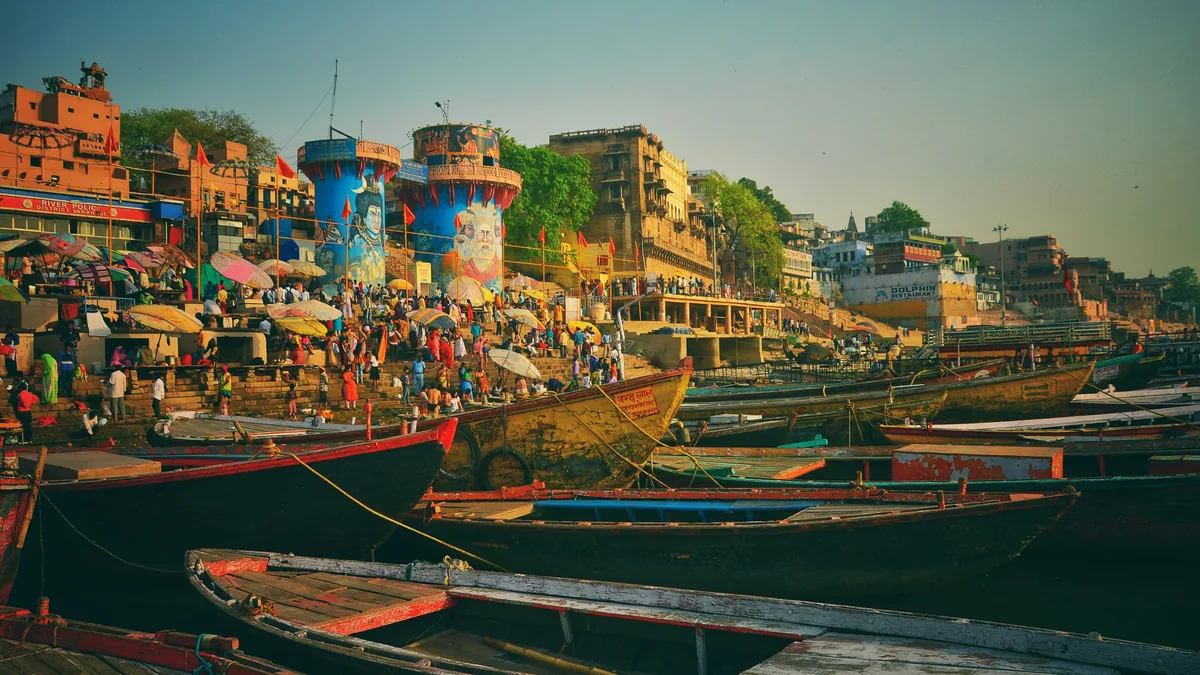
The city is a long curve of more than 80 ghats. Take a rowing boat at dawn from Dashashwamedh or Assi Ghat, when people are bathing and the light is soft. Walk the lanes of the old city to Kashi Vishwanath Temple, now reached through the wide Kashi Vishwanath Corridor.
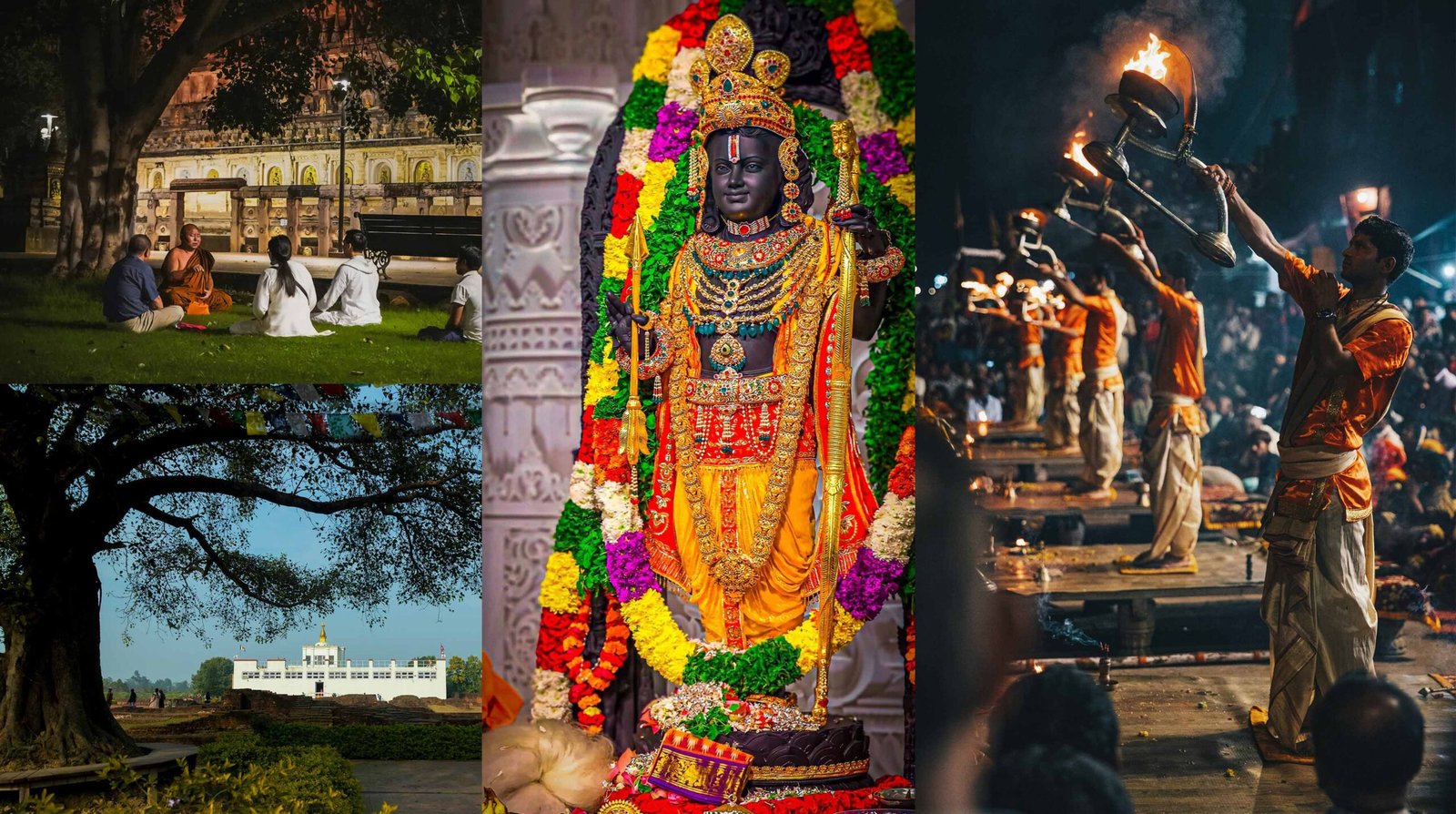
The evening Ganga aarti at Dashashwamedh Ghat starts at about 5:45 p.m. in winter (October to March) and about 6:45 p.m. in summer, and lasts around 45 minutes. It’s free: watch from the steps, or from a boat on the river. Assi Ghat holds a smaller morning aarti, the Subah-e-Banaras, at about 5:30 a.m.
Manikarnika Ghat is the main cremation ground. You may watch quietly from a distance, but don’t photograph the cremations, and ignore anyone who asks for money “for wood”.
Sarnath is about 10 km from central Varanasi, a 30 to 45 minute drive. Here, in a deer park, the Buddha gave his first sermon to five companions and set in motion the “wheel of the Dharma”.
Most people visit Sarnath as a half day from Varanasi. Ticket prices at the archaeological site have changed several times, so pay at the official counter and ignore older figures online.
Bodh Gaya in Bihar is the most important place on any Buddhist India–Nepal pilgrimage. The Mahabodhi Temple, a UNESCO World Heritage Site, stands beside a descendant of the Bodhi tree under which the Buddha attained enlightenment (see the Ministry of Culture page).
Around it are monasteries built by Buddhist countries from Thailand and Japan to Bhutan and Tibet, and the 80-foot Great Buddha statue. In winter, from December to February, thousands of monks and lay pilgrims come for teachings and prayer festivals.
Practical points: mobile phones are not allowed inside the Mahabodhi complex and are deposited at a counter by the gate, along with shoes. A small camera fee applies. The temple opens very early and stays open into the evening, and dawn is the most peaceful time.
Bodh Gaya is about 250 km from Varanasi, around 6 hours by road. Many pilgrims add Rajgir (Vulture Peak) and the ruins of Nalanda university, both an easy day from Bodh Gaya.
Kushinagar, in eastern Uttar Pradesh, is where the Buddha died and entered parinirvana. The Mahaparinirvana Temple holds a 6-metre reclining Buddha, and the Ramabhar Stupa nearby marks the site of his cremation. It’s a quiet place, and most visitors need half a day.
From Kushinagar it is roughly 3 to 4 hours by road, via Gorakhpur, to Sunauli, the main border crossing for an India–Nepal pilgrimage. On the Nepal side the town is Belahiya, next to Bhairahawa (Siddharthanagar).
| Situation | What you need |
|---|---|
| Entering Nepal at Sunauli–Belahiya | Nepal visa on arrival for most nationalities: USD 30 (15 days), USD 50 (30 days), USD 125 (90 days). Indian citizens need no visa. |
| Leaving India by road | Foreigners may exit India at any authorised land crossing, including Sunauli. |
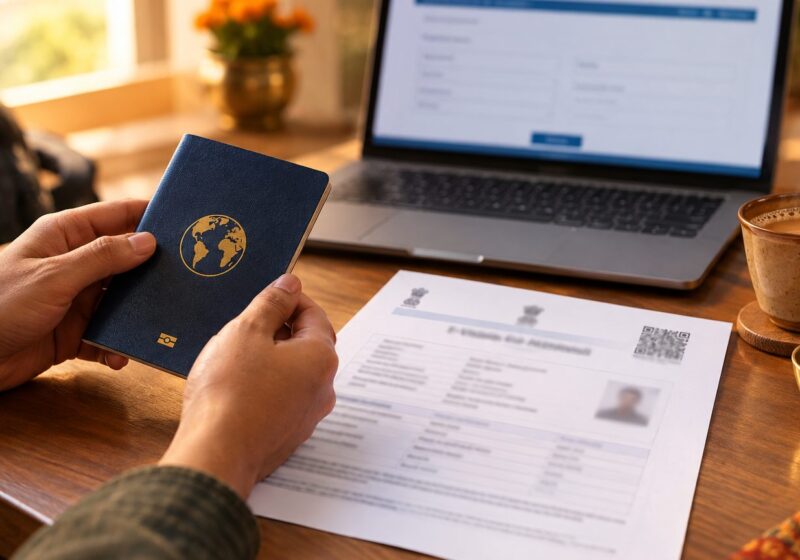
| Re-entering India by road on an e-Visa | Only at designated land crossings. Reports in 2026 list Raxaul, Rupaidiha and Jogbani on the Nepal border, but not Sunauli. Check the official Indian e-Visa site before you plan the return. |
| Coming back into India at all | Make sure your Indian visa allows more than one entry. |
| Driving across | Indian-registered cars need a separate customs permit to enter Nepal, and many routes switch to a Nepali vehicle at the border. We tell you which applies to your route. |
Get your passport stamped out of India and into Nepal: the border is open to Indians and Nepalis without formalities, and it’s easy for foreigners to walk past the immigration offices by mistake. Our drivers stop at both.
Lumbini is the heart of any Nepal pilgrimage for Buddhists. It lies in Nepal’s Terai plain, about 25 km from the border at Belahiya and a similar distance from Gautam Buddha International Airport at Bhairahawa.
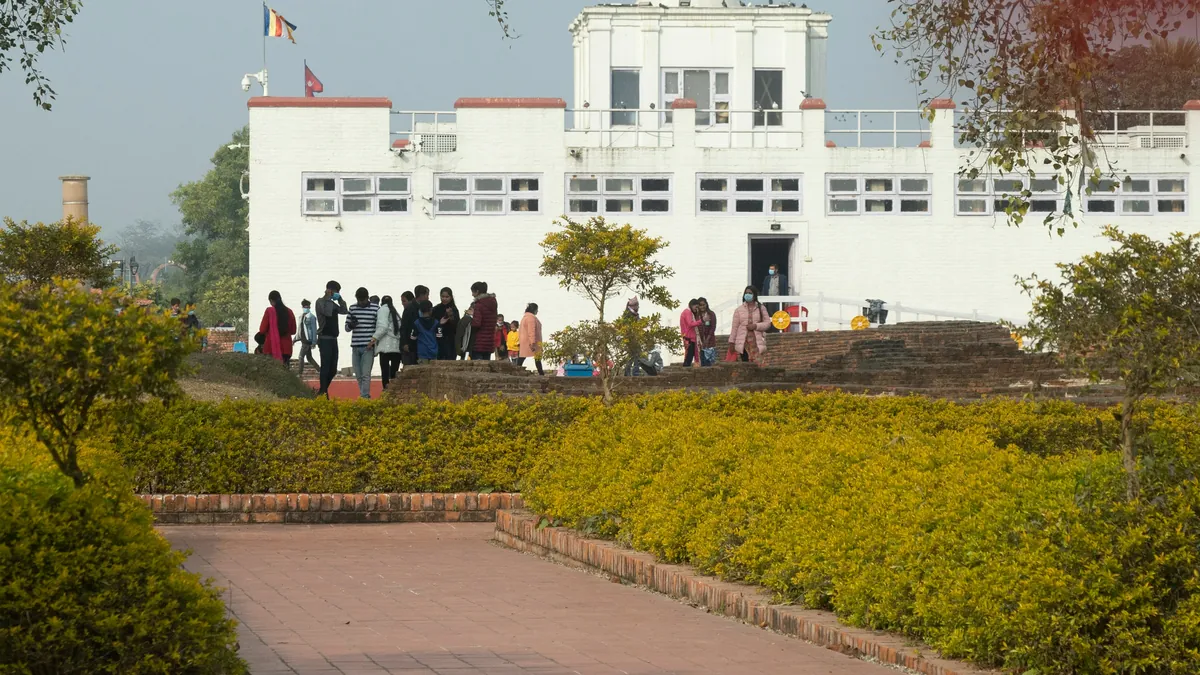
The Maya Devi Temple covers the marker stone for the exact spot of the Buddha’s birth. Beside it are the sacred pond, the Bodhi tree hung with prayer flags, and the Ashoka Pillar, erected by the emperor when he visited in about 249 BCE. Its inscription is the earliest written evidence that this is the birthplace. Lumbini was inscribed as a UNESCO World Heritage Site in 1997.
North of the sacred garden, the long Monastic Zone holds temples built by Buddhist communities from around the world: Chinese, Thai, Korean, Myanmar, German, Vietnamese and more. It’s spread out, so hire a cycle-rickshaw or electric cart, or let your driver take you between the gates.
The conservation fee for the Maya Devi Temple area is NPR 700 for most foreign nationals, NPR 400 for SAARC and Myanmar citizens and NPR 80 for Indians, according to the Lumbini Development Trust. Shoes come off at the garden entrance.
Stay at least one night: Lumbini is the emotional centre of a Nepal pilgrimage. The sacred garden at dawn, with monks chanting, is the high point of many an India–Nepal pilgrimage.
| Site | Foreign visitors (approx.) | Notes |
|---|---|---|
| Dashashwamedh aarti, Varanasi | Free | Boat seats are extra |
| Sarnath archaeological site and museum | Small ASI ticket | Museum closed Fridays |
| Mahabodhi Temple, Bodh Gaya | Camera fee | Phones deposited at the gate |
| Mahaparinirvana Temple, Kushinagar | Free | Remove shoes |
| Maya Devi Temple, Lumbini | NPR 700 | NPR 80 for Indians; shoes off in the garden |
| Pashupatinath, Kathmandu | NPR 1,000 | Free for Indian and SAARC citizens; main shrine for Hindus only |
| Muktinath | Temple free; ACAP permit NPR 3,000 | NPR 1,000 ACAP for SAARC nationals |
| Janaki Mandir, Janakpur | Small fee | Very busy at Vivah Panchami |
Fees change, and several Nepali sites revised theirs in 2025–26, so treat these as a guide and carry cash in rupees.
At about 3,760 metres in Mustang, Muktinath is sacred to both Hindus and Buddhists (see Muktinath). Hindus worship Vishnu here as Muktinath, “lord of liberation”, and it is one of the 108 Divya Desam. Tibetan Buddhists call it Chumig Gyatsa, the Hundred Waters.

Pilgrims bathe under 108 bull-headed water spouts behind the temple, in water that is ice-cold even in summer, and dip in the two ponds in front. Next door, the Jwala Mai temple shelters a small natural flame burning over water.
Getting there is part of the pilgrimage. Fly Pokhara to Jomsom (about 20 minutes, morning only, because the wind rises by midday) or drive the long, rough road up the Kali Gandaki, then take a jeep for about an hour to Ranipauwa below the temple.
Take the altitude seriously. Muktinath is higher than any town in the Alps. Walk slowly, drink water, and don’t go straight up from Pokhara and back in a day if you have heart or lung problems. The road continues north into the restricted area of Upper Mustang; see our Upper Mustang jeep tour guide.
Janakpur, in Nepal’s eastern Terai, is revered as the birthplace of Sita and the place where she married Rama. The white marble Janaki Mandir, built in the early 20th century in a Mughal-Rajput style, is one of the most striking temples in Nepal.
Its biggest festival is Vivah Panchami, the re-enactment of the divine wedding, which falls in late November or December. The town also celebrates Ram Navami and Chhath on a grand scale.
Janakpur is about a 30-minute flight or a long day’s drive from Kathmandu, and it pairs naturally with a Hindu India–Nepal pilgrimage that also includes Ayodhya on the Indian side.
No Nepal pilgrimage is complete without Pashupatinath, the great Shiva temple on the Bagmati river in Kathmandu. The pagoda-roofed main temple, with its golden roof and silver doors, is part of the Kathmandu Valley World Heritage Site.
Only Hindus may enter the main temple courtyard. Everyone else can walk the terraces, shrines and ghats around it and look across the river. Foreigners pay NPR 1,000; Indian and SAARC citizens enter free.
On the river bank are the Arya Ghats, where open-air cremations take place throughout the day. Watch from the opposite bank, quietly, without photographs of the families. The evening aarti on the Bagmati, at around 6 p.m., is free to watch.
On Maha Shivaratri, which falls on 6 March 2027, hundreds of thousands of pilgrims and thousands of sadhus from India and Nepal gather here. It’s an extraordinary sight, but queues can last hours, and roads around the temple close.
Kathmandu is also a Buddhist pilgrimage centre, and it’s where many India–Nepal pilgrimage routes end.
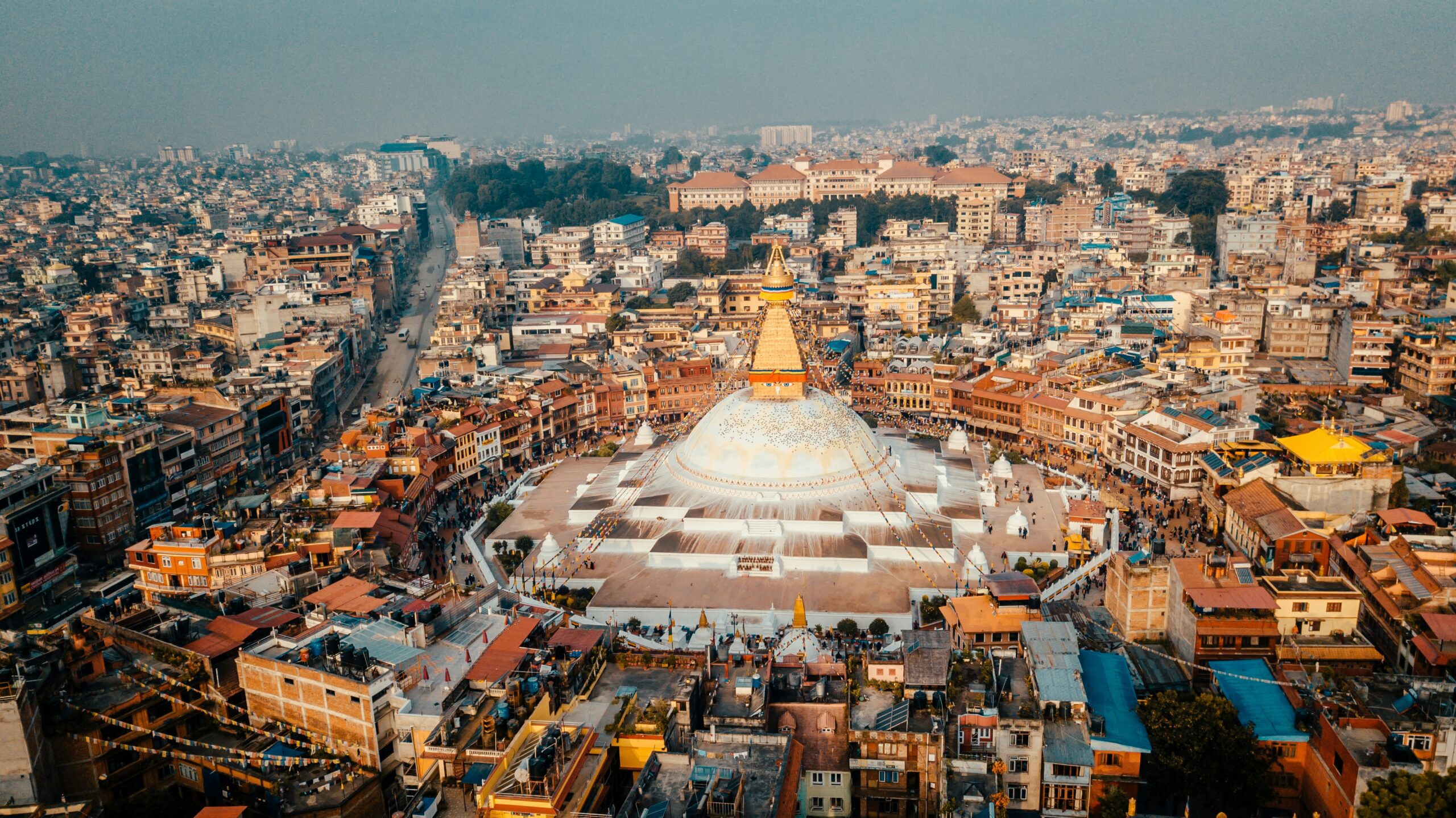
Boudhanath is one of the largest stupas in the world and the centre of Kathmandu’s Tibetan community. Walk the kora (circuit) clockwise at dawn or dusk, when the lamps are lit and pilgrims turn the prayer wheels. It’s about 20 to 30 minutes’ walk from Pashupatinath, so the two pair easily.
Swayambhunath, the “Monkey Temple”, sits on a hill west of the city with views over the valley. It is sacred to both Buddhists and Hindus. Climb the eastern stairway early, before the heat and the tour groups.
Beyond these, pilgrims visit the monasteries of Kopan above Boudha, and the cave of Guru Rinpoche at Pharping, south of the city. Our Kathmandu tours include all three stupas and temples at the right times of day.
| Date | Festival | Where |
|---|---|---|
| 7–11 November 2026 | Tihar and Diwali (Lakshmi Puja on 8 November) | Nepal and India |
| 24 November 2026 | Dev Deepawali (Kartik Purnima): the ghats lit with lamps | Varanasi |
| Late Nov or Dec 2026 | Vivah Panchami, the wedding of Rama and Sita | Janakpur |
| December 2026 to February 2027 | Winter teachings and prayer festivals | Bodh Gaya |
| January to April 2027 | Haridwar Kumbh (Amrit Snan on 6 March, 8 March and 14 April) | Haridwar |
| 6 March 2027 | Maha Shivaratri | Pashupatinath and all Shiva temples |
| 20 May 2027 | Buddha Jayanti (Buddha Purnima) | Lumbini, Bodh Gaya, Sarnath, Kushinagar |
Hindu and Buddhist festivals follow lunar calendars, so dates are announced each year and can differ by a day between India and Nepal. We confirm them when we plan your route.
Should you travel for a festival? If you want to see faith at its most intense, yes. If you want quiet time at each shrine, travel a week either side. Hotels in Varanasi for Dev Deepawali and in Haridwar for the Kumbh fill months ahead.
| Days | Route | Highlights |
|---|---|---|
| 1–2 | Arrive Varanasi | Dawn boat on the Ganga; evening aarti |
| 3 | Varanasi and Sarnath | Dhamek Stupa, museum (not Friday) |
| 4–6 | Drive to Bodh Gaya (about 6 hours) | Mahabodhi Temple; day trip to Rajgir and Nalanda |
| 7–8 | Drive to Kushinagar, via Vaishali | Mahaparinirvana Temple, Ramabhar Stupa |
| 9–10 | Cross at Sunauli to Lumbini | Maya Devi Temple, Monastic Zone |
| 11–12 | Drive or fly to Kathmandu | Boudhanath, Swayambhunath |
| 13–14 | Kathmandu | Pashupatinath, Kopan or Pharping; depart |
For a Hindu route, start at Haridwar and Rishikesh (see our Ganga Yatra guide), fly or drive to Varanasi, cross to Nepal for Lumbini and Kathmandu, then fly to Pokhara for Muktinath. For the general India–Nepal combination, read how to plan a combined India and Nepal trip and our 14-day India Nepal itinerary.
When to go: October to March is the best season for an India–Nepal pilgrimage. The plains are hot from April to June, often over 40 °C in Varanasi and Bodh Gaya, and the monsoon from July to September brings floods on the Terai roads. December and January can bring thick morning fog on the plains, which delays drives and flights.
Our pilgrimage routes are private and priced for the whole vehicle with its driver, not per person:
| Tour | Sedan (1–3) | SUV (4–5) | Tempo Traveller (6–8) |
|---|---|---|---|
| India Nepal Grand Odyssey: From the Taj to Buddha’s Birthplace | USD 1,869 | USD 2,562 | USD 3,360 |
| Golden Triangle, Khajuraho and Varanasi, 10 days | USD 890 | USD 1,220 | USD 1,600 |
| Nepal Himalayan Heritage Tour | USD 1,068 | USD 1,464 | USD 1,920 |
| Divine Ganga Yatra: Holy Cities of the Foothills | USD 623 | USD 854 | USD 1,120 |
Included on the India legs: the car, the driver, fuel, tolls, parking and state taxes, with the driver’s own food and lodging covered. Not included: hotels, meals, entry fees, donations, guides and visas. Each trip page lists exactly what’s included on the Nepal side.
We can arrange a licensed local guide at Bodh Gaya, Sarnath, Lumbini or Pashupatinath; see guide or driver. Every route can be changed, and we’ll price it at our India car and driver rates and Nepal car and driver rates. See all our India and Nepal tours.
Tell us which sites matter most to you, your dates and how many of you are travelling. We reply within 24 hours with a fixed price for the car and driver. If you’d like a detailed day-by-day itinerary, it costs €100, and the full €100 is deducted from your tour price when you book. There is no obligation.
Tailor-Made India & Nepal
Tell us what you love and we reply within 24 hours with a fixed price. A detailed day-by-day itinerary costs €100, deducted in full from your tour price.
Pick one or more destinations — you can mix India and Nepal freely.
This helps us match the right pace, stay and activities.
We reply within 24 hours. No spam, ever.
Before you book, run through these eight questions:
If you can answer yes to most of these, your India–Nepal pilgrimage will run smoothly.
Think of an India–Nepal pilgrimage as a line on the map, not a list of places.
The river: Haridwar and Varanasi, where Hindus come to the Ganga. The Buddha’s path: Bodh Gaya, Sarnath, Kushinagar and Lumbini, joined by road across the Sunauli border. The valley and the mountains: Pashupatinath and Boudhanath in Kathmandu, Janakpur in the plains and Muktinath in the high Himalaya.
Travel overland, cross the border the right way, give each great site a night, and pick your festival dates on purpose. Then this Nepal pilgrimage guide has done its job.
For Buddhists, the four great sites are Lumbini, Bodh Gaya, Sarnath and Kushinagar. For Hindus, the usual route includes Varanasi, Pashupatinath, Muktinath and Janakpur, often with Haridwar and Rishikesh at the start.
On an India–Nepal pilgrimage, about 12 to 14 days by road covers Varanasi, Sarnath, Bodh Gaya, Kushinagar, Lumbini and Kathmandu without rushing. Ten days is possible if you add Rajgir and Nalanda to Bodh Gaya and skip Kathmandu.
At Sunauli in Uttar Pradesh, which is Belahiya on the Nepal side. Lumbini is about 25 km from the border. Foreigners must get stamped out of India and into Nepal at the immigration offices.
Yes. Most nationalities get a visa on arrival at Belahiya: USD 30 for 15 days, USD 50 for 30 days and USD 125 for 90 days. Indian citizens don’t need a visa for Nepal.
At the time of writing, Sunauli is not a designated e-Visa entry point. Reports in 2026 list Raxaul, Rupaidiha and Jogbani on the Nepal border. Check the official Indian e-Visa site, or fly back into India.
Foreign visitors pay NPR 1,000. Indian and SAARC citizens enter free. Only Hindus may enter the main temple courtyard, but everyone can visit the surrounding shrines and ghats.
The Lumbini Development Trust lists a conservation fee of NPR 700 for most foreign nationals, NPR 400 for SAARC and Myanmar citizens and NPR 80 for Indians. Shoes come off in the sacred garden.
Maha Shivaratri falls on 6 March 2027. It is the biggest festival at Pashupatinath in Kathmandu, and it is also the first Amrit Snan day of the Haridwar Kumbh.
Buddha Jayanti, also called Buddha Purnima, falls on 20 May 2027. It is celebrated at Lumbini, Bodh Gaya, Sarnath and Kushinagar, which are all very busy that week.
Fly from Pokhara to Jomsom, about 20 minutes, in the morning, or drive the long road up the Kali Gandaki. From Jomsom, a jeep takes about an hour to Ranipauwa below the temple. Foreigners need an ACAP permit of NPR 3,000.
About 3,760 metres. Walk slowly, drink plenty of water and avoid going up and down from Pokhara in a single day if you have heart or lung problems.
Often yes, by flight to Jomsom and jeep to Ranipauwa, with a short walk or pony ride to the temple. The altitude is the main concern, so check with a doctor first and allow a night in Jomsom or Marpha.
Clothes that cover the shoulders and knees, for men and women, and shoes that slip off easily. Some Hindu temples ask you to leave leather belts and bags outside.
October to March. April to June is very hot on the plains, and the monsoon from July to September floods Terai roads. Expect fog on winter mornings in December and January.
Our India Nepal Grand Odyssey costs USD 1,869 for a sedan (1 to 3 travellers), USD 2,562 for an SUV and USD 3,360 for a Tempo Traveller, for the whole vehicle. Shorter routes start from USD 623.
Yes. It is written for the October 2026 to June 2027 season, with festival dates for 2026–27. Border rules and entry fees change, so confirm them before you travel.
A good India–Nepal pilgrimage isn’t measured by the number of temples. It’s measured by the moments: the Ganga at dawn, the Bodhi tree at night, the marker stone at Lumbini.
A route, not a list? The right visa for re-entry? A night at each great site? Modest clothes and slip-on shoes? Festival dates chosen on purpose?
If the answer is yes, the journey itself becomes part of the pilgrimage. If not, it becomes a string of airport transfers.
Once you plan around those things, this Nepal pilgrimage guide is simple to follow. Read our Ganga Yatra guide, our Pokhara travel guide for the road to Muktinath, or see our Lumbini tours.
See the India Nepal Grand Odyssey · India and Nepal tours · Plan my trip