By Khem “Babu” Khadaka, founder, driving these roads since 1996 · Last updated: 2027 season (October 2026 – June 2027)
The Everest Base Camp trek is the most famous walk in the Himalaya, and most people who fail to reach base camp don’t fail because they aren’t fit enough.
They fail because they climb too fast. They skip a rest day to save time, sleep too high too soon, and wake up at Lobuche with a pounding headache that only goes away when they walk back down.
The trek itself is not technical. There’s no rope, no ice axe and no climbing. It’s twelve days of steady walking on a good stone trail through Sherpa villages, monasteries and some of the finest mountain scenery on earth. The challenge is the thin air above 4,000 metres, and the flight to Lukla that has to happen before you take a single step.
So instead of asking only “Am I fit enough for the Everest Base Camp trek?”, it helps to ask a better question:
Does my plan give my body enough time to adjust to the altitude, and enough spare days to absorb a delayed Lukla flight, so that I actually reach base camp and enjoy it?
That’s what this guide is built around. It covers our 14-day Everest Base Camp trek day by day with the altitude of every stop, how acclimatisation works, Lukla flights from Kathmandu and Ramechhap, the 2026–27 permits and fees, how hard the trek really is, altitude sickness, the best months, teahouse life, what to pack, a full cost breakdown and our per-person prices.
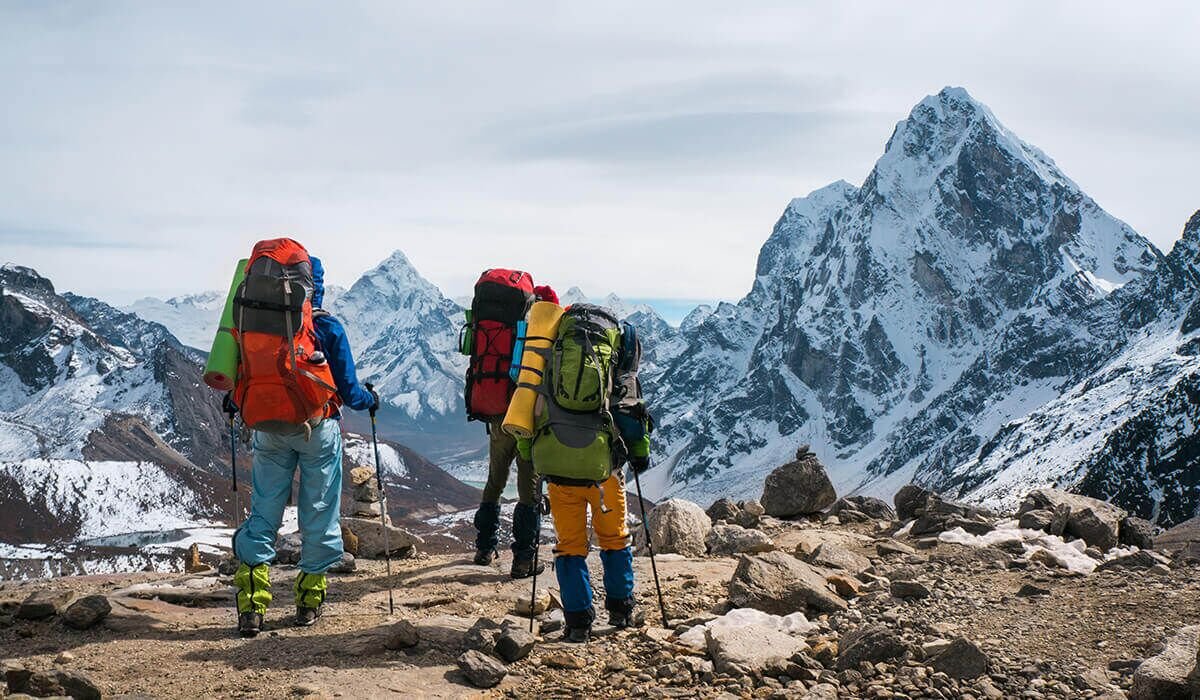
The Everest Base Camp trek follows the Dudh Koshi and Khumbu valleys from Lukla up to the foot of the Khumbu Icefall, where expeditions set up their tents each spring. The return trip on foot is roughly 130 km, walked over about 12 days.
The whole route lies inside Sagarmatha National Park, set up in 1976 and a UNESCO World Heritage Site since 1979 (see the UNESCO Sagarmatha page). Everest itself is 8,849 metres, and along the way you pass Ama Dablam, Lhotse, Nuptse, Pumori and Cho Oyu.
Two things surprise first-timers. You can’t actually see the summit of Everest from base camp, because Nuptse blocks it; the classic view is from Kala Patthar, a rocky hill above Gorak Shep. And base camp itself, outside the spring climbing season, is a stretch of glacier rubble with prayer flags and a marker stone. The journey is the point.
This is the itinerary our guides use. It follows the widely accepted pace for the Everest Base Camp trek: short days early on, and two nights each at Namche and Dingboche.
| Day | Route | Sleeping altitude | Walking time |
|---|---|---|---|
| 1 | Arrive in Kathmandu; briefing and gear check | About 1,400 m | – |
| 2 | Fly to Lukla (about 2,850 m); walk to Phakding | 2,610 m | 3–4 hours |
| 3 | Phakding to Namche Bazaar; enter Sagarmatha National Park | 3,440 m | 6–7 hours |
| 4 | Acclimatisation day in Namche; hike to the Everest View viewpoint | 3,440 m | 3–4 hours |
| 5 | Namche to Tengboche monastery | 3,867 m | 5–6 hours |
| 6 | Tengboche to Dingboche | 4,410 m | 5–6 hours |
| 7 | Acclimatisation day in Dingboche; hike up Nangkartshang | 4,410 m | 3–4 hours |
| 8 | Dingboche to Lobuche, past the climbers’ memorials at Thukla | 4,940 m | 5–6 hours |
| 9 | Lobuche to Gorak Shep, then Everest Base Camp (5,364 m) and back | 5,164 m | 7–8 hours |
| 10 | Sunrise on Kala Patthar (about 5,545 m); descend to Pheriche | About 4,370 m | 7–8 hours |
| 11 | Pheriche to Namche Bazaar | 3,440 m | 6–7 hours |
| 12 | Namche to Lukla | About 2,850 m | 6–7 hours |
| 13 | Fly Lukla to Kathmandu (or Ramechhap, then drive) | About 1,400 m | – |
| 14 | Spare day in Kathmandu for weather, then departure | – | – |
Day 9 is the big one. You walk up to Gorak Shep, drop your bags, walk to base camp and back, and sleep at 5,164 metres. Some groups do Kala Patthar that afternoon instead of at sunrise, when the light and the weather are often better. Your guide will decide on the day.
Day 14 is deliberately empty. If the Lukla flight on Day 13 is cancelled, it becomes your flight day. Don’t book an onward international flight for the same evening.
Your body adapts to thin air, but slowly. The CDC Yellow Book advises that above 3,000 metres you should raise your sleeping altitude by no more than 500 metres a night, and add an extra night for every 1,000 metres you gain.
The Everest Base Camp trek can’t follow that rule exactly, because the villages are where they are. That’s why the two rest days matter so much. They aren’t lazy days: you hike high in the morning and come back down to sleep, which is the best way to help your body adjust.
If you want a gentler plan, add a night at Pheriche or a third night at Namche. The price difference is small; the difference in how you feel can be enormous.
Almost everyone starts the Everest Base Camp trek with a 15 to 35-minute flight to Tenzing-Hillary Airport at Lukla, about 2,850 metres up, with a short, sloping runway on the side of the mountain.
The complication is where you fly from. To ease congestion at Kathmandu’s Tribhuvan airport, Nepal’s aviation authority moved Lukla flights to Ramechhap Airport at Manthali in 2019, and has done so again in the busy seasons since 2022. In recent years that has meant roughly mid-March to May and mid-September to November. The exact dates are announced each season.
| From Kathmandu | From Ramechhap (Manthali) | |
|---|---|---|
| When | Quieter months, usually December–February and June–August | Peak seasons, roughly spring and autumn |
| Getting to the airport | 15–30 minutes from Thamel | About 130 km by road, 4–5 hours; most groups leave Kathmandu around 1–2 a.m. |
| Flight time | About 30–35 minutes | About 15–20 minutes |
| Typical foreigner fare (2026) | Roughly USD 250–260 one way | Roughly USD 210 one way |
| Baggage | About 10 kg checked + 5 kg hand baggage | About 10 kg checked + 5 kg hand baggage |
Fares are set by the airlines (Tara Air, Summit Air and Sita Air fly the route) and change often, so treat them as a guide.
Delays are normal. Lukla flights only operate in good visibility, usually in the morning. Cloud can ground them for a day, occasionally several. That’s why our Everest Base Camp trek itinerary includes a spare day, and why we recommend one more if your international flight is tight.
If you’re stuck, a shared helicopter seat between Lukla and Kathmandu or Ramechhap is usually possible for an extra cost, which travel insurance may or may not cover. Some trekkers avoid the flight completely by driving to Salleri or Phaplu and walking in, which adds several days.
You need two local permits for the standard Everest Base Camp trek. The TIMS card isn’t used in the Khumbu, because the local area permit replaced it.
| Permit | Where you get it | Foreigner cost |
|---|---|---|
| Khumbu Pasang Lhamu Rural Municipality entry fee | Lukla (or Monjo) | NPR 2,000; some 2025–26 permit cards show NPR 3,000 |
| Sagarmatha National Park entry fee | Monjo checkpoint or Kathmandu | NPR 3,000 |
| Gaurishankar Conservation Area fee | Only if you walk in from Jiri or Shivalaya | Separate fee; check locally |
SAARC nationals pay lower rates. Budget up to NPR 6,000 per person (about USD 45) for the two standard permits. On our treks, your guide buys them for you and they’re included in the price.
The guide rule: since 1 April 2023 the Nepal Tourism Board has required foreign trekkers in national parks and conservation areas to trek with a licensed guide. The Khumbu municipality disputed this for the Everest region at first, and enforcement on the ground has varied. Either way, every one of our Everest Base Camp trek departures includes a licensed guide.
Climbing fees are separate. From September 2025 Nepal raised the spring Everest summit permit for foreigners from USD 11,000 to USD 15,000, as reported by the Kathmandu Post. That affects climbers only, not trekkers going to base camp.
We rate the Everest Base Camp trek as moderate to challenging. It’s harder than Poon Hill, similar to Annapurna Base Camp in walking effort, and more demanding because of the altitude.
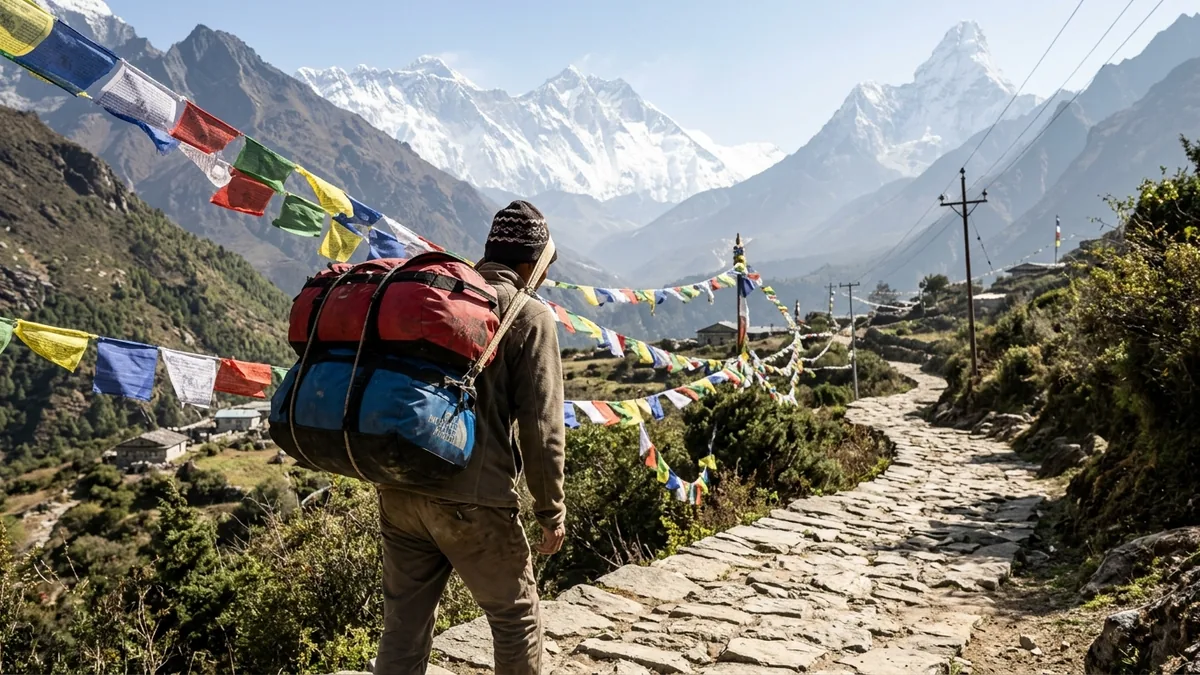
Who can do it? Most healthy adults who walk regularly. We’ve guided people in their sixties and seventies to base camp. What matters is steady fitness and patience, not speed. Fit young trekkers who race ahead are often the ones who get altitude sickness.
How to prepare: spend 8 to 12 weeks building up to long day hikes of 5 to 6 hours with hills, ideally on consecutive days, carrying a 5 to 7 kg daypack. Stairs and hill walking help more than gym sessions. See your doctor before you book if you have any heart or lung condition.
Almost everyone feels the altitude somewhere on the Everest Base Camp trek. Mild symptoms are normal; ignoring them is what’s dangerous.
| Condition | Signs | What to do |
|---|---|---|
| Acute mountain sickness (AMS) | Headache plus poor appetite, nausea, dizziness, tiredness or poor sleep | Don’t go higher; rest, drink water; descend if it gets worse |
| High-altitude cerebral oedema (HACE) | Confusion, clumsiness, stumbling like someone drunk, extreme drowsiness | Emergency: descend immediately, oxygen, evacuation |
| High-altitude pulmonary oedema (HAPE) | Breathless at rest, a wet cough, sometimes frothy or bloody sputum | Emergency: descend immediately, oxygen, evacuation |
Our guides carry a pulse oximeter and check every trekker morning and evening, and they’re trained to turn someone around. That decision is never negotiable. There’s a Himalayan Rescue Association aid post at Pheriche with doctors in the main seasons.
Some trekkers take acetazolamide (Diamox) to help acclimatisation. It’s a prescription medicine, so talk to your doctor before you go. It doesn’t replace a slow ascent.
Travel insurance is essential. Make sure it covers trekking up to 6,000 metres and helicopter evacuation. A rescue helicopter from Gorak Shep costs thousands of dollars, and without insurance you’ll be asked to pay before it flies.
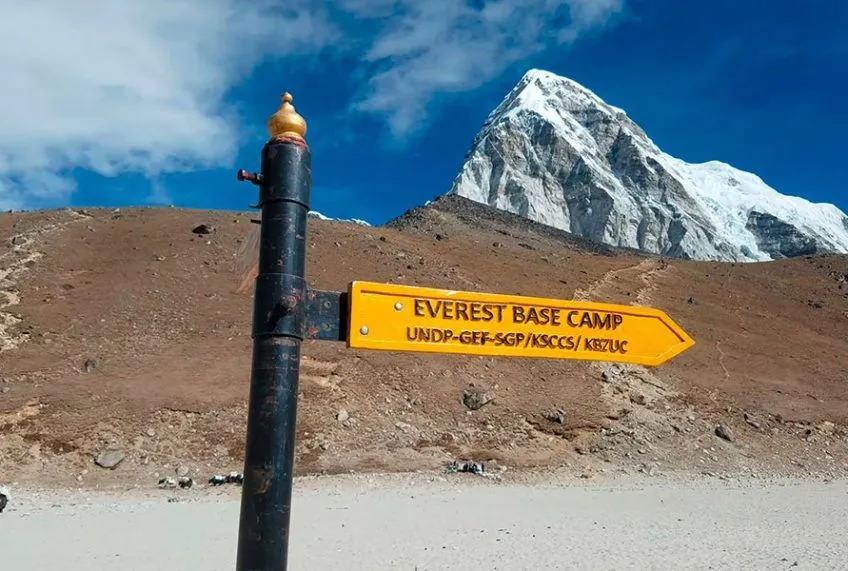
The best time for the Everest Base Camp trek is the dry, clear weather either side of the monsoon.
| Months | Conditions | Verdict |
|---|---|---|
| October–November | Clear skies, stable weather, cold nights, busy trails | The best overall, especially for views |
| December–February | Very cold, often clear; fewer trekkers; some lodges close high up | Good for tough, well-equipped trekkers |
| March–May | Warmer, rhododendrons lower down, more cloud in the afternoons | Very good; base camp is full of expedition tents in April and May |
| June–September | Monsoon cloud and rain, leeches low down, frequent Lukla delays | Avoid unless you’re very flexible |
Our pick is mid-October to mid-November for the clearest mountain views, or late March to early May if you’d like to see base camp alive with expeditions.
Two festivals are worth timing for. Mani Rimdu, the masked-dance festival at Tengboche monastery, usually falls in October or November. Dashain (around 11–21 October 2026) is Nepal’s biggest festival, when flights and cars get busy, so book early.
You sleep in teahouses: family-run lodges with simple twin rooms, foam mattresses, a blanket and a shared bathroom. The dining room has a stove, lit in the evenings, and that’s where everyone gathers. Lower down, in Namche and Lukla, some lodges have en-suite rooms and good bakeries.
Food is better than people expect. The staple is dal bhat, lentils, rice and vegetables with free refills, which is why the guides eat it twice a day. Menus also have noodles, pasta, potatoes, eggs, soups and pancakes. Prices rise with altitude, because everything above the last road is carried in by porters or yaks.
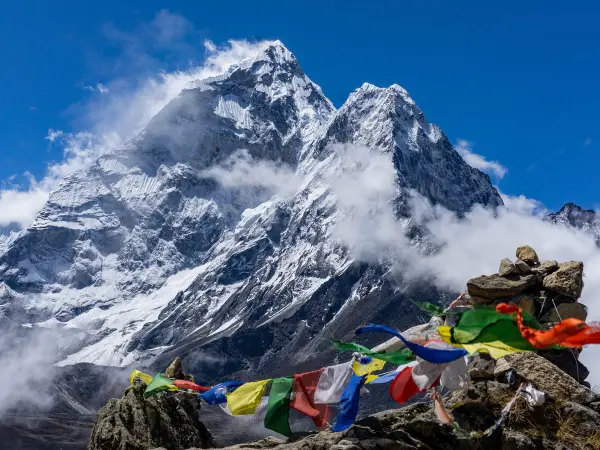
The classic route isn’t the only way to see Everest. If you have more time or experience, these are worth a look:
For easier options, read our guide to the best treks in Nepal for beginners. If you’d prefer a dry landscape and a rain-shadow trek, see our Upper Mustang trek guide.
Pack for cold, not for style. A porter carries up to about 20–25 kg shared between two trekkers, and the Lukla flight allows about 15 kg each including hand baggage, so keep it light.

| Category | Essentials |
|---|---|
| Clothing | Base layers, fleece, insulated down jacket, waterproof shell, trekking trousers, warm hat, sun hat, liner and warm gloves |
| Feet | Broken-in waterproof boots, camp shoes, 4–5 pairs of wool socks |
| Sleeping | Sleeping bag rated to about −15 °C (we can rent you one in Kathmandu) |
| Kit | Daypack (25–35 litres), trekking poles, headtorch, sunglasses (category 3–4), two water bottles, water purification |
| Health | Sunscreen, lip balm, blister kit, personal medicines, rehydration salts, any prescribed altitude medicine |
| Documents | Passport, copies, insurance details, some Nepali cash for snacks, showers and charging |
Most gear can be bought or rented cheaply in Kathmandu’s Thamel district. Break your boots in at home; that’s the one thing you can’t fix on the trail.
The total cost of an Everest Base Camp trek depends on your group size and what’s included. Here’s what makes up the bill, and what our package covers:
| Item | Typical cost | In our price? |
|---|---|---|
| Licensed guide and porter for the whole trek | The largest single cost after flights | Yes |
| Teahouse lodging, all meals on the trek | Rises with altitude | Yes |
| Sagarmatha NP and Khumbu area permits | About NPR 5,000–6,000 | Yes |
| Airport and ground transfers in Nepal | Includes the Ramechhap drive in peak season | Yes |
| Lukla flights (return) | Roughly USD 420–520 | No |
| Nepal visa | USD 30 / 50 / 125 for 15 / 30 / 90 days | No |
| Travel insurance with helicopter rescue | Varies by provider | No |
| Hot showers, charging, Wi-Fi, snacks, drinks | A few thousand rupees over the trek | No |
| Tips for guide and porter | Optional | No |
The visa fees come from the Tribhuvan airport immigration office. Tipping is always your choice; our tipping guide explains what’s usual for guides and porters in Nepal.
Cheap Everest Base Camp trek offers usually save money by cutting the rest days, using unlicensed guides or overloading porters. Ask exactly what’s included before you compare prices.
Our Everest Base Camp Trek, 14 days is private and priced per person. The more of you there are, the lower the price, because the guide and logistics are shared:
| Group size | Price per person |
|---|---|
| Small group, 6 to 8 trekkers | USD 1,320 |
| Family, 4 to 5 trekkers | USD 1,650 |
| Couple or friends, 2 to 3 trekkers | USD 2,000 |
| Solo trekker | USD 2,650 |
Included: teahouse lodging, all meals on the trek, a licensed English-speaking guide, porters, the national park and local permits, and ground transport in Nepal, including the drive to Ramechhap when flights leave from there.
Not included: the Nepal visa, international flights, the Lukla flights, travel insurance and tips.
Want to rest by a lake after the trek? Add a few days in Pokhara or Chitwan with our 10-day Nepal tour or our car and driver in Nepal. Prefer something shorter? Our Annapurna Base Camp Trek, 11 days starts at USD 1,005 per person.
Tell us your dates, your group size and your trekking experience. We reply within 24 hours with a fixed per-person price. If you’d like a detailed day-by-day itinerary, it costs €100, and the full €100 is deducted from your tour price when you book. There is no obligation.
Tailor-Made India & Nepal
Tell us what you love and we reply within 24 hours with a fixed price. A detailed day-by-day itinerary costs €100, deducted in full from your tour price.
Pick one or more destinations — you can mix India and Nepal freely.
This helps us match the right pace, stay and activities.
We reply within 24 hours. No spam, ever.
Before you book, run through these eight questions:
If you can answer yes to all eight, you’re ready for the Everest Base Camp trek.
Think of the Everest Base Camp trek in three parts.
Getting there: the Lukla flight, with spare days around it. Going up slowly: Namche and Dingboche twice each, no more than the body can take. The high days: Lobuche, Gorak Shep, base camp and Kala Patthar, then down as fast as your knees allow.
Get the season right, respect the altitude and leave slack for the weather. Then the Everest Base Camp trek is one of the great walks of your life rather than an ordeal.
The standard Everest Base Camp trek takes 14 days from Kathmandu to Kathmandu, with about 12 days of walking from Lukla and back. That includes two acclimatisation days at Namche Bazaar and Dingboche and one spare day for flight delays.
Everest Base Camp is at about 5,364 m. The highest point of the trek is usually Kala Patthar at about 5,545 m, and you sleep at Gorak Shep, 5,164 m.
It is moderate to challenging. There is no technical climbing, but you walk 5 to 7 hours a day for about 12 days and the altitude above 4,000 m makes every step harder. Regular walkers with steady fitness usually manage it.
Our 14-day Everest Base Camp trek costs USD 1,320 per person for 6 to 8 trekkers, USD 1,650 for 4 to 5, USD 2,000 for 2 to 3 and USD 2,650 for a solo trekker. Lukla flights, visa, insurance and tips are extra.
You need the Sagarmatha National Park entry permit (NPR 3,000) and the Khumbu Pasang Lhamu Rural Municipality fee (NPR 2,000, with some cards now showing NPR 3,000). A TIMS card is not needed for the standard route.
Since 1 April 2023 the Nepal Tourism Board has required foreign trekkers in national parks to use a licensed guide. The local municipality disputed this for the Everest region and enforcement has varied, but a guide makes the trek safer and all our treks include one.
October and November give the clearest views and most stable weather. March to May is the second-best season, warmer and busier at base camp with expeditions. June to September is monsoon season, with cloud, rain and frequent Lukla flight delays.
In the peak spring and autumn seasons, Lukla flights have operated from Ramechhap (Manthali) airport, about 4 to 5 hours’ drive from Kathmandu, to ease congestion at Kathmandu. In quieter months they usually leave from Kathmandu. The dates are announced each season.
In 2026 foreigners typically pay roughly USD 210 one way from Ramechhap and about USD 250 to 260 from Kathmandu. Fares change often and are not included in our trek price.
You wait for the next flyable morning, which is why our itinerary includes a spare day. If delays drag on, a shared helicopter seat is often possible at extra cost. Never book your international flight home for the day you fly out of Lukla.
Not the summit. Nuptse blocks the view of the summit from base camp. The classic view of Everest is from Kala Patthar, a hill above Gorak Shep, usually climbed at sunrise.
Altitude sickness. Climb slowly, take the rest days, drink plenty of water and report any headache to your guide. If symptoms worsen, the only cure is to descend.
Yes. Your policy must cover trekking up to 6,000 m and helicopter evacuation. A rescue from high on the trail can cost thousands of dollars.
Simple family-run lodges with twin rooms, basic mattresses and shared bathrooms, and a warm dining room with a stove. Hot showers, charging and Wi-Fi usually cost extra, especially higher up.
Yes, if they are healthy, train for 8 to 12 weeks with long hill walks and follow a slow itinerary with rest days. First-time trekkers may prefer to start with Poon Hill or Annapurna Base Camp.
Yes. It is written for the October 2026 to June 2027 season. Permit fees, flight arrangements and rules can change, so confirm them before you travel.
A good Everest trek isn’t about speed. It’s about patience, the season and slack in the plan.
Two rest days? The right months? A spare day for the Lukla flight? Insurance that covers a helicopter? Boots you’ve already walked a hundred kilometres in?
If the answer is yes, you’ll stand at the foot of the Khumbu Icefall and watch the sun hit Everest from Kala Patthar. If not, you may spend those days in a lodge at Lobuche waiting to feel better.
Once you plan around those things, the Everest Base Camp trek becomes simple. For more of Nepal, read our guide to the best places to visit in Nepal, our beginner treks guide or our look at India and Nepal travel trends for 2027, or see all our Everest tours.
See the 14-day Everest Base Camp trek · Plan your Nepal tour · Plan my trip