By Khem “Babu” Khadaka, founder, driving these roads since 1996 · Last updated: 2027 season (October 2026 – March 2027)
This Amritsar travel guide starts with the one thing every visitor says afterwards: the Golden Temple is not what they expected.
It’s not a monument you tour. It’s a living place of worship that never closes, where tens of thousands of people are fed for free every day and anyone, of any faith, is welcome.
Most visitors see it for an hour in the middle of the afternoon, rush to the Wagah border, and leave the next morning. They miss the temple at night, the pre-dawn ceremony, the kitchen, and the quiet side of the city. Others turn up in the wrong clothes, or arrive at Wagah when the stands are already full.
So instead of asking only “What are the top things to do in Amritsar?”, it helps to ask a better question:
How do I experience the Golden Temple the way the people who pray there do, and plan the rest of the day around it?
This guide covers it all for 2027: Golden Temple timings and dress code, the langar, the Wagah border ceremony timings, Jallianwala Bagh, the Partition Museum, Delhi to Amritsar by car or train, the best time to visit, and how many days in Amritsar you really need. It’s written by a family that drives the Delhi–Amritsar road for a living.
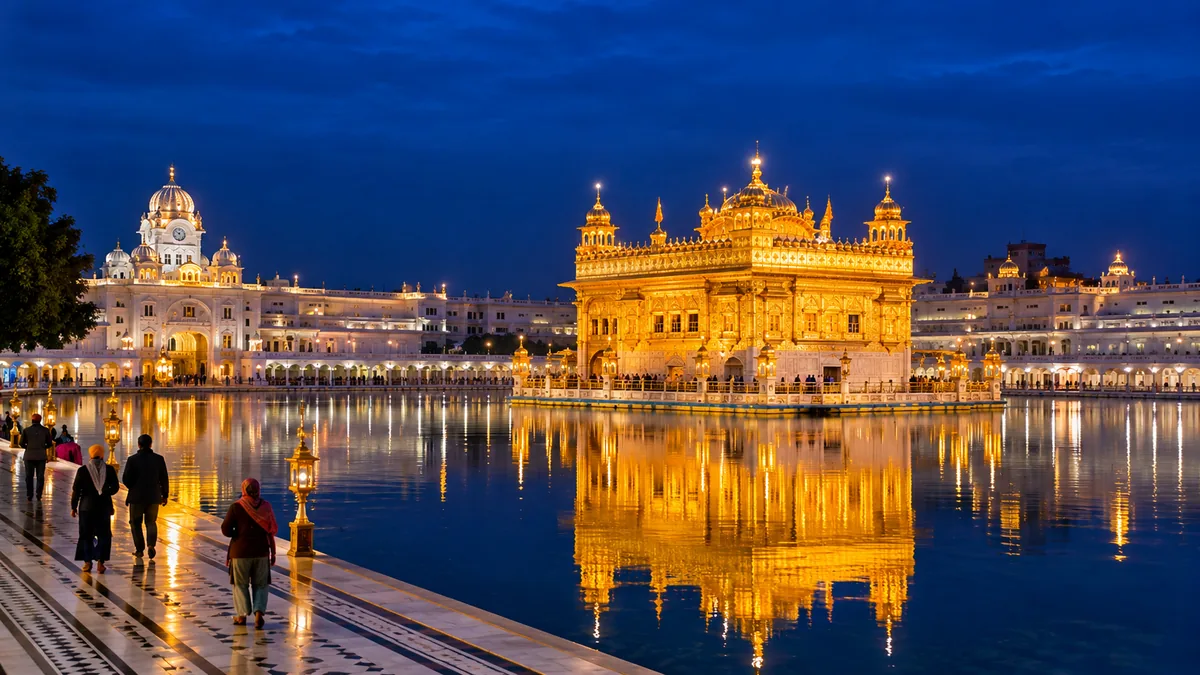
Amritsar is the spiritual heart of the Sikh faith and one of the most moving places in India to visit. The city grew around the sacred pool, the Amrit Sarovar (“pool of nectar”), that gives it its name. At the centre of that pool stands Harmandir Sahib, the Golden Temple Amritsar is famous for, also known as Darbar Sahib.
What makes it different is its openness. There’s no ticket, no queue for foreigners, no dress-up shop. The temple has four entrances, one on each side, as a sign that people from every direction and every background are welcome. You’ll share the marble walkway with families, pilgrims who’ve travelled across the world, and volunteers washing the floors at 3 a.m.
Amritsar fits naturally into:
| What | When |
|---|---|
| Golden Temple complex | Open 24 hours, every day of the year |
| Palki Sahib (morning) | Around 4:00–5:00 a.m. The Guru Granth Sahib is carried in procession from the Akal Takht to the sanctum. |
| Palki Sahib (night) | Around 9:30–10:30 p.m. It’s carried back to rest. This is the easier one for visitors to see. |
| Langar (community kitchen) | Serves around the clock |
Exact ceremony times shift a little between summer and winter, so ask at the information office inside the complex on the day.
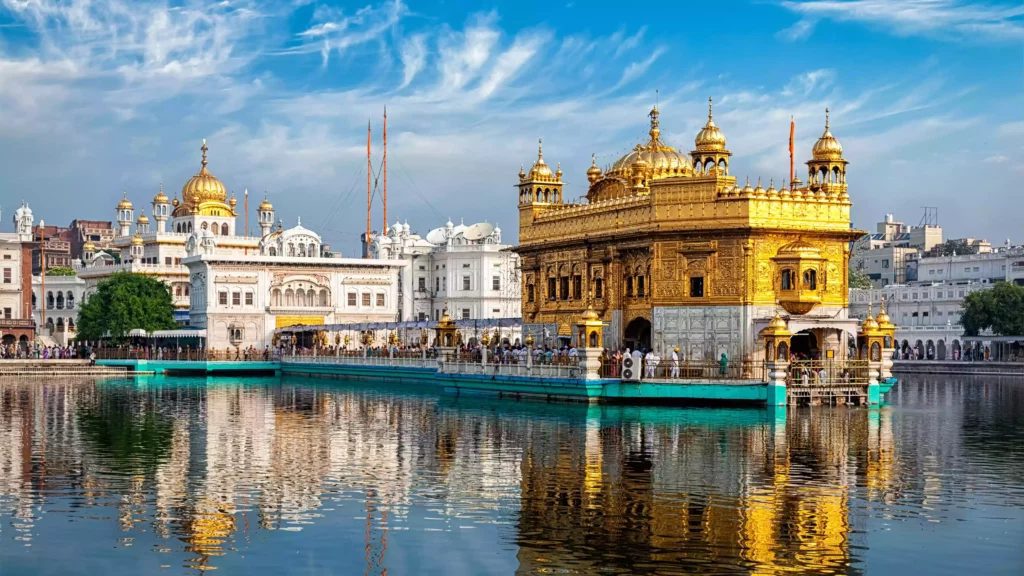
Our advice: go twice. Once at night, when the temple glows gold on the dark water, and once before dawn, when the ceremony starts and the complex is at its most peaceful. The middle of the afternoon is the busiest and hottest time to visit.
You don’t need to be Sikh to enter, sit, listen to the hymns, eat in the langar or help in the kitchen. Everyone is welcome.
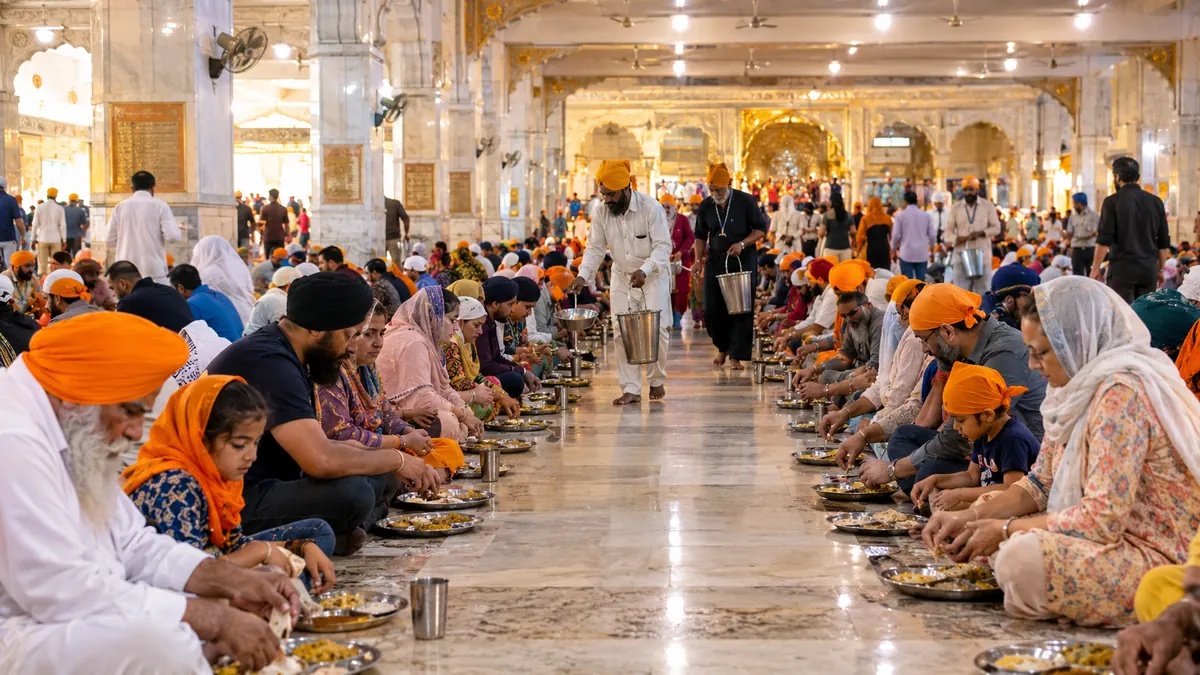
The Golden Temple langar serves a simple vegetarian meal of dal, roti, rice and kheer to anyone who comes, around the clock. It’s generally reported that 50,000 to 100,000 people are fed on an ordinary day, and far more on festival days.
Sitting in the langar is the heart of any visit. It’s the Sikh idea of equality in action: everyone sits on the same floor and eats the same food.
A two-minute walk from the Golden Temple, Jallianwala Bagh is the garden where British troops opened fire on a peaceful crowd on 13 April 1919, killing hundreds of people. It’s one of the defining moments of India’s independence movement.
Visit quietly. For many Indian families, this is a place of mourning.
Housed in the old Town Hall, a short walk from the temple, the Partition Museum tells the story of the 1947 Partition of India through letters, objects, photographs and survivors’ own voices. It’s the world’s first museum dedicated to Partition, and one of the most powerful museums in the country.
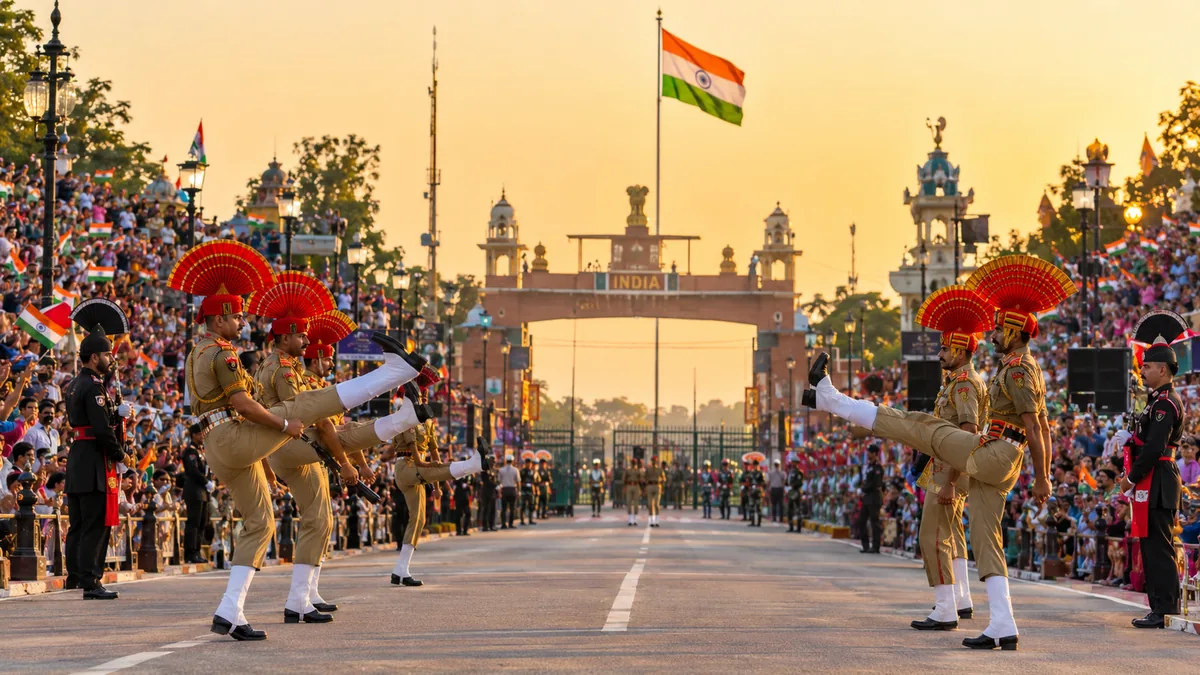
Every evening at the Attari–Wagah border, about 30 km from Amritsar, Indian and Pakistani border guards perform the Beating Retreat: a loud, patriotic, almost theatrical ceremony of high kicks, stamping and flag-lowering, watched by thousands of cheering spectators on both sides.
| Detail | What to expect |
|---|---|
| Distance from Amritsar | About 30 km, 45 minutes to 1 hour by car |
| Entry | Free |
| Ceremony time | Changes with the season, roughly between 4:15 p.m. (winter) and 6:00 p.m. (summer). The BSF moved it to 6:00–6:30 p.m. in August 2025. Check on the day. |
| When to arrive | At least 1.5 to 2 hours early. The stands fill up fast. |
| Bring | Your passport. Foreign visitors are usually seated in a separate gallery. |
| Don’t bring | Bags of any size. Leave them in the car. |
This is where a private car helps most: your driver drops you at the gate, keeps your bags safe, and gets you back to the city afterwards without the scramble for shared taxis.
| Place | Why go | Tip |
|---|---|---|
| Gobindgarh Fort | A restored 18th-century fort with museums and evening light-and-sound shows | Open 10 a.m.–10 p.m. Go in the evening for the shows. |
| Durgiana Temple | A Hindu temple built in the style of the Golden Temple, on its own sacred pool | Quieter, and 15 minutes from the Golden Temple |
| Heritage Street | The pedestrian street leading to the Golden Temple, lined with statues and shops | Lovely in the evening, when it’s lit up |
| The old city bazaars | Spices, textiles, juttis (embroidered shoes) and pickles | Go on foot and bargain politely |
| Amritsari food | Kulcha, chole, lassi, fish fry and phirni | Ask your driver where the locals queue |

| Option | Time | Good for | The catch |
|---|---|---|---|
| Delhi to Amritsar by car (private driver) | 7 to 8 hours, about 450 km | Door to door, stops when you want, and a car in Amritsar for Wagah | A full day on the road |
| Train (Shatabdi / Vande Bharat) | About 5.5 to 6.5 hours | A comfortable, fast journey | Fixed times, station transfers, and you still need a car for Wagah |
| Flight | About 1 hour 10 minutes | The fastest option | Airport time on both ends, and winter fog can cause delays |
The drive runs along the Grand Trunk Road and the national highway through Haryana and Punjab, past wheat and mustard fields and roadside dhabas. It’s a long but easy drive with an experienced driver. See our guide to hiring a car and driver in India.
| Months | Conditions | Our advice |
|---|---|---|
| October – November | Warm days, cool nights | Excellent, and the festival season |
| December – January | Cold, with dense fog in the mornings | Beautiful, but allow extra time on the road and for flights |
| February – March | Pleasant and clear | Excellent |
| April | Warming up | Good, and Vaisakhi is in mid-April |
| May – June | Very hot, often above 42°C | Visit the temple at night and early morning |
| July – September | Monsoon, humid | Fewer visitors, occasional heavy rain |
Festival dates worth planning around:
| Time | What you can do |
|---|---|
| 1 night | Golden Temple at night and at dawn, and the Wagah ceremony. Possible, but rushed. |
| 2 nights (our recommendation) | All of the above, plus the langar, Jallianwala Bagh, the Partition Museum, Gobindgarh Fort and the food |
| 3+ nights | Add a slower pace, the old city, or continue to Dharamshala, Dalhousie or Chandigarh |
| Day | Plan |
|---|---|
| Day 1 | Drive from Delhi (7–8 hours). Check in, rest, and visit the Golden Temple at night for the lit-up temple and the night Palki Sahib. |
| Day 2 | Back to the temple before dawn. Langar breakfast. Jallianwala Bagh and the Partition Museum. Lunch on Amritsari kulcha. Leave by early afternoon for the Wagah border ceremony. Evening at Gobindgarh Fort or Heritage Street. |
| Day 3 | Drive on to Dharamshala or Chandigarh, or back to Delhi. |
We don’t run hotels and we earn nothing from yours. If you’d like, we’ll book one for you at cost, or build the whole trip with our tailor-made travel team.
| From Amritsar to | Approx. drive | Why go |
|---|---|---|
| Dharamshala / McLeod Ganj | 5 to 6 hours | Tibetan culture, monasteries and the Dhauladhar mountains |
| Dalhousie | 5 to 6 hours | Pine forests and colonial hill-station charm |
| Chandigarh | About 4.5 hours | Le Corbusier’s planned city and Nek Chand’s Rock Garden |
| Delhi | 7 to 8 hours | Home, or on to Agra and the Golden Triangle |
For more on Punjab, see our Punjab private driver tours.

Our 4-day Amritsar tour from Delhi (Delhi → Amritsar → Chandigarh → Delhi) is priced for the whole vehicle with its driver, not per head:
| Travelling as | Vehicle | 4-day tour price |
|---|---|---|
| 1 to 3 travellers | Sedan | USD 356 |
| 4 to 5 travellers | SUV | USD 488 |
| 6 to 8 travellers | Tempo Traveller | USD 640 |
That covers the car, the driver, fuel, tolls, state taxes and parking. Hotels, meals and any entry fees are extra, and the Golden Temple, the langar and the Wagah ceremony cost nothing. Tipping your driver is always your choice (see our tipping guide). Building your own route? See our published car and driver day rates and how driver pricing works in India.
Tell us your dates, how many of you are travelling and what you want to see. We reply within 24 hours with a fixed price for the car and driver. If you’d like a detailed day-by-day itinerary, it costs €100, and the full €100 is deducted from your tour price when you book. There is no obligation.
Tailor-Made India & Nepal
Tell us what you love and we reply within 24 hours with a fixed price. A detailed day-by-day itinerary costs €100, deducted in full from your tour price.
Pick one or more destinations — you can mix India and Nepal freely.
This helps us match the right pace, stay and activities.
We reply within 24 hours. No spam, ever.
Before you finalise your trip, run through the eight questions at the heart of this Amritsar travel guide:
If you can answer all eight, your Amritsar plan is ready.
A good Amritsar trip isn’t about ticking off sights. It’s about being present: sitting by the pool as the hymns play at dawn, eating on the floor beside strangers, and standing in the crowd as the flags come down at the border.
Come with a covered head and an open mind. Go at night and before dawn. Leave early for Wagah. Amritsar will do the rest.
Yes. The Golden Temple complex is open 24 hours a day, every day of the year, and entry is free.
Cover your head (scarves are provided free), remove your shoes and socks, wash your feet at the entrance, and wear modest clothing that covers your shoulders and knees.
Yes. People of every faith and nationality are welcome to enter, sit, listen to the hymns and eat in the langar.
Yes. The langar serves free vegetarian meals to everyone, around the clock. It’s generally reported to feed 50,000 to 100,000 people a day. Donations are welcome but never expected.
Before dawn for the morning Palki Sahib ceremony and the calmest atmosphere, and at night when the temple is lit up. Avoid mid-afternoon, when it’s busiest and hottest.
They change with the season, roughly between 4:15 p.m. in winter and 6:00 p.m. in summer. The BSF moved it to 6:00–6:30 p.m. in August 2025. Arrive at least 1.5 to 2 hours early, and check the time locally on the day.
No, it’s free. Bring your passport, because foreign visitors are usually seated in a separate gallery, and don’t bring bags.
About 30 km, or 45 minutes to an hour by car from the city centre.
About 450 km, taking 7 to 8 hours with stops. The train takes about 5.5 to 6.5 hours, and the flight about 1 hour 10 minutes.
Two nights, as in the 2-day Amritsar itinerary above. That gives you the Golden Temple at night and at dawn, the langar, Jallianwala Bagh, the Partition Museum and Wagah without rushing.
Yes, entry is free. It’s roughly open from 6:30 a.m. to 7:30 p.m. in summer and from 7:00 a.m. to 6:30 p.m. in winter.
About ₹250 for foreign visitors, and a small fee for Indian citizens. It’s open from 10:00 a.m. to 6:00 p.m. and is usually closed on Mondays.
October to March. May and June are very hot (often above 42°C), and December and January bring dense morning fog.
Yes, around the pool and the walkway. Photography isn’t allowed inside the sanctum. Please be respectful of people praying.
Amritsari kulcha with chole, a tall glass of lassi, Amritsari fish fry, and phirni. And of course the simple, unforgettable meal in the langar.
Our 4-day Amritsar tour from Delhi costs USD 356 for a sedan (1–3 travellers), USD 488 for an SUV and USD 640 for a Tempo Traveller, including fuel, tolls, state taxes, parking and the driver.
Yes. It’s written for the October 2026 to March 2027 season. Ceremony times and museum fees can change, so confirm on arrival.
A great Amritsar trip isn’t about the number of places you see. It’s about timing and respect.
Night and dawn at the temple? Head covered? A seat in the langar? At Wagah early, with your passport? A driver who knows the road from Delhi?
If the answer is yes, you’ll see Amritsar the way it deserves to be seen. If not, you’ll see the gold, but miss what makes it shine.
And once you plan around those moments, using this Amritsar travel guide becomes simple. For more of India, read our Golden Triangle guide or our Delhi to Agra same day trip guide.
See the 4-day Amritsar tour · Car and driver rates in India · Plan my trip