By Khem “Babu” Khadaka, founder, driving these roads since 1996 · Last updated: 2027 season (October 2026 – June 2027)
A Ganga Yatra to Haridwar and Rishikesh is the easiest sacred journey in North India to plan badly, because the two towns look so close on a map.
They are close. Har Ki Pauri in Haridwar and the ashrams of Rishikesh are only about 25 km apart. But the aarti you came for happens at a fixed moment each evening, the ghats fill an hour before it, and the road between the towns can crawl on a festival weekend.
Most visitors squeeze everything into one rushed day from Delhi. They reach Haridwar at the wrong time, watch the aarti from the back of a crowd, and never see the quieter Ganga above Rishikesh, where the river is still green and fast.
So instead of asking only “What should I see in Haridwar and Rishikesh?”, it helps to ask a better question:
How do I stand at Har Ki Pauri at the right moment, see the quieter Ganga in Rishikesh, and avoid the days when a million pilgrims have the same idea?
That is what this Ganga Yatra guide is built around. It covers Har Ki Pauri and the Ganga aarti timings by season, the Haridwar to Rishikesh distance, what has changed at Laxman Jhula, the 2027 Kumbh in Haridwar and its bathing dates, rafting seasons, the drive up to Devprayag and Mussoorie, how the Char Dham fits in, and what a private car and driver costs for the whole trip.
A yatra is a pilgrimage, a journey made with intent. A Ganga Yatra follows the river to the places where Hindus believe its water is most purifying, and for most travellers that means Haridwar and Rishikesh, where the Ganga leaves the Himalaya and enters the plains.
Haridwar is the gateway. Its name is usually read as “the gate of Hari” (Vishnu) or “the gate of Har” (Shiva), and it is one of the four cities that host the Kumbh Mela. Life here revolves around the ghats, bathing, rituals for ancestors and the evening aarti.
Rishikesh, upstream, is quieter and greener. It is the town of ashrams, yoga schools and suspension bridges, and since the Beatles stayed here in 1968 it has drawn seekers from all over the world.
Together they make a short, rewarding Ganga Yatra. Add Devprayag, where the Ganga is formed, or the Char Dham shrines higher up, and it becomes a longer one.
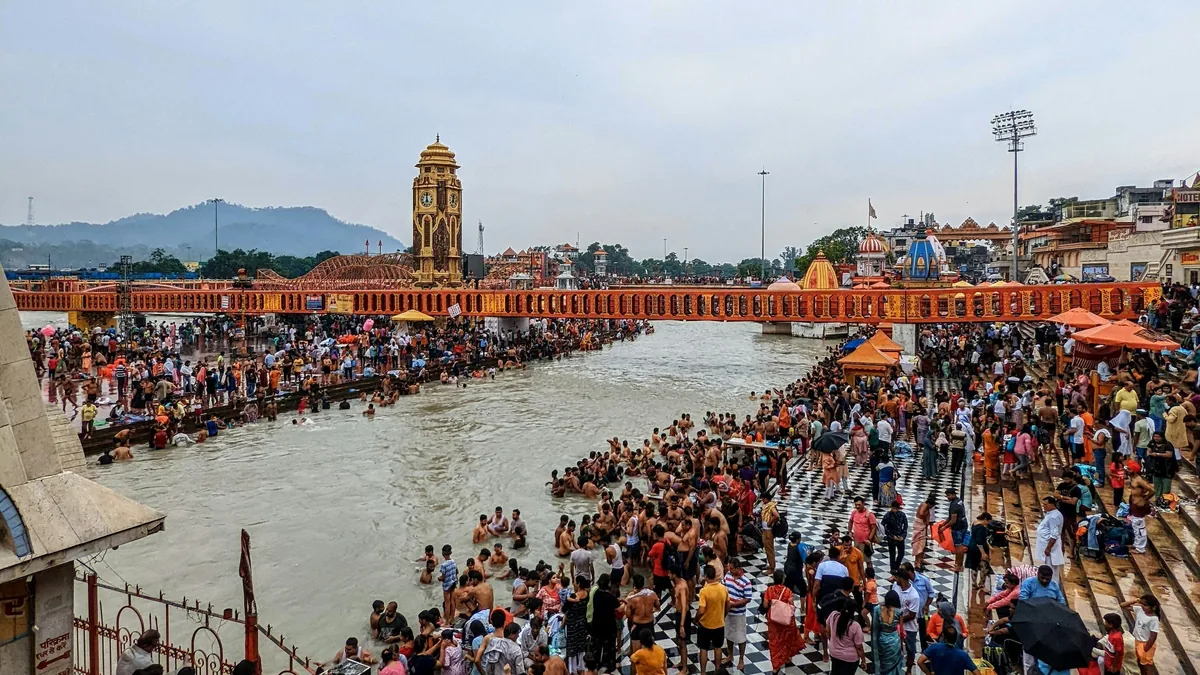
Har Ki Pauri means “the steps of Hari”. It is the most sacred ghat in Haridwar, built on a channel of the Ganga, with a clock tower on an island in the middle and bridges linking both banks. The spot called Brahma Kund is where pilgrims believe a drop of the nectar of immortality fell.
By day, families bathe holding the iron chains set into the steps, because the current is strong. Priests perform rites for the dead, and people float small leaf boats filled with flowers and a lamp, called diyas, on the water.
Shoes come off before the ghat. There are shoe-keeping stalls nearby, and it is worth giving a small tip. Keep phones and wallets zipped, as it gets very crowded around aarti time.
| What | Detail |
|---|---|
| Entry | Free. There is no ticket for the ghat or the aarti. |
| Best time | Early morning for bathing and calm; an hour before sunset for the aarti |
| Dress | Modest clothing; cover shoulders and knees |
| Photography | Allowed on the ghats; ask before photographing people bathing or at rituals |
| Food and drink | Haridwar’s pilgrim area is vegetarian and alcohol-free |
| Getting there | Cars stop at parking areas outside the old town; the last stretch is on foot |
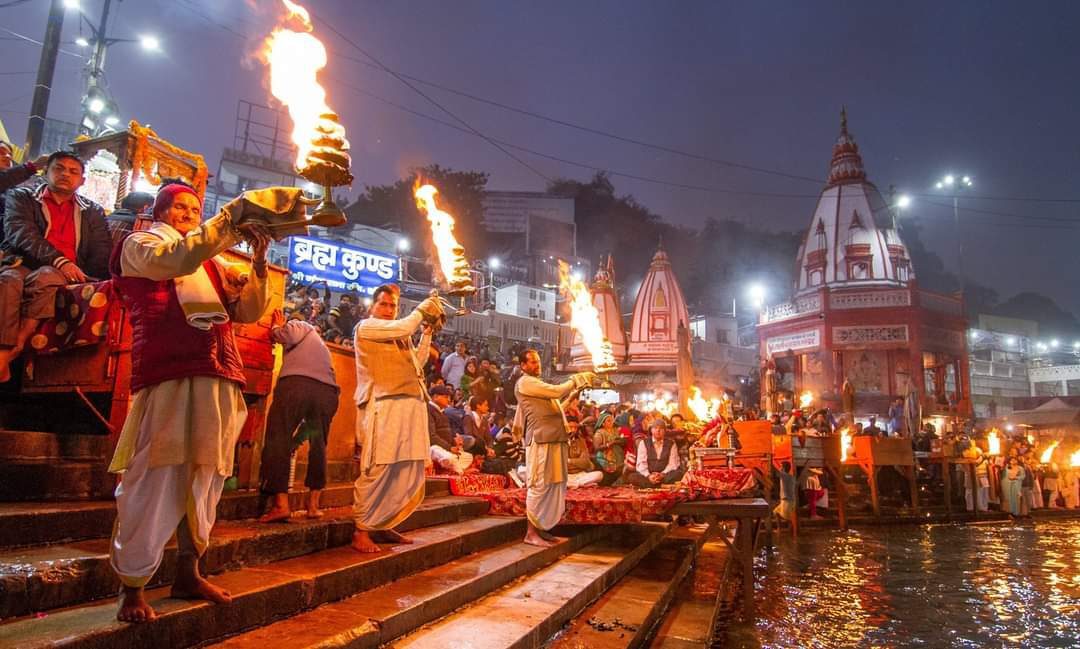
This is the question we are asked most. The aarti at Har Ki Pauri is tied to sunrise and sunset, not to a clock, so the time moves through the year. It is organised by the Ganga Sabha, the body that manages the ghat, and it happens every day.
| Months | Evening aarti (approx.) | Morning aarti (approx.) |
|---|---|---|
| November to January | 5:15 to 5:45 p.m. | 6:30 to 7:10 a.m. |
| February to March | 6:00 to 6:30 p.m. | 6:00 to 6:30 a.m. |
| April to June | 6:45 to 7:10 p.m. | 5:15 to 5:30 a.m. |
| July to September | 6:30 to 7:00 p.m. | 5:15 to 5:45 a.m. |
| October | 5:45 to 6:15 p.m. | 5:45 to 6:15 a.m. |
The evening ceremony itself lasts about 20 to 30 minutes. Priests on the steps swing large multi-tiered brass lamps as bells ring and the crowd sings the aarti hymn, then thousands of diyas go out onto the water.
Arrive 45 to 60 minutes early. The best places are on the steps near Brahma Kund or across the channel on the clock-tower island, facing the priests. On weekends, festivals and during the Kumbh, arrive even earlier.
Volunteers will ask for a donation to the Ganga Sabha. Giving is your choice, and an official receipt is offered. Ignore anyone selling “VIP” places.
One thing few guides mention: for about two to three weeks between Dussehra and Diwali each year, the Upper Ganga Canal that feeds Har Ki Pauri is closed for cleaning and repairs, and the water level at the ghat drops sharply. The aarti still happens, but the scene is different. If your Ganga Yatra falls in October or early November, ask us to check the closure dates.
Haridwar deserves more than the aarti. Give it a morning, too.
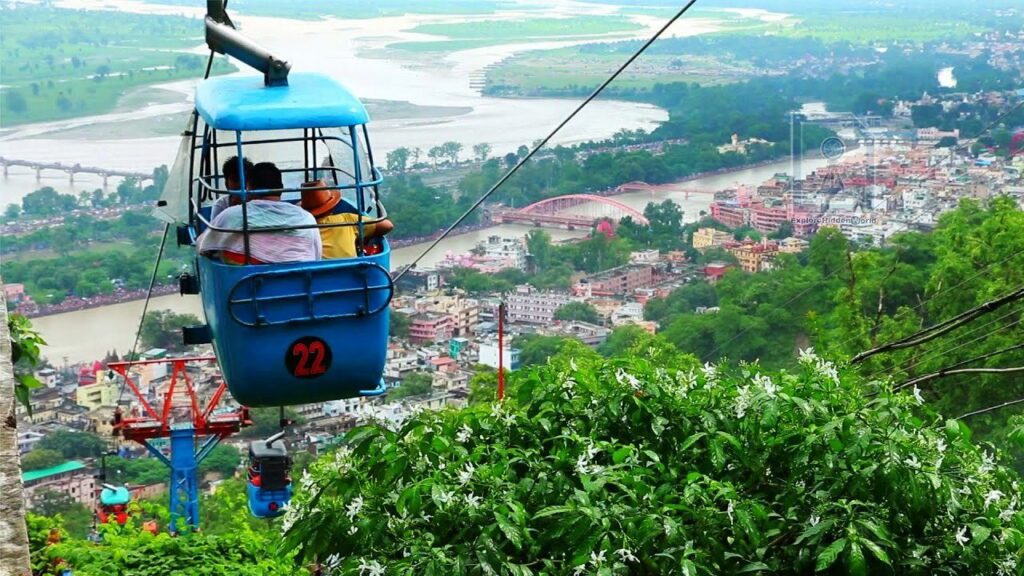
Ropeway queues can run for an hour or more on weekends. Go at opening time on a weekday. Monkeys are bold around both hilltop temples, so keep food out of sight.
The Haridwar to Rishikesh distance is about 25 km by road. On a clear day the drive takes 45 minutes to an hour. On weekends, festivals and during the July Kanwar Yatra it can take two hours or more.
| Route | Distance | Typical time |
|---|---|---|
| Delhi to Haridwar by car | About 220 km | 4 to 6 hours, depending on route and traffic |
| Haridwar to Rishikesh (Ram Jhula area) | About 25 km | 45 to 60 minutes |
| Rishikesh to Dehradun airport (Jolly Grant) | About 20 km | 35 to 45 minutes |
| Rishikesh to Devprayag | About 74 km | 2.5 to 3 hours |
| Rishikesh to Mussoorie | About 75 to 80 km | 2.5 to 3 hours |
| Haridwar to Delhi by train (Shatabdi / Vande Bharat) | Rail | About 4 to 5 hours |
The new Delhi–Dehradun Expressway, inaugurated in April 2026, has cut the Delhi to Dehradun journey to around 2.5 hours according to the project figures, and it links toward Haridwar. How much time it saves you depends on where in Delhi you start and which spur your driver uses. Details are on the Delhi–Dehradun Expressway page.
Our advice: stay one night in each town rather than doing day trips between them. The road is short, but a Ganga Yatra is about the river at dawn and dusk, and you want to be on foot at both.
Rishikesh begins where the Ganga comes out of the hills. The old pilgrim quarter is split between the two banks, with Swarg Ashram on the east bank and the town on the west, joined by footbridges.
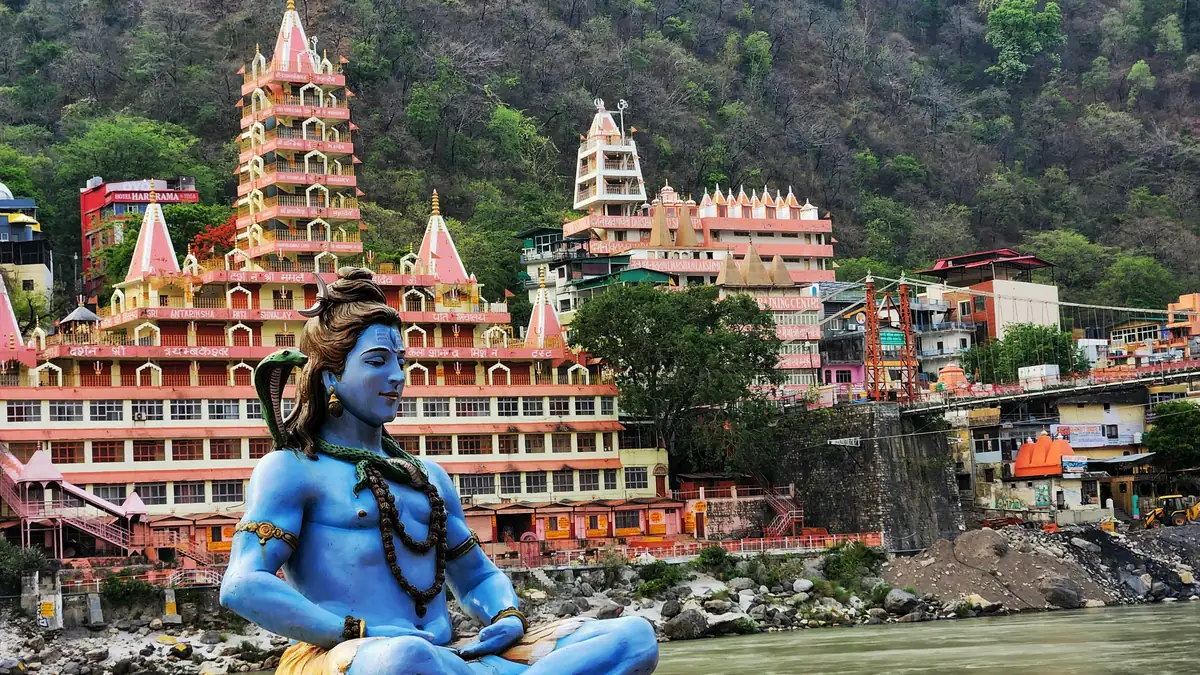
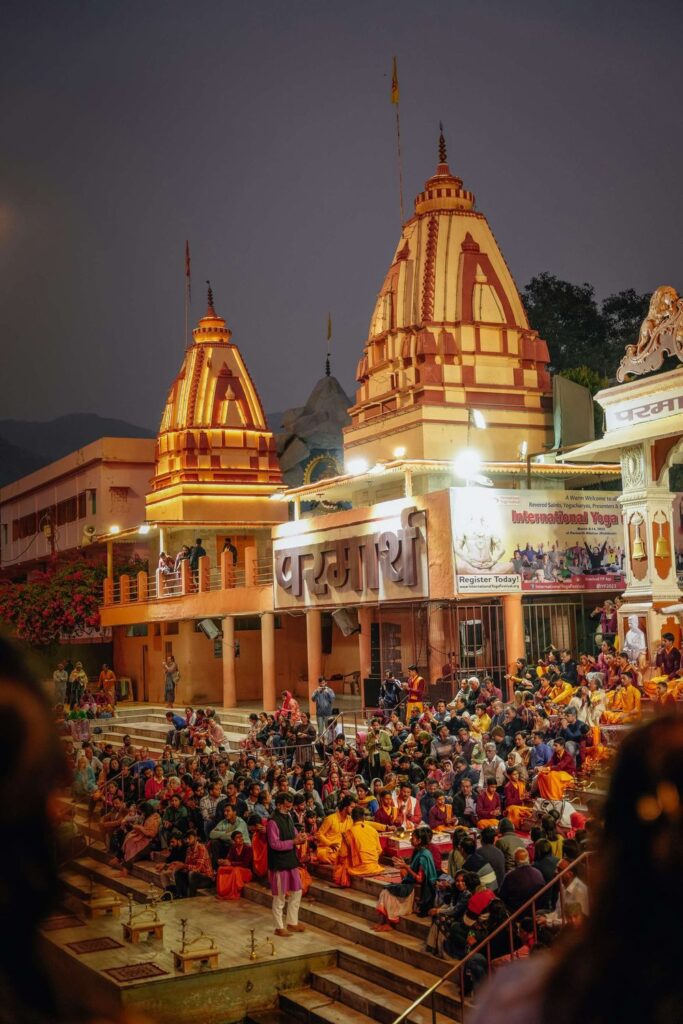
Parmarth Niketan is one of the largest ashrams in Rishikesh, and its evening Ganga aarti is the town’s best known. It is gentler than Haridwar’s: children from the ashram’s school chant, a fire ritual (havan) is performed, and the crowd sits on the steps rather than standing.
Triveni Ghat, in the main town, holds its own aarti and is closer in style to Haridwar, with more local pilgrims.
| Aarti | Winter (approx.) | Summer (approx.) | Morning |
|---|---|---|---|
| Parmarth Niketan | About 5:00 to 6:00 p.m. (Nov to Feb) | About 6:00 to 7:00 p.m. (Mar to Oct) | About 5:45 a.m. |
| Triveni Ghat | About 5:30 to 6:30 p.m. | About 6:30 to 7:30 p.m. | About 5:45 a.m. |
| Har Ki Pauri, Haridwar (for comparison) | From about 5:15 p.m. | Up to about 7:10 p.m. | 5:15 to 7:10 a.m. |
On a two-night Ganga Yatra, we suggest the Har Ki Pauri aarti on the first evening and Parmarth Niketan on the second. They feel very different, and seeing both is the point.
The suspension bridges are the symbol of Rishikesh, and the situation has changed.
The bridges are narrow, and scooters, cows and pilgrims share them. Hold children’s hands and keep bags in front of you.
The Beatles Ashram (Chaurasi Kutia) is the former ashram of Maharishi Mahesh Yogi, where the band spent February to April 1968 and wrote much of the White Album. It now lies inside Rajaji Tiger Reserve and has been open to visitors since 2015.
It’s a peaceful, overgrown place of meditation huts and graffiti-covered walls. The foreigners’ ticket was raised to ₹1,200 in 2025, according to the Beatles Ashram page; check at the gate.
Yoga: Rishikesh calls itself the yoga capital of the world, and it has hundreds of schools. Drop-in classes are easy to find in Tapovan and around Laxman Jhula. The International Yoga Festival at Parmarth Niketan is usually held in early March.
Neelkanth Mahadev, a Shiva temple about 30 km from Rishikesh by a winding forest road, is a popular half-day trip. It is extremely busy during the July Kanwar season.
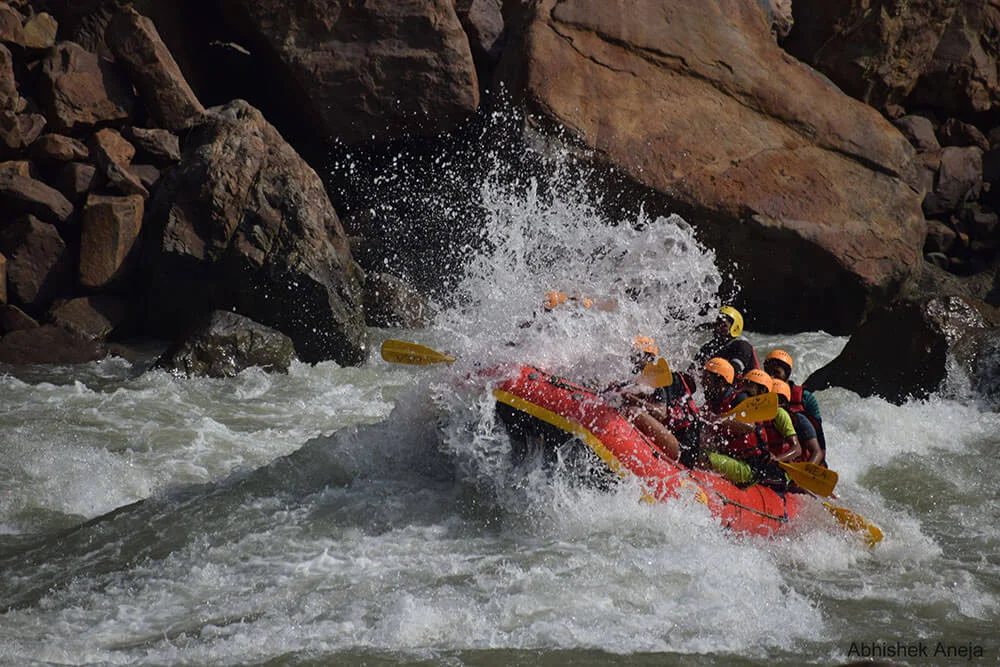
White-water rafting on the Ganga is the other reason people come to Rishikesh. It is regulated by the state, and the official season runs from 1 September to 30 June. In practice, trips stop during the monsoon floods and restart once the water drops, usually in the second half of September. In 2025, rafting resumed on 27 September.
| Stretch | Length | Guide price per person | Good for |
|---|---|---|---|
| Brahmpuri to Rishikesh | About 9 km | ₹600–750 | First-timers and families |
| Shivpuri to Rishikesh | About 16–18 km | ₹800–1,000 | The classic half day |
| Marine Drive to Rishikesh | About 22–25 km | About ₹1,500 | Bigger rapids |
| Kaudiyala to Rishikesh | About 36 km | About ₹2,000 | Full day, experienced rafters |
Prices are the 2025 figures reported locally and change each season. Book with a licensed operator, wear the helmet and life jacket, and don’t raft after heavy rain. We can recommend operators we trust.
Haridwar holds a Kumbh Mela every 12 years and an Ardh (half) Kumbh in between. The last Kumbh was in 2021. The next event is officially an Ardh Kumbh, from January to April 2027, but the Uttarakhand government has said it will be run on the scale of a full Kumbh, with Amrit Snan (royal bath) processions by the akharas for the first time at an Ardh Kumbh (report).
| Date (2027) | Occasion | Type |
|---|---|---|
| 14 January | Makar Sankranti | Bathing day |
| 6 February | Mauni Amavasya | Major bathing day |
| 11 February | Vasant Panchami | Bathing day |
| 20 February | Magh Purnima | Bathing day |
| 6 March | Maha Shivaratri | 1st Amrit Snan |
| 8 March | Phalgun Amavasya | 2nd Amrit Snan |
| 7 April | Nav Samvatsar | Bathing day |
| 14 April | Mesh Sankranti (Baisakhi) | 3rd Amrit Snan, the main day |
| 15 April | Ram Navami | Bathing day |
| 20 April | Chaitra Purnima | Closing bathing day |
These are the dates announced by the Akhara Parishad and the state government in 2025. On the Amrit Snan days, Har Ki Pauri is reserved for the akharas’ processions for much of the day, roads into Haridwar are closed to private cars, and walking distances become long. Background on past melas is on the Haridwar Kumbh Mela page.
Our advice for a Kumbh Ganga Yatra: book hotels now, stay in Rishikesh or on the edge of Haridwar, visit the ghats on the days either side of an Amrit Snan, and build in a spare day. If you want quiet, avoid January to April 2027 in Haridwar altogether.
A Ganga Yatra can go further up the river, or up into the hills.
| Extension | From Rishikesh | Why go |
|---|---|---|
| Devprayag | About 74 km, 2.5–3 hours | The confluence where the Alaknanda and Bhagirathi become the Ganga |
| Mussoorie | About 75–80 km, 2.5–3 hours | Hill station views, Camel’s Back Road, Landour |
| Kempty Falls | About 15 km beyond Mussoorie | Waterfall stop; very busy in summer |
| Rajaji National Park | Close to both towns | Jeep safaris for elephants and birds, mid-November to mid-June |
| Char Dham | Several days by road | The four high Himalayan shrines (see next section) |
Devprayag is the most meaningful addition to a Ganga Yatra. At about 830 metres, the grey-green Bhagirathi from Gangotri meets the muddy Alaknanda from Badrinath, and from here the river is called the Ganga (see Devprayag). Steps lead down to the sangam, and the Raghunath temple stands above it. It makes a long but rewarding day trip, or a first night on the Char Dham road.
Mussoorie is the easy way to add cool air and mountain views. Our Haridwar Rishikesh Mussoorie tour does exactly that in five days.
Haridwar and Rishikesh are also the starting points for the Char Dham Yatra: Yamunotri, Gangotri, Kedarnath and Badrinath. It’s a much bigger undertaking of roughly 10 to 12 days by road, with long mountain drives and, for Kedarnath, a 16 km or so trek (or pony, palanquin or helicopter).
The shrines open in late April or May and close for winter around Diwali. In 2026 they opened between 19 and 23 April, and they close in the first half of November. Badrinath’s opening date is announced on Basant Panchami and Kedarnath’s on Maha Shivaratri. For 2027, expect late April or early May.
Registration with the Uttarakhand government is compulsory for every pilgrim. We handle it as part of our 12-day Char Dham Yatra by road, which starts and ends at Haridwar. Avoid July and August on the Char Dham road: monsoon landslides regularly close it.
| Months | Weather | Verdict |
|---|---|---|
| October to November | Clear, warm days, cool evenings | The best overall; note the canal closure between Dussehra and Diwali |
| December to February | Cold mornings and fog; days around 18–20 °C | Good, quiet and atmospheric; early aarti; Kumbh crowds in 2027 |
| March to April | Warm and bright | Very good; International Yoga Festival in March; Kumbh peak in 2027 |
| May to June | Hot in Haridwar, often over 38 °C | Busy with Indian holidaymakers and Char Dham pilgrims |
| July to August | Monsoon; Kanwar Yatra crowds | Avoid unless you’re on the Kanwar pilgrimage; rafting closed |
| September | Monsoon easing | Fair from mid-month; rafting restarts |
The Kanwar Yatra in the month of Shravan (usually July) is one of the largest gatherings in India. Millions of Shiva devotees walk to Haridwar to collect Ganga water, and the Delhi–Haridwar highway is diverted for days. It’s a remarkable sight, but it is not the time for a relaxed Ganga Yatra by car.
| Day | Plan | Overnight |
|---|---|---|
| Day 1 | Drive Delhi to Haridwar; check in; Har Ki Pauri evening aarti | Haridwar |
| Day 2 | Dawn at the ghats; Mansa Devi or Chandi Devi by ropeway; drive to Rishikesh; Parmarth Niketan aarti | Rishikesh |
| Day 3 | Ram Jhula, Janki Setu and the Laxman Jhula area; Beatles Ashram; optional rafting | Rishikesh |
| Day 4 | Drive to Mussoorie (or day trip to Devprayag); Mall Road and Landour | Mussoorie |
| Day 5 | Drive back to Delhi | End |
If you have longer, pair the Ganga Yatra with the hills further west. See our Shimla travel guide and Manali travel guide, or go east to Varanasi on a wider route from our India–Nepal pilgrimage guide.
All of our Ganga Yatra tours are private and priced for the whole vehicle with its driver, not per person:
| Tour | Sedan (1–3) | SUV (4–5) | Tempo Traveller (6–8) |
|---|---|---|---|
| Divine Ganga Yatra: Holy Cities of the Foothills | USD 623 | USD 854 | USD 1,120 |
| Haridwar Rishikesh Mussoorie, 5 days | USD 445 | USD 610 | USD 800 |
| Char Dham Yatra by road, 12 days | USD 1,272 | USD 1,740 | USD 2,280 |
Included: the car, an experienced driver, fuel, tolls, parking and state taxes, including interstate permits and any green-cess charges at the Uttarakhand border. The driver’s own food and lodging are covered, so you don’t pay for them.
Not included: hotels, meals, ropeway tickets, rafting, donations and entry fees. We can recommend a local priest or licensed guide at the ghats if you want one; see our note on guide or driver.
Want a different route? We’ll price it at our published car and driver rates. Read how driver pricing works in India. Tipping is always optional (see our tipping guide).
Tell us your dates, how many of you are travelling and whether you want the aarti, rafting, Devprayag or the Char Dham. We reply within 24 hours with a fixed price for the car and driver. If you’d like a detailed day-by-day itinerary, it costs €100, and the full €100 is deducted from your tour price when you book. There is no obligation.
Tailor-Made India & Nepal
Tell us what you love and we reply within 24 hours with a fixed price. A detailed day-by-day itinerary costs €100, deducted in full from your tour price.
Pick one or more destinations — you can mix India and Nepal freely.
This helps us match the right pace, stay and activities.
We reply within 24 hours. No spam, ever.
Before you book, run through these eight questions:
If you can answer yes to most of these, your Ganga Yatra will run smoothly.
Think of a Ganga Yatra as two evenings and two mornings on the river.
Haridwar is the crowd, the chains on the steps and the great brass lamps at Har Ki Pauri. Rishikesh is the ashram aarti, the bridges and the green water. Beyond are Devprayag, Mussoorie and the Char Dham, for those with more time.
Get the aarti time right, stay the night, and avoid the Kanwar and Kumbh peak days unless the crowd is what you came for. Then this Ganga Yatra guide has done its job.
A Ganga Yatra is a pilgrimage along the Ganga to its holiest places. For most travellers it means Haridwar and Rishikesh, with optional extensions to Devprayag, Mussoorie or the Char Dham shrines higher in the Himalaya.
The evening aarti follows sunset: about 5:15 to 5:45 p.m. from November to January and about 6:45 to 7:10 p.m. from April to June. It lasts about 20 to 30 minutes. Arrive 45 to 60 minutes early for a good place.
Yes. The morning aarti at Har Ki Pauri follows sunrise, from about 5:15 a.m. in May and June to about 7:10 a.m. in January. It is much quieter than the evening ceremony.
About 25 km by road, which takes 45 to 60 minutes. On weekends, festivals and during the July Kanwar Yatra it can take two hours or more.
About 220 km by road, which takes roughly 4 to 6 hours by car depending on route and traffic. The Shatabdi and Vande Bharat trains take about 4 to 5 hours.
The 2027 Haridwar Kumbh, officially an Ardh Kumbh, runs from January to April 2027. The Amrit Snan days are 6 March (Maha Shivaratri), 8 March (Phalgun Amavasya) and 14 April (Mesh Sankranti), which is the main day.
No. Laxman Jhula has been closed for several years for safety reasons. A new glass-walkway bridge, Bajrang Setu, has been built beside it, and Ram Jhula and Janki Setu remain open for crossing the river.
They are different. Har Ki Pauri in Haridwar is larger, louder and more intense, while Parmarth Niketan in Rishikesh is calmer, with chanting and a fire ritual. On a two-night Ganga Yatra, see both.
October to April is best, with clear, mild weather. Avoid July and August for the monsoon and the Kanwar Yatra crowds, and expect very large crowds in Haridwar from January to April 2027 for the Kumbh.
Two nights is the minimum, one in each town, so you see both evening aartis. Four to five nights lets you add Mussoorie or Devprayag, rafting and a slower pace.
The official season runs from 1 September to 30 June, but trips pause during monsoon floods and usually restart in the second half of September. In 2025, rafting resumed on 27 September. Prices range from about ₹600 to ₹2,000 per person.
Yes, anyone may bathe. Hold the chains set into the steps because the current is strong, dress modestly, and keep valuables with someone on the steps.
Yes. The pilgrim areas of both towns are vegetarian and alcohol-free, and meat and alcohol are not served in them. Rishikesh has plenty of good vegetarian cafés.
About 74 km by road, which takes 2.5 to 3 hours. Devprayag is where the Alaknanda and Bhagirathi meet to form the Ganga, which makes it a meaningful addition to a Ganga Yatra.
Our Divine Ganga Yatra costs USD 623 for a sedan, USD 854 for an SUV and USD 1,120 for a Tempo Traveller, for the whole vehicle. The 5-day Haridwar Rishikesh Mussoorie tour starts at USD 445.
Yes. Most Char Dham routes start from Haridwar or Rishikesh. Our 12-day Char Dham Yatra by road starts and ends at Haridwar and costs from USD 1,272 for a sedan.
Yes. It is written for the October 2026 to June 2027 season, including the 2027 Kumbh dates. Aarti times, bridge status and road rules change, so confirm them before you travel.
A good Ganga Yatra isn’t about ticking off temples. It’s about being on the right steps at the right moment.
The aarti time for your month? A night in each town? Slip-on shoes and modest clothes? The Kumbh and Kanwar dates checked? A driver who knows where the car can and can’t go near the ghats?
If the answer is yes, you’ll see the Ganga as pilgrims have seen it for centuries. If not, you’ll see traffic on the Haridwar bypass.
Once you plan around those things, this Ganga Yatra guide becomes simple to use. For the wider picture read our India–Nepal pilgrimage guide or our Amritsar Golden Temple guide, or see all our Haridwar tours.
See the Divine Ganga Yatra · Car and driver rates in India · Plan my trip