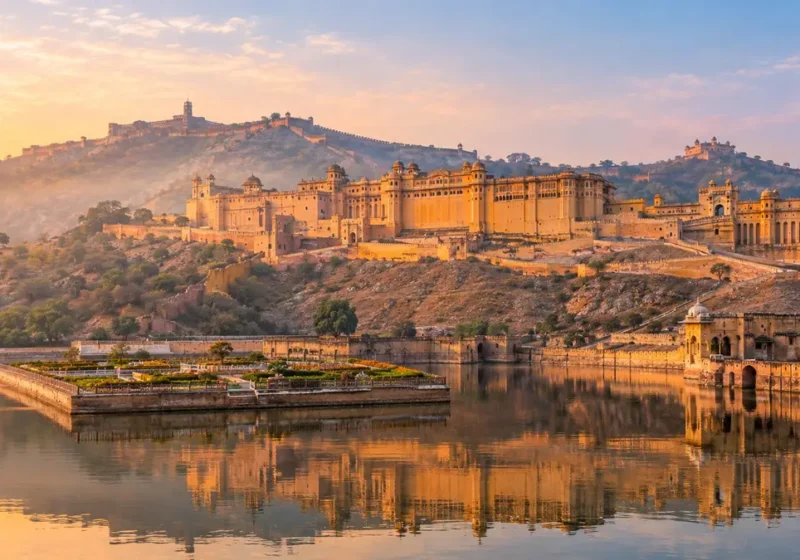
By Khem “Babu” Khadaka, founder, driving these roads since 1996 · Last updated: 2027 season (October 2026 – June 2027)
A Ranthambore tiger safari is the easiest way to add wild tigers to a Golden Triangle trip, but most people plan it backwards.
They pick a hotel, drive down from Jaipur, and then try to buy a safari seat the night before. By then the permits for the good zones have gone, the only seats left are in a 20-seat canter, and the one drive they booked lands in a zone that rarely sees a tiger.
Ranthambore rewards the opposite approach. Book the permits first, give yourself more than one drive, and pick the month to match what you care about most: comfort, green forest or the best chance of a sighting.
So instead of asking only “How do I see a tiger in India?”, it helps to ask a better question:
How many safaris do I need, in which months, zones and vehicles, and how do I fit Ranthambore into Delhi, Agra and Jaipur without wasting a day on the road?
That’s what this guide is built around. It covers the park season and weekly closures, the ten safari zones, gypsy versus canter, the official 2026–27 permit fees for foreigners, safari timings by month, how booking works on the Rajasthan forest department system, sighting odds, where to stay, and how to add Ranthambore to the Golden Triangle with our 7 and 8-day private car tours.
Ranthambore is one of the best places in the world to see a wild Bengal tiger, and it’s the only major tiger reserve that sits a half-day’s drive from Jaipur and Agra.
The Ranthambore reserve covers about 1,300 square kilometres of dry forest, grassland, lakes and rocky ridges between the Banas and Chambal rivers in Sawai Madhopur district. It began as a game sanctuary in 1955, came under Project Tiger in the 1970s and became a national park in 1980.
Tiger numbers have grown steadily. A state count reported in July 2026 put Ranthambore at 72 tigers, about half of Rajasthan’s total of 149. That’s more than the reserve’s estimated carrying capacity, which is one reason tigers are often seen close to the tracks.
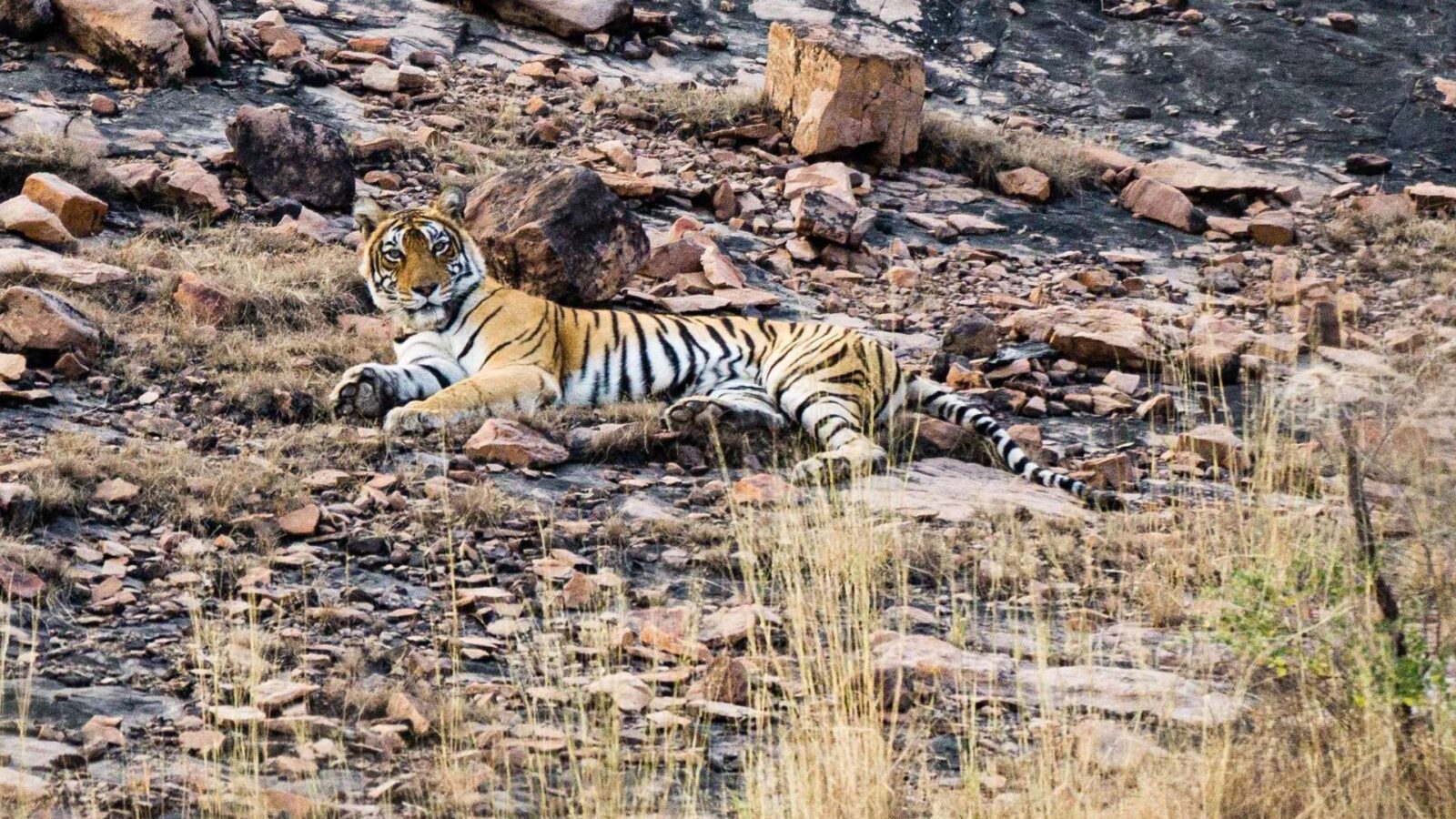
The other reason is the landscape. Ranthambore’s forest is open and dry, and in the hot months the tigers come to a small number of lakes and waterholes. A tiger resting under a dhok tree beside a lake, with the walls of a 10th-century fort above it, is the image that made the park famous.
A Ranthambore tiger safari is not a zoo visit, though. You are driving through wild forest with rules, quotas and zones. The planning below is what separates a good trip from a disappointing one.
The main season runs from 1 October to 30 June. All ten safari zones operate in these months, subject to a weekly closure day (more on that below).
From 1 July to 30 September, during the monsoon, the core zones 1 to 5 close for the breeding season and to protect the tracks. Zones 6 to 10 stay open for monsoon safaris. They’re green and beautiful, but tiger sightings there are less frequent than in the core.
There is also a weekly closure. Since 2024 the forest department has closed zones 1 to 5 on Wednesdays and zones 6 to 10 on Tuesdays, so the whole park is never shut on the same day. Check this when you book, because it decides which zones you can get on your Ranthambore tiger safari dates.
Safaris can also be suspended on some festival days and occasionally for official reasons. We check the calendar for every booking.
| Period | Zones open | What to expect |
|---|---|---|
| 1 October – 30 June | Zones 1–10 (with one weekly closure day per group) | Main season; best sighting chances |
| Wednesdays | Zones 6–10 only | Core zones 1–5 closed |
| Tuesdays | Zones 1–5 only | Buffer zones 6–10 closed |
| 1 July – 30 September | Zones 6–10 only | Monsoon safaris; green forest, fewer sightings |
There is no single best month for a Ranthambore tiger safari. It depends whether you want comfort, lush forest or the highest chance of seeing a tiger.
| Months | Weather | Forest and wildlife | Verdict |
|---|---|---|---|
| October–November | Warm days, pleasant mornings | Green after the monsoon, thick grass; tigers harder to spot | Good, and a lovely time to be in Rajasthan |
| December–February | Cold mornings (near 5 °C in the open jeep), mild days | Grass dying back, good birding, tigers often sun themselves | Very good; bring warm layers |
| March | Warm, dry | Leaves fall, visibility improves | Excellent balance of comfort and sightings |
| April–June | Hot: often above 40 °C by afternoon | Water scarce, tigers stay near lakes and waterholes | Best odds of a sighting, hardest on you |
| July–September | Monsoon rain and humidity | Only zones 6–10 open | For keen wildlife fans only |
Our pick for most travellers is February to mid-April. Mornings are comfortable, the forest has opened up, and the tigers are moving towards water. If seeing a tiger matters more than anything else, May and June give the best odds, but plan for real heat and do the morning drives.
The park is divided into ten safari zones, each with fixed routes. On a Ranthambore tiger safari your permit is for one zone, and you stay in it for the whole drive. You can’t change zone once inside.
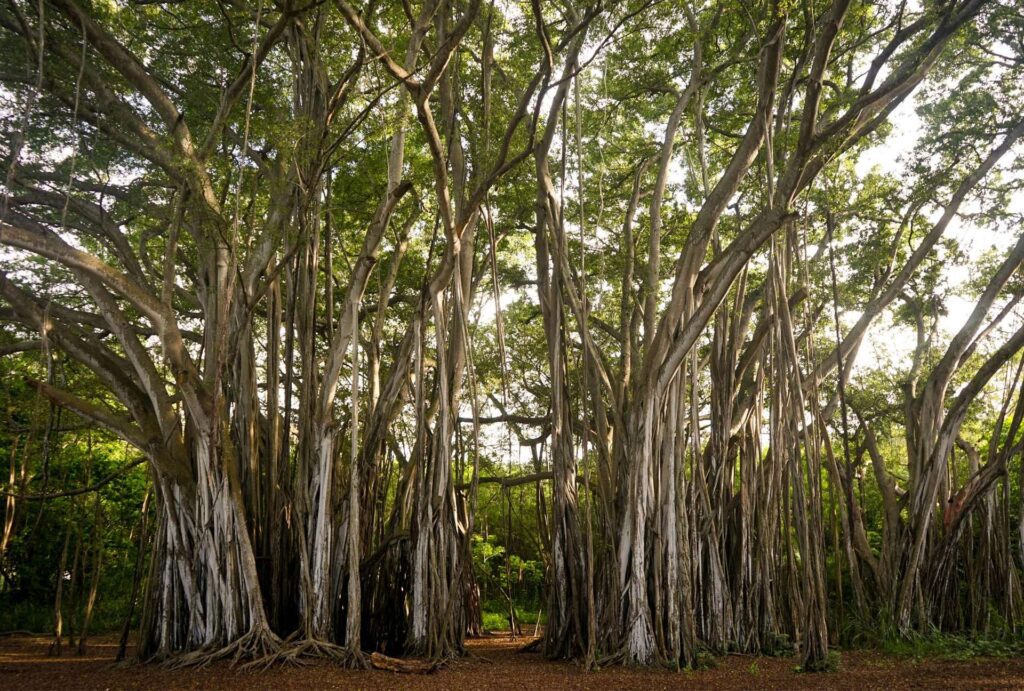
Zones 1 to 5 are the older, core zones around the lakes and the fort, reached through the main gate. Zones 6 to 10 were added later on the outer side of the reserve to spread the vehicles out. The table is a guide, not a promise: tigers move, and a zone that’s hot one month can go quiet the next.
| Zones | Character | Notes |
|---|---|---|
| 1 | Forest opening into grassland near water (Sultanpur, Gada Dub) | Close to the main gate; often good for tigers |
| 2 | Mixed forest and grassland (Jhalra, Amrai) | Historically strong for tigers, deer and sambar |
| 3 | Padam Talao and Rajbagh lakes below the fort, via Jogi Mahal | The classic lake-and-ruins scenery; the most requested zone |
| 4 | Malik Talao, Lakarda and rocky hills | Large zone; good for tigers and leopards |
| 5 | Forest corridor beyond zone 4 | Often productive; shares territories with zone 4 |
| 6 (Kundal) | Open grassland and hills | Popular with photographers; chinkara and vultures |
| 7 (Chidikho) | Hilly, small and uncrowded | Fewer vehicles; close encounters possible |
| 8 (Balas) | Aravalli hills and ravines | Quiet; leopard habitat |
| 9 (Kuwal Ji) | Grassland and hills near the Chakal river | About 45 minutes’ drive from the main gate; good for sloth bear and birds |
| 10 (Aantri) | Halonda and Aantri, with water sources | Less crowded; mixed wildlife |
Here’s what matters most: you can ask for a zone, but availability is decided by the booking system and quotas. Instead of chasing one famous zone, give yourself more than one safari. Three drives in three different zones will usually beat one drive in zone 3.
Tigers do cross between zones, and the naturalists share news of recent sightings, so each Ranthambore tiger safari benefits from the last. A zone reputation is useful, but it isn’t the whole story.
Every Ranthambore tiger safari runs in one of two open vehicles, driven by a forest-registered driver with a naturalist guide on board.
| Gypsy (jeep) | Canter | |
|---|---|---|
| Seats | 6 passengers | About 20 passengers |
| Feel | Small, quiet, flexible | Open-sided truck, noisier |
| Photography | Much better; everyone has a side view | Harder; depends on your seat |
| Government fee (foreigner, per seat, from April 2026) | About ₹3,025 | About ₹2,400 |
| Book as a whole vehicle? | Yes, you can book all six seats | No, shared with others |
| Best for | Photographers, families, anyone serious about sightings | Budget travellers, last-minute bookings |
We recommend the gypsy for almost everyone. The difference in cost per seat is small next to the rest of the trip, and a gypsy can stop quietly, reposition, and give everyone a clear view.
If you are four to six people, book the whole gypsy. You control the pace, nobody else’s chatter scares the animals, and there’s room for camera bags.
Canters are fine if gypsies have sold out. They’re also useful for a second, cheaper drive if you’ve already had a gypsy safari.
Safari fees in Rajasthan’s tiger reserves rise by about 10% every year on 1 April, under a forest department policy in place since 2016. The rates below took effect at Ranthambore on 1 April 2026 and apply until 31 March 2027.

| Per seat, per safari (government fee) | Indian nationals | Foreign nationals |
|---|---|---|
| Gypsy (6-seat jeep) | About ₹1,612 | About ₹3,025 |
| Canter (about 20 seats) | About ₹987 | About ₹2,400 |
These are the government figures reported when the April 2026 increase came in. They cover the park entry, the vehicle and the naturalist guide for one drive. The online system adds a small booking charge.
Booking agents and hotels usually quote more, typically around ₹4,000–4,500 per foreigner seat in a gypsy, because they add their service fee and GST. That’s normal. Just make sure you know what you’re paying for.
Expect another rise of about 10% on 1 April 2027. If you’re travelling in April, May or June 2027, budget accordingly.
The forest department also sells a limited number of whole-vehicle permits at much higher prices: tatkal (last-minute) gypsies, and half-day and full-day safaris that let one vehicle stay in the park for longer. They cost tens of thousands of rupees per vehicle. For most people, three or four ordinary drives are better value.
Permits for a Ranthambore tiger safari are sold through the Rajasthan forest department’s online system. The forest department’s safari booking page links to the official portal for Ranthambore Tiger Reserve.
Permits are released in seasonal blocks rather than on a rolling calendar. In recent seasons the October–December block has opened on 1 August, January–March on 1 November, and April–June on 1 February. The popular morning gypsies in the best zones can sell out within days.
If you’re travelling with us, tell us your dates early and we’ll arrange the permits through a reliable local booking agent, with the fees passed on at cost plus their service charge. Safari permits are not part of our car and driver price.
If permits have sold out: there is a limited current-booking quota at the booking office in Sawai Madhopur, where seats are sold for the next shift. It means queueing early and taking whatever zone and vehicle you’re given. Canter seats are the easiest to get this way.
Each Ranthambore tiger safari lasts about three and a half hours. The times shift with sunrise and sunset:
| Dates | Morning safari | Afternoon safari |
|---|---|---|
| 1–31 October | 6:30 – 10:00 | 14:30 – 18:00 |
| 1 November – 31 January | 7:00 – 10:30 | 14:00 – 17:30 |
| 1 February – 31 March | 6:30 – 10:00 | 14:30 – 18:00 |
| 1 April – 15 May | 6:00 – 9:30 | 15:00 – 18:30 |
| 16 May – 30 June | 6:00 – 9:30 | 15:30 – 19:00 |
Gypsies and canters usually collect you from your hotel 30 to 45 minutes before the gate opens. Be ready early; they won’t wait long.
Morning or afternoon? Both work. Mornings are cooler and the light is soft; in winter, afternoons are more comfortable. In the hot months, tigers are active early and late, so both shifts can be good near water. If you only have two drives, do one of each.
Nobody can guarantee a tiger on a Ranthambore tiger safari, and anyone who promises one is selling you something. What you can do is stack the odds.

In our experience, guests who do three or four drives between February and June usually see at least one tiger. A single drive is a gamble. Some people are lucky on their first safari; others do five and see only pugmarks.
Even without a tiger, a Ranthambore tiger safari is rarely a bad morning. You’ll see sambar, spotted deer, nilgai, wild boar, langurs, crocodiles in the lakes and a long list of birds. Leopards and sloth bears are seen less often, mostly in the rockier zones and on the edges, such as zones 8 and 9.
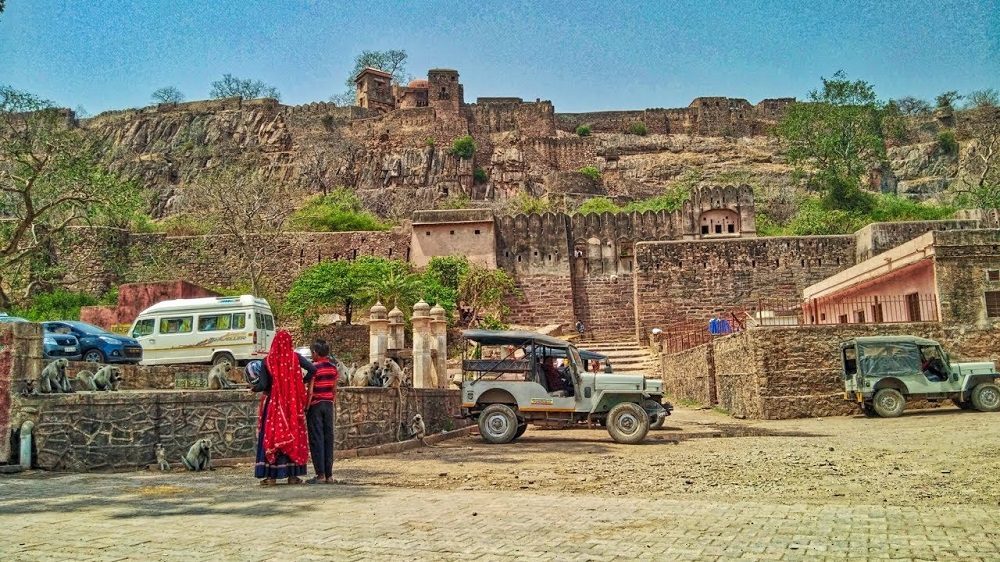
Ranthambore Fort stands on a hill inside the park and dates back to about the 10th century. In 2013 it was inscribed by UNESCO as one of the Hill Forts of Rajasthan, together with Chittorgarh, Kumbhalgarh, Gagron, Amber and Jaisalmer.
The fort is reached by a road through the forest that doesn’t need a safari permit, so your driver can take you up between your Ranthambore tiger safari drives. Inside are gateways, step-wells, ruined palaces and the Trinetra Ganesh temple, which draws large crowds on Wednesdays and during the Ganesh festival.
Allow two to three hours, go in the late morning after your first drive, and bring water. The views over the lakes and forest are the best in the park.
Rajasthan Tourism’s Ranthambore page has background on the park and town. Sawai Madhopur itself is small and busy. Most hotels are along Ranthambore Road between the town and the park gate, which is where the safari vehicles collect guests.
A Ranthambore tiger safari fits neatly between Agra and Jaipur. The usual order is Delhi → Agra → Ranthambore → Jaipur → Delhi, which avoids doubling back.
| Route | Approx. distance | Approx. drive time |
|---|---|---|
| Agra → Ranthambore (via Fatehpur Sikri or Bharatpur) | About 250–290 km | 5–6 hours |
| Ranthambore → Jaipur | About 160–180 km | 3–3.5 hours |
| Delhi → Ranthambore (direct) | About 380 km | 6–7 hours |
| Jaipur → Delhi | About 280 km | 4–6 hours, depending on the route |
Driving from Agra, most of our guests stop at Fatehpur Sikri on the way, which turns a long drive into a good day. From Ranthambore to Jaipur, the road is short enough to do a morning safari, have a late breakfast and reach Jaipur by mid-afternoon.
There is also a train option: Sawai Madhopur is on the main Delhi–Mumbai railway line, and several trains a day connect it with Delhi in roughly 5.5–7 hours. If you’re travelling with us, the driver meets you at the station, or drives the whole way so your luggage stays in the car.
For the full city-by-city picture, see our 6-day Golden Triangle itinerary and our guide to how many days the Golden Triangle needs.
Ranthambore has everything from simple guesthouses to some of India’s best wildlife lodges. Most are on Ranthambore Road or the Sherpur side, a short drive from the gates.
Stay within 15–20 minutes of the park so early pick-ups for your Ranthambore tiger safari aren’t painful. Many lodges have a naturalist on staff who talks about the day’s sightings in the evening, which adds a lot to the trip.
We don’t book hotels or take commission, so we can suggest places at any budget with no bias.
Park rules ban loud music, feeding animals and getting out of the vehicle. Keep voices low on every Ranthambore tiger safari. Drivers and naturalists can be fined if guests break the rules, so please respect their instructions.
We run two private car-and-driver tours built around a Ranthambore tiger safari stop, plus a shorter Rajasthan loop. Prices are for the whole vehicle with its driver, not per person:
| Tour | Sedan (1–3 travellers) | SUV (4–5) | Tempo Traveller (6–8) |
|---|---|---|---|
| Golden Triangle with Ranthambore, 7 days | USD 623 | USD 854 | USD 1,120 |
| Golden Triangle with Ranthambore Tiger Safari, 8 days | USD 712 | USD 976 | USD 1,280 |
| Rajasthan tour 6 days: Jaipur, Pushkar, Ranthambore | USD 534 | USD 732 | USD 960 |
Included: a private air-conditioned car and driver for the whole trip, fuel, tolls, parking, state taxes, and the driver’s own food and lodging.
Not included: hotels, meals, safari permits and other entry tickets, and guides. We’ll help you book the safaris and recommend licensed local guides for Agra and Jaipur on request. Tipping your driver is always your choice; see our tipping guide.
The 8-day tour is the one we recommend for a proper Ranthambore tiger safari, because it gives you two nights at the park and three or four drives. Want a different route? We’ll build it at our published car and driver rates.
Tell us your dates, how many of you are travelling and how many safaris you’d like. We reply within 24 hours with a fixed price for the car and driver. If you’d like a detailed day-by-day itinerary, it costs €100, and the full €100 is deducted from your tour price when you book. There is no obligation.
Tailor-Made India & Nepal
Tell us what you love and we reply within 24 hours with a fixed price. A detailed day-by-day itinerary costs €100, deducted in full from your tour price.
Pick one or more destinations — you can mix India and Nepal freely.
This helps us match the right pace, stay and activities.
We reply within 24 hours. No spam, ever.
Before you finalise your trip, run through these eight questions:
If you can answer yes to most of these, your Ranthambore trip is set up well.
Think of a Ranthambore tiger safari as three decisions: when, how many drives and which vehicle.
Come between February and June, book two nights and three or four gypsy drives as early as the permits open, and treat any zone as a chance rather than a promise. Add the fort between drives and slot Ranthambore between Agra and Jaipur.
Do that, and a Ranthambore tiger safari turns a classic Golden Triangle into something you’ll remember for the rest of your life.
The core zones 1 to 5 are open from 1 October to 30 June. In the July to September monsoon only zones 6 to 10 run safaris. There is also a weekly closure: zones 1 to 5 close on Wednesdays and zones 6 to 10 on Tuesdays.
From 1 April 2026 the government fee for a foreign visitor is about ₹3,025 per seat in a gypsy and about ₹2,400 in a canter, per drive. Agents typically charge around ₹4,000 to ₹4,500 per gypsy seat including their service fee. Fees rise about 10% every 1 April.
Zones 3 and 4, with the lakes and ruins, are the most famous, and zones 2 and 5 are often good too. But tigers move and zones are allocated by quota, so doing several safaris in different zones matters more than chasing one.
The gypsy. It carries six guests, is quieter, and gives everyone a side view for photos. A canter carries about 20 people and is cheaper, and is a good back-up if gypsies are sold out.
At least two, ideally three or four. One drive is a gamble; on a Ranthambore tiger safari trip, several drives across different zones and shifts give you a much better chance of a tiger sighting.
February to mid-April balances comfort and sightings. May and June give the best odds because tigers stay near water, but afternoons are often above 40 °C. October and November are green and pleasant, with thicker cover.
Through the Rajasthan forest department’s online booking system, with passport details for every guest. Permits open in seasonal blocks, and popular morning gypsies sell out quickly. We can arrange them through a trusted local agent.
Sometimes. A limited current-booking quota is sold at the booking office in Sawai Madhopur for the next shift. You’ll need to queue early and accept whatever zone and vehicle is available, usually a canter.
Each drive lasts about 3.5 hours. In winter the morning shift runs roughly 7:00 to 10:30 and the afternoon 14:00 to 17:30; in May and June it is about 6:00 to 9:30 and 15:30 to 19:00.
No. Ranthambore has about 72 tigers, one of the best densities in India, but sightings depend on luck, season and the number of drives. Guests who do three or four Ranthambore tiger safari drives between February and June usually see at least one.
About 160 to 180 km, or 3 to 3.5 hours by car. That makes it easy to do a morning safari and still reach Jaipur by mid-afternoon.
About 250 to 290 km depending on the route, which takes 5 to 6 hours. Most of our guests stop at Fatehpur Sikri on the way.
Yes. The usual route is Delhi, Agra, Ranthambore, Jaipur and back to Delhi. Our 7-day tour costs USD 623 for a sedan and our 8-day tour USD 712, for the whole vehicle with fuel, tolls, parking and taxes.
No. Our India tours cover the car, driver, fuel, tolls, parking and state taxes. Safari permits, hotels, meals and entry tickets are extra, but we help you book the safaris.
Partly. From July to September only zones 6 to 10 are open. The forest is green and quiet, but tiger sightings are less frequent than in the core zones during the main season.
Yes. The fort road through the forest doesn’t need a safari permit, so your driver can take you up between drives. The fort is part of the UNESCO-listed Hill Forts of Rajasthan.
Yes. It’s written for the October 2026 to June 2027 season, using the fees that took effect on 1 April 2026. Fees usually rise again each April, so check before you pay.
A tiger sighting is never guaranteed. What you control is the setup: the season, the number of drives, the vehicle and the timing of your permits.
Two nights, not one? Three or four drives? A gypsy? Permits booked when the block opens? Warm clothes for winter or sun protection for May?
Get those right, and your odds improve a great deal. Get them wrong, and you’re relying on luck.
With that in place, planning your Ranthambore tiger safari becomes simple. For the rest of the route, read our Golden Triangle tour guide, our guide to driving from Delhi to Jaipur, and our Rajasthan itinerary guide.
See the 8-day Golden Triangle with Ranthambore tour · Rajasthan tours · Plan my trip