Two weeks is the length most people actually have, and it is enough for India and Nepal if the route is built properly. The mistake is trying to fit in one more city. Below is a fourteen-day itinerary we have refined over years of running it, with the reasoning behind each decision.
Seven days in northern India, six in Nepal, one lost to the crossing. That split works because India rewards movement and Nepal rewards staying put. You cover ground in Rajasthan and Uttar Pradesh, then slow down in the hills.
Day 1 – Arrive Delhi. Do not plan anything. Long-haul arrivals into Delhi are tiring and the city is a lot to take on jetlagged.
Day 2 – Old and New Delhi. Jama Masjid, the lanes of Chandni Chowk, Humayun Tomb, and India Gate. Humayun Tomb is the one people underestimate; it is the prototype the Taj Mahal was built from, and it is far quieter.
Day 3 – Drive to Agra. Roughly four hours on the Yamuna Expressway. Arrive in the afternoon, see Agra Fort in the softer light, and keep the Taj for sunrise the next morning.
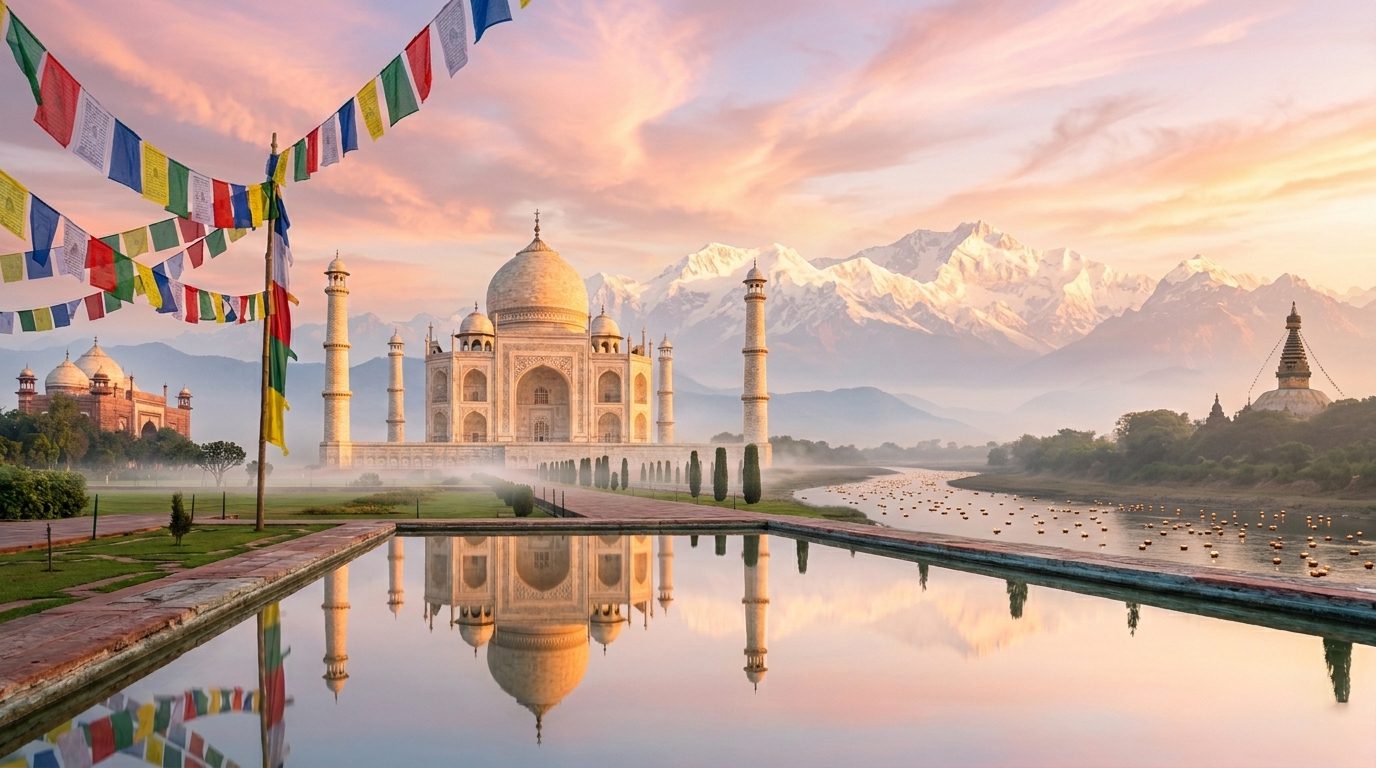
Day 4 – Taj Mahal at sunrise, then drive to Jaipur. Go at opening. The difference between the Taj at 6am and the Taj at 11am is the difference between a monument and a crowd. Break the drive at Fatehpur Sikri, the abandoned Mughal capital, which almost nobody stops at and probably should.
Day 5 – Jaipur. Amber Fort in the morning, the City Palace and Jantar Mantar after. Hawa Mahal is worth ten minutes from the street rather than an hour inside.
Day 6 – Jaipur to Delhi, fly to Kathmandu. Or fly Jaipur to Delhi and connect. This is the day that costs you, which is why the itinerary does not try to squeeze a sixth Indian city in.
Day 7 – Kathmandu. Boudhanath in the late afternoon, when the pilgrims circle the stupa and the light goes gold. Pashupatinath if you want to understand how Nepal treats death.
Day 8 – Patan and Bhaktapur. The two old Newar cities in the valley. Bhaktapur in particular still functions as a working town rather than a museum, and it is the single best afternoon in the valley.
Day 9 – Drive to Pokhara. Six to seven hours through river gorges and terraced hills. Long, but the drive is the point rather than an inconvenience.
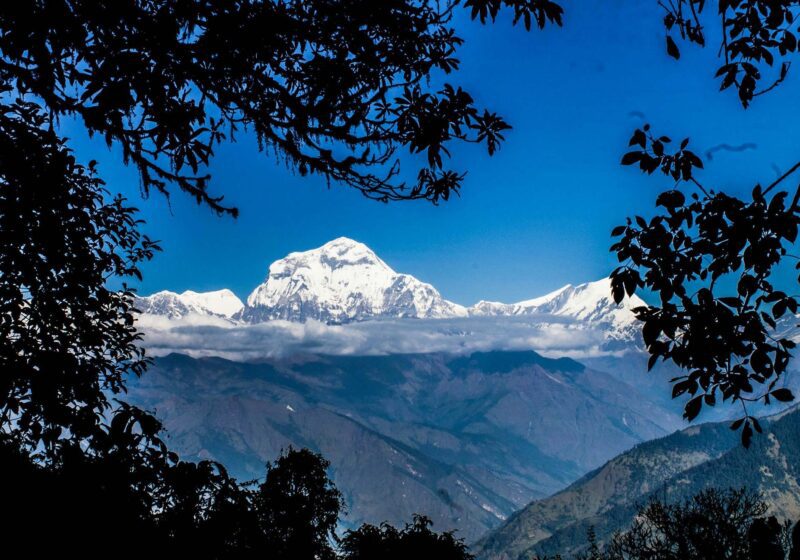
Day 10 – Pokhara. Sunrise at Sarangkot for the Annapurna range, then do very little. Phewa Lake, a boat, a long lunch. After nine days of moving you will want this.
Day 11 – Drive to Chitwan. Down into the lowland Terai, a different Nepal entirely: hot, flat, and green.
Day 12 – Chitwan National Park. Jeep safari and a canoe on the Rapti. One-horned rhino are common, tigers are not, and anyone who promises you a tiger is selling something.
Day 13 – Return to Kathmandu. Drive or take the short flight. Last afternoon in Thamel for whatever you did not buy the first time.
Day 14 – Depart.
With three weeks, add Varanasi between Agra and Kathmandu, and Lumbini on the way into Nepal. That version is close to our India-Nepal Grand Odyssey.
With ten days instead of fourteen, cut Chitwan rather than Pokhara. The mountain views are what people remember.
We run these trips privately, never as a group. The price covers your vehicle, your driver, fuel, tolls, state taxes and permits for the whole route in both countries.
Hotels, meals, monument entrance fees, guides, visas and the India to Nepal flight are not included. We can arrange any of them at extra cost if you would rather not deal with it, but we do not build them into the price and quietly add a margin.
Yes, for the highlights of both. It is not enough to add a trek, or Kerala, or Ladakh. For those you want three weeks.
India first works better. You arrive with energy for the harder country and finish in the mountains, which is a gentler way round.
Fly via Delhi. There is no direct route, and the overland alternative costs two days.
If you have never done a jungle safari, yes. If you have been to African parks or Indian tiger reserves, spend the days in Pokhara instead.
If you want this route adjusted to your dates, tell us what you have in mind. Every itinerary we run is built for the people travelling.